Worth The Read

Why Do My Clogs Slip? Heel Slip and Sizing Explained
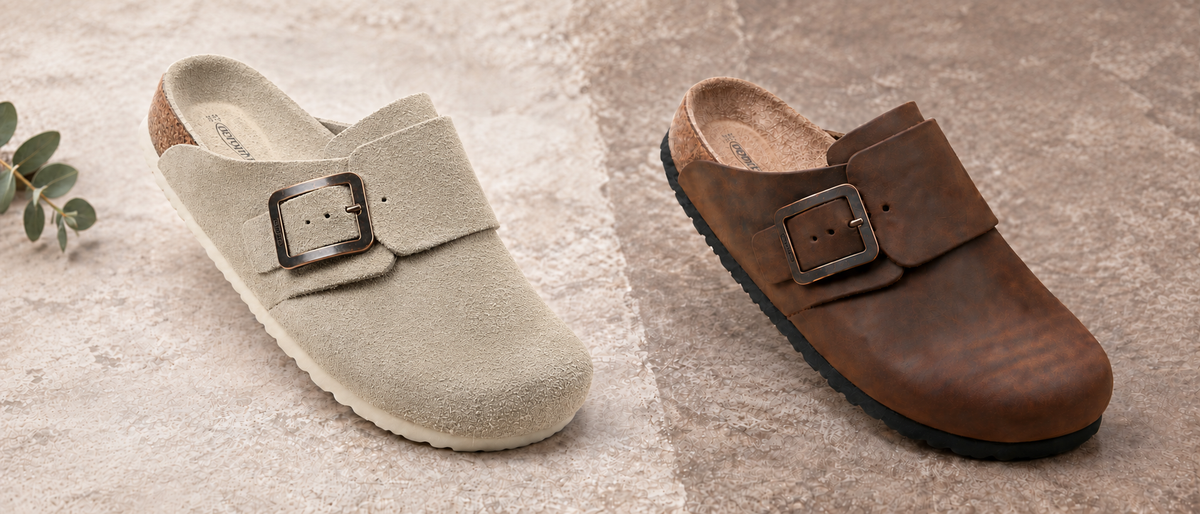
Clogs should feel easy to wear, but that does not mean the fit should be careless. A pair that is too tight may press against your toes or instep, while an oversized pair can slide around and make you grip with your toes while walking. So, how should clogs fit? Your toes should have room to rest naturally, your foot should remain centered on the footbed, and the upper should feel secure without pinching. With backless clogs, a small amount of controlled heel movement can be normal. Your heel should not, however, slide from side to side or feel as though it will leave the shoe with every step. This clog sizing guide covers heel slip, toe room, width, instep fit and how to choose the correct women's clog size. You can also browse the complete Aerothotic women's clogs collection while comparing fit features and styles. How Should Clogs Fit Overall? A properly fitting pair of clogs should meet five basic conditions: Your toes can lie flat without touching the front. The widest part of your foot sits fully on the footbed. The upper feels secure across the instep without creating pressure. Your heel remains centered instead of slipping sideways. You can walk naturally without curling or gripping with your toes. The contoured footbed, heel cup and adjustable upper all influence how a clog fits. Unlike lace-up shoes, backless clogs do not lock the heel completely in place. The goal is controlled movement, not a restrictive fit and not a loose, unstable one. Why Do Clogs Fit Differently? Clogs are built differently from closed shoes. Most have a covered toe and an open heel, leaving the upper and footbed responsible for controlling the foot. They may also feel different from women's slide sandals. Slides usually have an open toe, making it easy to see whether the foot is positioned correctly. With clogs, you must pay closer attention to how your toes feel inside the covered front. A correct clog fit should feel relaxed while still allowing you to walk normally. You should not need to tighten your toes, shuffle your feet or shorten your stride to keep the shoes in place. Clog Heel Slip: How Much Is Normal? A small amount of clog heel slip can be normal in a backless design. As you take a step, your heel may rise slightly before settling back onto the footbed. Normal heel movement should feel smooth and controlled. The clog should follow your stride without forcing you to grip the footbed with your toes. Heel slip may be excessive if: The clog nearly comes off with every step. Your heel repeatedly lands on the edge of the footbed. Your foot slides forward until your toes touch the front. You have to shorten your stride to keep the clogs on. Your toes curl to prevent the shoes from slipping. The open-back construction can allow a small heel rise, but the foot should remain centered. If your clogs have an adjustable buckle, check the instep fit before changing sizes. A small strap adjustment may improve stability. If the upper is already adjusted and the clog still feels uncontrolled, the size may be too large. How Much Toe Room Should Clogs Have? Proper toe room in clogs lets your toes rest flat and move naturally. Your longest toe should not press against the covered front, and your smaller toes should not feel compressed. Too much empty space can also cause problems. If a clog is excessively long, your foot may slide forward and repeatedly strike the toe area. While standing, check that: Your toes do not touch the front. You can gently move your toes. The toe box does not press against your toenails. Your toes remain relaxed while walking. Your foot does not slide forward on slopes or turns. Check the covered toe shape and footbed length before selecting your size. Always evaluate toe room while standing. Your feet spread under body weight, so clogs that seem spacious while seated may feel different once you begin walking. Check the Width and Instep Fit Length is only one part of clog sizing. Your foot should sit completely within the edges of the footbed. If the sides of your feet extend over the footbed, the clog may be too narrow even if the length looks correct. The instep is equally important because the upper helps control your foot. It should feel gently secure without creating pinching, rubbing or deep pressure marks. An adjustable buckle lets you fine-tune the instep without affecting toe room. If the clog has an adjustable buckle, begin with a slightly relaxed setting. Walk several steps and tighten it gradually until the shoe feels stable. Do not overtighten the buckle to compensate for a clog that is too long or wide. Check the Footbed and Arch Placement A supportive footbed only works as intended when your foot is correctly positioned on it. The raised contour should meet your natural arch rather than feeling too far forward or too close to your heel. Your heel should also rest in the center of the heel cup. If the heel sits on the back edge or repeatedly shifts to one side, reconsider the size. The raised arch contour should sit under your natural arch, not ahead of or behind it. Women who want to compare other contoured footwear options can explore Aerothotic's arch support collection. Women's Clog Sizing: A Step-by-Step Guide Women's clog sizing can vary according to the design, foot shape and socks you plan to wear. Follow these steps before ordering: 1. Measure Both Feet Measure from the back of your heel to the end of your longest toe. Because one foot may be slightly larger, compare your size using the measurement from the larger foot. 2. Measure Later in the Day Feet may become slightly fuller after several hours of standing and walking. Measuring later in the day provides a more realistic indication of how the clogs may fit during regular wear. 3. Consider Your Socks If you plan to wear your clogs with fall or winter socks, measure and try them on with a similar pair. Thick socks can affect toe space, width and instep pressure. 4. Start With Your Usual Sandal Size Your regular sandal size is usually the best starting point. Do not automatically size down simply because the clog has an open back. 5. Check the Official Size Chart Compare your measurement with the Aerothotic Clogs Size Chart. If you fall between sizes, consider your foot width and whether you plan to wear socks. Compare your foot measurement against the chart before choosing a size. 6. Walk in Both Clogs Indoors Test the clogs on a clean indoor surface. Walk normally, turn in both directions and take several longer steps. Pay attention to heel movement, toe position and whether the foot slides sideways. How Should Atlas LC1424 Clogs Fit? The Atlas LC1424 clogs should feel supportive underfoot while allowing your toes to rest naturally. Your heel should remain centered on the cork footbed, with only a modest rise during each step. Atlas includes an adjustable buckle that helps refine the fit across the instep. Adjust it until the upper holds your foot without pinching. Your foot should not slide forward when you walk. The adjustable buckle helps create a more secure fit across the instep. Begin with your usual sandal size. If you normally wear a half size or have wider feet, consider moving up to the next available size. Atlas is designed around a medium-width fit, so women needing more width should pay close attention to the edges of the footbed and the pressure across the instep. If you like the structured feel of cork but want to compare different silhouettes, browse Aerothotic's cork footbed sandals. Are Clogs Supposed to Be Loose? Clogs are supposed to feel relaxed, but they should not feel uncontrolled. A small amount of heel lift is different from the entire foot sliding inside the shoe. A good fit keeps the ball of the foot and heel aligned with the footbed. The upper should provide enough control that you can walk without consciously trying to keep the clog attached to your foot. Signs Your Clogs Are Too Small Your clogs may be too small if: Your toes touch the covered front. Your heel rests on or beyond the back edge. The sides of your feet extend over the footbed. The upper pinches your instep. Your toes feel crowded when standing. Do not depend on extended wear to correct a length or width problem. A footbed may gradually feel more familiar, but an incorrectly sized clog will not become longer. Signs Your Clogs Are Too Large Your clogs may be too large if: Your foot slides forward and backward. Heel lift becomes exaggerated. The upper cannot hold your foot securely. You curl your toes to prevent slipping. Your heel repeatedly lands away from the center. A correctly sized clog keeps the foot centered with no forward slide or exaggerated heel lift. Before exchanging the size, adjust the buckle and retest the clogs with your intended socks. If the sliding continues, a smaller size or a different shape may be more appropriate. Can You Wear Clogs With Socks? Yes. Clogs can be worn barefoot or with socks, depending on the season and design. Choose your size based on how you expect to wear them most frequently. When trying clogs with thicker socks, make sure your toes can still move and the upper does not become tight across the instep. For softer indoor options, compare Aerothotic's women's slippers collection. For seasonal styling advice, read why clogs make sense for transitional fall weather. More Aerothotic Clog and Footwear Guides Continue planning your seasonal footwear rotation with these related guides: Best Transitional Shoes for September and October Transitioning Your Favorite Clogs From Fall to Winter Why Arch Support in Sandals Matters More Than You Think Find Your Best Clog Fit When asking how should clogs fit, remember the difference between relaxed and oversized. The right pair provides natural toe room, keeps your foot centered and allows only controlled heel movement. Start with your usual sandal size, account for your foot width and intended socks, and walk in both clogs before deciding. Compare the available styles in the Aerothotic women's clogs collection to find the pair that best matches your feet, wardrobe and daily routine. Frequently Asked Questions Is heel slip normal in clogs? Yes, a small amount of heel lift is normal in a backless clog. It becomes a problem only if the heel repeatedly lands off the footbed or you have to shorten your stride to keep the clog on. Should I size up or down for clogs? Start with your usual sandal size. If you wear a half size or have wider feet, size up to the next full size rather than sizing down. How do I know if my clogs are too wide or too narrow? Your foot should sit fully within the edges of the footbed. If the sides of your feet hang over the edge, the clog is too narrow. If your foot shifts side to side on the footbed, it may be too wide. Can clogs be worn with socks? Yes. If you plan to wear socks regularly, try the clogs on with a similar pair before deciding on a size, since thicker socks affect toe space and instep pressure. My clogs still feel loose after adjusting the buckle. What should I do? If the buckle is already adjusted and the foot still slides forward or the heel lift feels exaggerated, the clog is likely too large and a smaller size is worth trying.
Learn more
How to Protect Your Floors (and Your Feet) at the Same Time
Why Hard Floors Are Tough on Your Feet — and How to Protect Both There's a reason so many women reach for supportive house shoes the moment they get home. Hard, unforgiving surfaces are a double-edged problem: they're rough on the wood they cover, and they're even rougher on the joints, heels, and arches that stand on top of them. When you walk barefoot or in flat, unsupportive shoes on a hardwood or tile floor, your foot's arch has to do all the shock-absorbing work on its own. As our article on why walking barefoot indoors hurts your feet explains, going barefoot on hard surfaces forces your joints to absorb impact they were never meant to handle. Over a long day, that shows up as tired arches, heel discomfort, and that achy "hard floor fatigue" in your knees and lower back. At the same time, thin or worn soles can scuff, scratch, and mar your flooring finish with every step. The fix is simple: choose supportive, floor-friendly slippers that do both jobs at once. In this guide, we'll walk through exactly what to look for — and how to protect your hardwood floors and your feet without compromising on either. Key Features to Look For in Floor-Friendly Slippers Not all slippers are created equal when it comes to hard floors. Here are the four features that separate a genuinely floor-friendly, foot-supporting slipper from a flimsy afterthought. Non-Slip Soles A smooth, flat sole might glide nicely, but on hardwood and tile it can be dangerously slick — especially for anyone who's a little unsteady or rushing between rooms. Look for a non-slip, grippy outsole with a textured tread that keeps you steady. This matters even more for older adults or anyone recovering from an injury, where a slip on a hard floor can be serious. Non-Marking Soles This is the feature that actually protects your floors. Non-marking slippers use a light-colored or specially formulated sole compound that won't leave black scuff marks, discoloration, or residue on your wood finish. If you've ever scrubbed a dark streak off a beautiful floor, you know why this matters. Arch Support and Cushioning Hard floors punish flat, unsupported feet. The right house shoe provides built-in arch support and a cushioned footbed that absorbs impact and keeps your body aligned. If you're wondering whether it really matters, our deep dive on the science of arch support explains why a supported foot fatigues far less than a bare one on hard surfaces. For low or fallen arches specifically, browse the flat feet collection — the same principles apply indoors. A Supportive, Stay-Put Fit Slip-on slippers are easy, but a loose, floppy pair makes you work harder to keep them on and can throw off your gait. A supportive fit with soft, padded straps (or a secure slip-on shape) keeps the slipper where it belongs and lets your foot relax. For fit tips, see how to measure for the perfect fit in slippers. Non-Slip vs. Non-Marking Soles: What's the Difference? This is the most common point of confusion, so let's settle it. Non-slip refers to the grip between the sole and the floor — it's about your safety and stability. Non-marking refers to whether the sole leaves marks on the floor — it's about protecting the surface. Ideally, you want both. A non-marking sole protects the wood from scuffs and stains, while a non-slip tread keeps you planted. When you shop, look for the words "non-slip" and "non-marking" together, or check the sole color and texture. The house slippers with arch support in our collection combine a grippy, non-marking outsole with a supportive, cushioned footbed — so you get safety, floor protection, and comfort in one pair. Our Recommended Slippers for Hardwood Floors Aerothotic's footwear is designed with exactly this double duty in mind — comfortable, supportive, and easy to slip on for hard-surface days at home. Here are three styles that protect your floors and your feet. Kai Cork Recovery Slides The versatile pick for all-day indoor comfort. A supportive cork footbed molds to your foot for cushioning, while the contoured arch support and grippy outsole absorb impact on hard surfaces and keep you steady. Easy slip-on design makes them perfect for moving between rooms all day. Shop the Kai Cork Recovery Slides. Maeve Arch Support Slide Sandals A clean, supportive slide that's easy to slip on and off around the house. Built-in arch support and a cushioned footbed help relieve the fatigue of standing on hardwood or tile, while the simple strap keeps your foot secure. Shop the Maeve slides. Atlas Leather Clogs For a sturdier, warmer silhouette, the Atlas Leather Clogs offer a plush cork footbed that molds to your foot, built-in arch support, and a cushioned high-density EVA outsole that absorbs impact on hard surfaces. The adjustable buckle keeps a secure fit as you move around the house. Shop the Atlas Leather Clogs. If you'd rather stay in a slide all day, our slipper and slide collection has more supportive, non-marking options too. Slip them on after a long day and give your heels and arches the cushioning a hard floor can't. Tips to Keep Your Hardwood Floors Looking New A great pair of slippers does the heavy lifting, but a little routine care keeps your floors beautiful for years. A few easy habits: Use floor-friendly footwear — supportive, non-marking slippers for everyday wear, and reserve high-heels, cleats, or outdoor shoes for outdoors. Place rugs at high-traffic zones — entryways, hallways, and in front of sinks or stoves absorb impact and catch grit before it reaches the wood. Sweep or dust often — loose sand and dirt are abrasive; they scratch floors with every step. Regular sweeping removes the grit that does the damage. Wipe spills promptly — standing water and moisture can warp or stain hardwood, so address spills right away. Use floor protectors on furniture — felt pads under chair and table legs prevent dents and scuffs when things move. Frequently Asked Questions Are slippers bad for hardwood floors?Not if they have non-marking soles. The problem is slippers (or socks) with worn, dark, or hard soles that scuff and scratch. Supportive slippers with non-marking outsoles protect the surface — and the wrong indoor footwear can even damage your feet. That guide breaks down exactly how hard surfaces affect foot health. What kind of sole is best for hardwood floors?A non-marking, non-slip sole with a textured tread. It grips the floor to keep you steady while leaving no scuffs or residue behind. Do I really need arch support in house slippers?If you spend a lot of time on your feet on hard surfaces, yes. As our house shoes with arch support explain, supportive cushioning absorbs the impact that hard floors send straight up your legs, helping prevent foot fatigue and discomfort. What's the difference between house shoes and slippers?Often just terminology. "House shoes" implies a sturdier, more supportive indoor shoe; "slippers" is the catch-all term. For hard floors, look for either as long as they have supportive footbeds and non-marking soles. If you're torn, our guide on slippers vs. indoor sandals can help you choose. Can I wear supportive slippers outside?They're designed for indoor use. Reserve your outdoor footwear for outside and keep your slippers clean and dry to protect both your feet and your floors. Conclusion You don't have to choose between a beautiful floor and comfortable feet. The right floor-friendly slippers protect your flooring from scuffs and scratches while giving your arches and heels the support hard surfaces simply can't. Look for non-slip, non-marking soles, real arch support, and a cozy, supportive fit — and you'll protect both, every day. For more on why a supportive shoe matters more inside than out, read why support matters more indoors than outdoors. Ready to give your feet the cushioning they deserve? Explore the Kai Cork Recovery Slides, Maeve slides, and Atlas Leather Clogs from Aerothotic and step comfortably onto any floor in your home.
Learn more
Why Clogs Make Sense for Transitional Fall Weather
Somewhere around the third week of September, sandals stop making sense but boots still feel like overkill. That in-between stretch is exactly where clogs quietly do their best work, structured enough for a cool morning, open enough to breathe through a warm afternoon, and fast enough on and off that you never think twice about grabbing them. This is why they earn a permanent spot in a fall rotation instead of a seasonal afterthought. If you want to see what is holding up right now, Aerothotic's clogs collection is a good place to start. Quick answer: Clogs work for fall because they solve the one problem sandals and boots each fail at separately. A sandal has no structure for a cold morning and nowhere to put a sock. A boot is overbuilt for a 60 degree afternoon and slower to put on. A well-made clog, leather or suede upper, cork or orthotic footbed, deep heel cup, splits the difference: bare-footed when it is warm, sock-ready when it is not, and on or off in one motion either way. The material and footbed still matter more than the silhouette, a flat unsupportive clog is no better than a flat unsupportive sandal. Did you know? Clogs have a longer history than you'd think Clogs are one of the oldest shoe styles still worn today, with wooden versions showing up in Europe as far back as the 1300s, particularly in the Netherlands. The word "clog" comes from an Old English term for a block of wood, referring to the thick wooden sole early versions were carved from. Dutch klompen were traditionally carved from a single piece of willow or poplar and were worn as sturdy work shoes in farms and factories. Swedish clogs (traskor) with a wooden sole and leather upper became a fashion staple in the 1970s after gaining popularity across Europe and the United States. Modern comfort clogs owe much of their structure, a contoured footbed and deep heel cup, to orthopedic shoe designs developed for people who stand all day. The fall footwear gap nobody talks about Most footwear advice treats fall like a hard cutoff, sandals until a certain date, boots after it. Real weather does not work that way. A single week in October can swing from a 68 degree afternoon to a 44 degree morning, and neither a beach sandal nor a winter boot handles that whole range comfortably. The gap between them is real, and it lasts longer than most people plan for. We map out the earlier and later ends of that stretch in our fall sandals guide, which is worth reading alongside this one if you are building a full rotation rather than a single pair. What a clog gives you that a sandal cannot A sandal's whole design depends on warm skin and dry ground. Take either of those away and the open sides and toe post stop being a feature. A clog keeps the same one-motion convenience, no laces, no buckles to fight with, while adding a closed toe box and covered sides that hold in warmth and keep out wind. That structure is also what makes room for a sock, something almost no sandal can do without feeling wrong. Aerothotic's Atlas leather clog is built around exactly this shift, a plush cork footbed, deep heel cup, and suede leather upper that still slips on as fast as anything you wore in July. "Finally sandals I can wear all day without heel pain." — Sarah M., verified Aerothotic buyer Not just any clog earns a spot in the rotation The silhouette gets the credit, but the footbed does the actual work. A flat, unstructured clog with no arch contouring offers roughly the same support as the cheapest flip flop in your closet, it just looks warmer. What actually matters is a contoured footbed, a deep heel cup, and enough cushioning that a full day of walking does not undo the benefit of switching seasons in the first place. If arch support is the priority, Aerothotic's arch support sandals and clogs collection filters specifically for that, rather than making you check every product page by hand. Where clogs beat both sandals and boots It is not that clogs are better than sandals or boots in every category, it is that they are the only one of the three built for exactly this window. A sandal loses to weather. A boot loses to convenience and breathability, lacing up or zipping in for a five minute errand feels disproportionate, and feet run hot inside them well before it is actually cold enough to need that much insulation. A clog gives up a little of each extreme to stay useful across the widest range of fall days. Once you are ready to move fully into boot territory, our guide on transitioning clogs from fall to winter covers exactly when that handoff makes sense. Sandals vs clogs vs boots for fall Feature Sandals Clogs Boots Speed on and off Fastest Just as fast Slowest, laces or zips Works with socks Rarely Yes Yes, expected Breathability Best Good Warmest, least breathable Light rain Poor protection Handles it reasonably Best protection Best for Warm afternoons The whole fall window Cold, wet, or snowy days What to actually look for in a fall clog Skip anything with a flat, unlined footbed or a stiff synthetic upper that will not flex through daily wear. Suede or full-grain leather ages better and resists light moisture, a cork or orthotic footbed distributes pressure instead of concentrating it under the heel, and an adjustable strap keeps the fit secure as you move between bare feet and socks. If you want that checklist confirmed rather than assumed, Aerothotic's APMA approved styles have already been reviewed by a panel of podiatrists against criteria like these. Clogs are not a trend item that happens to look seasonal, they solve a specific problem that sandals and boots each fail at from opposite directions. Get the footbed right and the silhouette does the rest, structure when mornings turn cold, breathability when afternoons do not, and none of the friction of lacing up for a five minute errand. Ready to see what is available? Browse Aerothotic's clogs collection and find the pair built for exactly this stretch of the year. Related reads Fall sandals guide Transitioning clogs from fall to winter Back to campus footwear guide Why arch support matters What podiatrists recommend Frequently asked questions Are clogs actually warm enough for fall? A leather or suede clog with a lined footbed handles most fall temperatures fine on its own, and adding a sock underneath extends that range further into cooler mornings without needing to switch to boots. Can you wear socks with clogs? Yes, and it is one of the main reasons clogs work through the fall transition. Unlike an open sandal, a clog's closed sides and covered toe box accommodate a sock comfortably, which most sandals cannot do without feeling awkward. Are clogs better than boots for everyday fall wear? For most of fall, yes, since clogs slip on and off in one motion, breathe better than a boot, and still handle mild rain and cooler mornings. Boots make more sense once temperatures drop further or snow becomes a regular factor. Do clogs offer enough arch support? It depends entirely on the construction. A clog built with a contoured cork or orthotic footbed and a deep heel cup offers real arch support, while a flat, unstructured clog offers about as much support as a flat sandal does. Are leather clogs good in light rain? Suede and full-grain leather resist light rain reasonably well and can be treated with a protectant spray for extra resistance. Neither is meant for standing water or heavy downpours, but for a damp fall walk they hold up better than most people expect. Are Aerothotic clogs APMA approved? Many styles carry the APMA Seal of Acceptance from the American Podiatric Medical Association, meaning a panel of podiatrists reviewed the design against criteria for supporting foot health, not just seasonal styling.
Learn more
Best Shoe Deals for Women - 2026 Labor Day
Labor Day Weekend: 30% Off Sitewide, September 2–8. Shop 30% off Sorting through a sitewide sale can take longer than it should, so this is the shortcut. Rather than scrolling everything, these are the standouts worth grabbing while Aerothotic's Labor Day Sale runs at 30% off sitewide, September 2 through 8, pulled specifically from the Best Sellers and Recovery collections, the two categories most worth checking first this week. Labor Day sits at an odd point in the shoe-buying calendar. It is not quite the deep discounting of Black Friday, but it lands right as summer sandals start getting real daily use in their final stretch and before fall styles take over shelf space. That timing tends to produce genuinely useful markdowns on styles people actually wear year round, not just seasonal clearance on things nobody wanted in July. A flat 30% off sitewide also removes the usual guesswork of checking which specific pairs happen to be discounted, so the real decision this week is which collection matches what you actually need, whether that is arch support in general or something more specific, not which one has the better markdown. Best Sellers, 30% off this week These are the styles customers keep coming back for, the pairs that show up in repeat orders and word-of-mouth recommendations rather than one-time impulse buys. Popularity alone does not guarantee comfort, but many of these also carry the APMA Seal of Acceptance, which is a more concrete signal than star ratings alone. A few worth starting with, all at the same sitewide discount as everything else: Crystal Mist Flip Flops Shimmer strap, molded arch. A long-running favorite. Hazel Thong Sandals Metallic accent, dressier everyday pick. Raido Strappy Sandal Double strap, deep heel cup, built for full days out. Atlas Leather Clog Cork footbed, a head start on the fall transition. Pearly Fume Flip Flops Gel-injected footbed, glossy finish for a dressier look. Celestis Strappy Sandal Memory foam footbed with a dressier buckled strap. Recovery picks, also 30% off Best Sellers answers the question of what most people buy. Recovery answers a more specific one: what actually helps if your feet are dealing with something particular, plantar fasciitis, general fatigue from standing all day, or a foot shape that most sandals were not built for. Every style in this collection carries a contoured arch and a deep heel cup by design, not as a marketing add-on, which matters if you are shopping with a condition in mind rather than casual browsing: Solace Flip Flop Yoga-mat footbed, built for plantar fasciitis recovery. Darin Slingback Non-slip outsole, secure fit for longer days on your feet. Hadal Slingback Velcro back strap and arch support built for longer walks. Kaizen Memory Foam Slide Memory foam footbed with a deep heel cup for all-day wear. See the full Recovery collection for more styles, all at the same 30% off. What customers are saying A quick sample of feedback across the styles featured above: "The only sandals I can wear all day without foot pain. Worth every penny." — Verified Aerothotic buyer "Finally sandals I can wear all day without heel pain." — Sarah M., verified buyer "Arrived quickly and genuinely comfortable, noticeably better for plantar fasciitis pain than what I was wearing before." — Paraphrased from a Trustpilot review A few more ways to save this week Since the discount is flat across the entire site rather than limited to specific stock, there is not much strategy needed beyond checking your size early against the size chart. A few things still worth knowing before you check out: free shipping still applies on top of the 30% off for qualifying orders, so there is no reason to wait for a separate promotion to stack. If you are shopping for someone else, a gift card is a straightforward option that sidesteps sizing guesswork entirely and is not affected by the sale ending. And if you already own a pair you love, this is a reasonable week to buy a backup before the discount disappears rather than waiting until the current pair wears out. Why these two collections first Best Sellers is exactly what it sounds like, the styles customers reorder and recommend most, so it is a low-risk place to start if you are not shopping for anything specific. Recovery narrows things down for a reason, every style in it is built around a contoured arch and deep heel cup rather than general comfort claims, which matters if foot fatigue or a specific condition is what brought you here. Both carry the same 30% off this week, so the choice comes down to what you actually need rather than which one is more discounted. For full sale terms and everything else included, browse the full sale collection. Related reads Are flip flops bad for your feet? The arch support fix most people overlook Best sandals for standing jobs Best sandals for sweaty feet What podiatrists recommend Frequently asked questions What are the best Labor Day shoe deals for women this year? Aerothotic's Best Sellers and Recovery collections are the strongest picks, since they combine the most-loved styles with the same 30% sitewide discount running September 2 through 8. Is the Labor Day discount the same on Best Sellers and Recovery styles? Yes. The 30% off applies sitewide, so Best Sellers and Recovery styles are discounted at the same rate as everything else, with the usual exception of items marked Final Sale. What is the difference between Best Sellers and Recovery styles? Best Sellers is a popularity ranking across all styles, thongs, slides, backstraps, and clogs that customers buy most. Recovery specifically highlights styles built around a contoured arch and deep heel cup for people managing foot fatigue or a specific condition. Can I buy a gift card during the sale? Yes, gift cards are available as usual and sidestep sizing guesswork if you are buying for someone else. Note that gift card purchases themselves are typically not discounted by sitewide sale pricing, only the products purchased with them. Should I buy a backup pair of a style I already own? It is a reasonable strategy if you already know a style works for you. Buying a backup at 30% off during the sale is often cheaper than replacing a worn-out pair at full price later in the year. Ends September 8. 30% off sitewide. Shop the Labor Day Sale
Learn more
Why End-of-Season Is the Best Time to Buy Arch Support Sandals
Best Arch Support Sandals for Women: Up to 60% Off in the End of Summer Sale Best Arch Support Sandals for Women: Up to 60% Off Limited time • Ends August 26 Best Arch Support Sandals for Women Up to 60% off • August 21–26 Shop arch support sandals on sale The best arch support sandals for women do not stop being worth it just because summer is winding down. Aerothotic's End of Summer Sale runs August 21 through August 26, with up to 60% off arch support sandals, slides, backstraps, and clogs, the same contoured footbeds and deep heel cups you would pay full price for any other week of the year. If you have been waiting to find supportive sandals before fall, this is the window. Browse the full sale collection to see what is currently discounted. What makes a sandal the best for arch support The best arch support sandals for women share three things: a contoured arch that sits in the right place, a deep heel cup that cradles the back of the foot, and a shock-absorbing footbed. These features work together to reduce strain on your arches during all-day wear, whether you are running errands or standing on your feet at work. Why a discount does not mean a lower standard Sale pricing on footwear usually raises a fair question: what is the catch? With Aerothotic, there is not one. Discounted styles carry the same contoured arch, deep heel cup, and shock-absorbing footbed as anything sold at full price, the markdown reflects seasonal timing and inventory, not a change in construction. Many discounted pairs still carry the APMA Seal of Acceptance, so the only thing changing during this sale is the price, not what is actually under your foot. Shop arch support sandals by style A few starting points if you know roughly what you are after: Flip Flops Slides Backstraps Clogs Not sure which arch support sandal is right for you? Tell us what you are shopping for, and we will point you to the right collection. Everyday comfort, no specific issue A specific foot condition Building out my fall rotation Choose an option above to see the best collection for you. Arch support sandals for plantar fasciitis If plantar fasciitis, standing all day, or general arch fatigue is what brought you here, it is worth checking the plantar fasciitis sandals collection specifically rather than the general sale page. The best arch support sandals for plantar fasciitis keep the arch in the anatomically correct position and cushion the heel, and Aerothotic's contoured footbeds are built to do exactly that. Discounted stock varies day to day, and the condition-specific pages filter that down for you automatically. A smart way to build a fall rotation If you read our guide on transitional shoes for September and October, you already know the case for having both a supportive sandal and a clog ready before the weather actually forces the switch. Sale week is the cheapest window of the year to build out a rotation of arch support sandals for women, rather than paying full price piecemeal once the season change is already underway. Trending arch support sandals this week A few styles customers are grabbing most right now. Sale pricing shows on the product page itself, since it varies by size and color: Raido Strappy Sandal Double strap, deep heel cup. Check current sale price on site. Crystal Mist Flip Flops Top rated shimmer flip flop. Check current sale price on site. Hazel Thong Sandals Metallic accent thong. Check current sale price on site. “The only sandals I can wear all day without foot pain. Worth every penny.” — Verified Aerothotic buyer A few tips to make the most of this sale Discounted stock moves fastest in common sizes, so it is worth checking your size specifically rather than assuming it will still be there on day five. If you are between sizes or have wider feet, most Aerothotic styles recommend sizing up rather than down, the size chart has exact measurements if you want to double check before ordering. And since every full-price purchase is backed by the 30-Day Comfort Guarantee, sale week is a low-risk time to finally try a pair of arch support sandals you have been eyeing rather than sticking with what you already know. Frequently asked questions Click a question to expand the answer. What are the best arch support sandals for women? The best arch support sandals for women combine a contoured arch, a deep heel cup, and a shock-absorbing footbed. Aerothotic styles carry this construction across sandals, slides, backstraps, and clogs, and many are APMA-approved. When does the End of Summer Sale end? The sale runs from August 21 through August 26. Discounts apply automatically at checkout while stock lasts, and prices return to regular the following day. Is the discount applied automatically? Yes. Sale pricing shows directly on eligible product pages and collections, no code needed. If a specific promo code is offered separately, it will be listed on the sale collection page. Are all styles included in the sale? Discounts vary by style and size, up to 60% off, and availability is limited to current stock. Check the sale collection for the current discount on any specific pair, since not every size or color is guaranteed to be included. Can I return or exchange sale items? Full-price items purchased during the sale are covered by Aerothotic's standard 30-Day Comfort Guarantee. Items marked Final Sale are not eligible for return or exchange, so check the product page before purchasing. Do sale items have the same arch support quality? Yes. Sale items are the same construction, footbed, and materials as full-price stock, just discounted because of season, size run, or inventory timing, not because of a quality difference. Find the best arch support sandals for women at up to 60% off. Ends August 26. Shop the End of Summer Sale
Learn more
Plantar Fasciitis Recovery: Do Flip Flops Help or Slow It Down?
⏰5 min read Ask five people managing plantar fasciitis whether flip flops help or hurt, and you will get five different answers, most of them confidently wrong in at least one direction. Some swear off flip flops entirely until they are fully healed. Others insist going barefoot is the real fix. Neither extreme holds up once you look at what is actually happening under the foot. This guide separates the myths from what the mechanics of the condition actually support, so you can stop guessing and start recovering with footwear that helps instead of quietly working against you. If you want to see what a recovery-appropriate flip flop looks like, Aerothotic's plantar fasciitis sandals collection is a good place to start. Quick answer Flip flops do not universally help or slow down plantar fasciitis recovery, the construction decides which one happens. A flat flip flop with no arch contour lets the foot roll inward with every step, which works against recovery. A flip flop built with a contoured arch, a deep heel cup, and a soft toe post can actually support recovery and be worn daily without the setbacks a flat sole causes. The category is not the problem, the flat sole is. Jump to Myth or fact Podiatrist videos Find your stage Comparison table FAQs Why this question does not have a one-word answer The question "do flip flops help or hurt plantar fasciitis" gets asked like it has a single answer, but it is really two different questions wearing the same sentence. What a flat, unsupportive flip flop does to a healing fascia is not what a genuinely supportive one does, and lumping them together is where most of the bad advice online comes from. The plantar fascia needs consistent support to stop the arch from overstretching while it heals, and whether a given flip flop provides that or actively works against it comes down entirely to the footbed underneath, not the fact that it is a flip flop at all. Our guide on whether flip flops are bad for your feet covers the general mechanics if you want the full picture. Myth or fact: recovery edition Myth 1 of 5 Myth All flip flops slow down plantar fasciitis recovery. Fact Reveal the fact What actual recovery support looks like Once you strip away the myths, the standard for a recovery-safe flip flop is simple: a molded arch that stops the foot from rolling inward, a deep heel cup that stabilizes the heel bone on impact, and a soft, wide toe post that does not need gripping to stay in place. Aerothotic's Solace flip flop was built specifically with that standard in mind, a yoga-mat-style cushioned footbed with real arch contouring, carrying the APMA seal so the claim is backed by a panel of podiatrists rather than marketing copy alone. “The only sandals I can wear all day without foot pain. Worth every penny.” — Verified Aerothotic buyer, Solace Hear it from podiatrists on video If you would rather see this explained than read it, a couple of short podiatrist clips cover the same ground, what actually supports recovery versus what just feels comfortable in the moment. ▶ Watch: a podiatrist on sandal support Instagram video, opens in a new tab ▶ Watch: podiatrist-recommended features Instagram video, opens in a new tab Where are you in recovery? Tell us, and we will point you toward what matters most right now. Just started, still very sore Few weeks in, gradually improving Mostly healed, staying cautious The role footwear plays alongside everything else Footwear is not the only factor in recovery, and treating it as the single fix is its own kind of myth. Stretching, rest, and in more stubborn cases professional treatment all play a role alongside whatever you put on your feet. What footwear can do is stop actively working against the other efforts, a supportive flip flop will not heal the fascia on its own, but a flat one can undo a week of careful stretching in a single afternoon of errands. Our roundup of the best flip flops with arch support for women covers more options if Solace is not the right style for you specifically. Recovery-safe vs recovery-slowing flip flop Hover a row to see it highlighted. Feature Recovery-slowing Recovery-safe Arch shape Flat, allows rolling Contoured, holds arch position Heel cup None Deep, stabilizes heel bone Toe post Thin, forces gripping Soft, wide, no gripping needed Daily wear during recovery Works against progress Compatible with progress How to identify it Footbed compresses flat under thumb pressure Footbed resists with visible arch shape The myths around plantar fasciitis and flip flops mostly come from treating an entire footwear category as either good or bad, when the real dividing line runs through the footbed of any individual pair. A flat sole works against recovery regardless of what it is called, and a genuinely supportive one can be part of your daily routine without setting you back. If persistent pain does not improve despite supportive footwear and consistent care, that is the point to bring in a podiatrist rather than keep guessing. Ready to see what recovery-appropriate support actually looks like? Browse Aerothotic's plantar fasciitis sandals and build a routine around what the mechanics actually support. More recovery-friendly sandals to consider If a full flip flop is not your style, the same footbed standard, contoured arch, deep heel cup, real support, shows up in other Aerothotic silhouettes too. A quick shortlist: Raido $45.99 Double strap, memory foam toe post, deep heel cup for extra security. Hadal $44.99 Velcro back strap and arch support built for longer walks. Celestis $54.99 Memory foam footbed with a dressier buckled strap for going-out days. Related reads from 2026 Best flip flops with arch support for women 2026 Plantar fasciitis sandals for summer 2026 Are flip flops bad for your feet? Aerothotic vs Archies for plantar fasciitis What flip flops podiatrists recommend Frequently asked questions Tap a question to expand the answer. Do flip flops slow down plantar fasciitis recovery? + It depends on the flip flop, not the category. A flat, unsupportive pair can slow recovery by letting the arch collapse with every step. A flip flop with a contoured arch and deep heel cup does not carry the same risk and can be worn during recovery. Is going barefoot better for healing plantar fasciitis? + Not usually, especially during an active flare. Bare feet on hard, flat surfaces remove the structure the fascia needs while it is inflamed. Any barefoot strengthening work typically comes later in recovery, on soft surfaces, and is not a substitute for supportive footwear early on. Does a flat sandal let your foot recover naturally? + No. A flat sole does not give the foot a natural reset, it lets the arch roll inward with each step, which is the same motion that overstretches the plantar fascia in the first place. Does a flip flop labeled arch support mean it is safe for recovery? + Not automatically. The label alone does not guarantee real structure. Pressing a thumb into the footbed is a quick check, if it does not resist with a noticeable arch shape, the support is mostly marketing. Should I avoid flip flops completely during plantar fasciitis recovery? + Total avoidance is not necessary for most people. A flip flop with genuine arch support and a deep heel cup can be part of a normal daily routine during recovery rather than something to wait out. How long does plantar fasciitis recovery usually take? + Recovery timelines vary widely and depend on severity and consistency of care, often ranging from several weeks to several months. Footwear is one factor among several, alongside stretching, rest, and in some cases professional treatment.
Learn more
Orthopedic Flip Flops: Do They Actually Work?
⏰5 min read Here's the uncomfortable truth: most flip flops are actively working against your feet. A flat piece of foam with a strap through it was never built to support your arch, and if you have ever finished a day in a $5 pair and felt it in your heels the next morning, that is not a coincidence, that is physics. Orthopedic flip flops exist to fix exactly that problem, but the label gets slapped on a lot of pairs that do not actually deliver. This guide breaks down what genuinely makes a flip flop orthopedic, whether it actually works, and how to tell a real one from a marketing claim. If you want to skip ahead, Aerothotic's orthopedic flip flops collection is a good place to start. Quick answer Orthopedic flip flops work when the construction actually earns the label: a contoured arch, a deep heel cup, and a shock-absorbing footbed, not just a sticker on the box. That structure can genuinely reduce foot fatigue and take pressure off the plantar fascia over a long day. What does not work is a flat flip flop with the word "orthopedic" printed on the packaging. Press your thumb into the footbed before you buy, if it does not push back with a real arch shape, it is not doing the job. Jump to The real problem Podiatrist videos Find your fit Comparison table FAQs The real problem with most flip flops A standard flip flop is, structurally, almost nothing: a flat slab of foam and a strap. There is no arch contour to hold your foot's natural shape, no heel cup to stabilize impact, and no shock absorption beyond whatever the foam happens to offer before it compresses flat. Wear that for a few hours of walking or standing and the arch collapses inward with every step, which is exactly the kind of repetitive strain linked to plantar fasciitis and general heel pain. It is not that flip flops are inherently bad, it is that most of them were designed for a walk to the mailbox, not a full day on your feet. Aerothotic's plantar fasciitis sandals collection exists specifically to address that gap. What actually makes a flip flop "orthopedic" The word gets used loosely, so it helps to know what it is supposed to mean. A genuinely orthopedic flip flop has a footbed molded with a raised arch, a heel cup deep enough to cradle and stabilize the hindfoot, and a midsole material, usually gel-injected polyurethane or memory foam, built to absorb impact rather than just cushion it. Aerothotic's Crystal Mist flip flop is a good example of the difference in practice, a molded arch and deep heel cup under a shimmer strap that does not look clinical, proof that structure and style are not mutually exclusive. If you want the broader technical breakdown, our piece on what arch support flip flops actually are goes deeper into the construction. “The only sandals I can wear all day without foot pain. Worth every penny.” — Verified Aerothotic buyer, Crystal Mist Hear it from podiatrists on video If you would rather see this explained than read it, a couple of short podiatrist clips cover the same ground, what actually separates a supportive flip flop from a flat one. ▶ Watch: a podiatrist on sandal support Instagram video, opens in a new tab ▶ Watch: podiatrist-recommended features Instagram video, opens in a new tab What's actually bothering your feet? Tell us your biggest complaint, and we will point you to the pair worth trying first. Heel pain by the end of the day Sandals sliding around on my feet Orthopedic ones all look clinical Where a lot of "orthopedic" flip flops still fall short Plenty of flip flops marketed as orthopedic still cut corners on the part that actually matters. A slightly thicker sole is not the same thing as a contoured arch. A soft strap is not the same thing as a stable heel cup. And a flip flop that only feels supportive in the store, before your body weight has spent six hours pressing into it, is not proof of anything. Our breakdown of what flip flops podiatrists actually recommend covers the specific red flags worth checking before you buy, not just after. Regular flip flops vs orthopedic flip flops Hover a row to see it highlighted. Feature Regular flip flop Orthopedic flip flop Arch shape Flat, no contouring Molded to support the arch Heel cup None Deep, stabilizes the hindfoot Impact after 4+ hours Compresses flat, offers little Holds shape, keeps absorbing shock Plantar fasciitis risk Can aggravate over time May reduce strain on the fascia Best for A quick trip to the mailbox A full day on your feet Finding the pair that actually fits your life Structure matters most, but it does not have to come at the cost of style or fit. If your feet swell or you deal with sliding straps, look for an adjustable buckle like the one on Aerothotic's Dune flip flop, which keeps the fit locked in without sacrificing the arch support underneath. If your priority is something sporty enough for long walks, the Fallon flip flop pairs a gel-injected midsole with a traction outsole built for exactly that. And if you want something that reads more classic and understated, the Flumen flip flop covers that ground without giving up the deep heel cup or arch contouring that actually does the work. The honest takeaway is that orthopedic flip flops are not a gimmick, but they are also not automatic. The label means nothing without the construction behind it, a contoured arch, a real heel cup, a footbed that still has structure left after hours of wear. Get those right and a flip flop can genuinely carry you through a full day without the ache you have come to expect from the category. Ready to see the difference for yourself? Browse Aerothotic's orthopedic flip flops and feel what real arch support is supposed to feel like. Recommended orthopedic flip flops A quick shortlist if you would rather compare a few real pairs than keep scrolling product pages: Crystal Mist $45.99 Shimmer strap, molded arch, deep heel cup. Dressier without losing structure. Fallon $45.99 Sporty traction outsole built for long walks and errands, not just standing still. Flumen $45.99 Classic thong shape, water-friendly, understated enough for daily rotation. Related reads from 2026 Women's orthopedic summer sandals 2026 Best sandals for standing jobs Health benefits of arch support sandals What flip flops podiatrists recommend What arch support flip flops actually are Frequently asked questions Tap a question to expand the answer. Do orthopedic flip flops actually work? + They can, when the construction backs up the claim. A genuine orthopedic flip flop has a contoured arch, a deep heel cup, and a shock-absorbing footbed, features that may reduce foot fatigue and strain. A flip flop that is only labeled orthopedic without those features will not deliver the same result. What is the difference between regular and orthopedic flip flops? + A regular flip flop is usually a flat piece of foam with a strap, offering no structure. An orthopedic flip flop builds in a contoured arch, a deep heel cup, and a footbed engineered to distribute pressure, closer to a supportive insole than a beach sandal. Can orthopedic flip flops help with plantar fasciitis? + Many people find relief from everyday plantar fasciitis discomfort with proper arch support and a deep heel cup, since both reduce strain on the plantar fascia. They are not a medical treatment, and persistent or severe pain should be evaluated by a podiatrist. Are orthopedic flip flops good for wearing all day? + A well-built pair can be, especially with a molded footbed and secure fit. Comfort over a full day still depends on the specific construction, a flat orthopedic-labeled flip flop will not hold up the same way one with real arch contouring will. How do I know if a flip flop has real arch support? + Press your thumb into the footbed. A supportive flip flop resists and springs back with a noticeable raised curve under the arch. If the footbed is completely flat or compresses with no resistance, it is not providing real structural support. Are Aerothotic flip flops APMA approved? + Many styles carry the APMA Seal of Acceptance from the American Podiatric Medical Association, meaning a panel of podiatrists reviewed the design against criteria for promoting foot health.
Learn more
Are Memory Foam Slippers Good for Standing All Day?
⏰4 min read Memory foam gets credit for a lot of things it does not actually do. It softens every step, sure, but "soft" and "supportive" are not the same word, and the difference matters a great deal if you are standing for hours rather than lounging on a couch. This guide looks at what memory foam slippers genuinely deliver for standing all day, where the foam alone runs out of road, and what else needs to be in the footbed for it to hold up. If you want to see what is built with that in mind, Aerothotic's memory foam sandals and slippers collection is a good place to start. Quick answer Memory foam slippers are good for standing all day, but only when the foam is paired with real structure underneath it, a contoured arch and a deep heel cup. Foam alone cushions impact and feels great for the first hour, but it compresses under sustained weight and does nothing to stop your arch from collapsing inward over a long shift. The foam and the footbed shape need to work together. A flat slipper with soft foam is still a flat slipper. Jump to What foam actually does Find your fit Comparison table FAQs What memory foam actually does for standing feet Memory foam earns its reputation honestly, it distributes pressure evenly and softens the repeated impact of body weight hitting the same spots step after step. For someone on their feet for hours, that cushioning genuinely reduces fatigue in the short term. What it does not do is hold your foot in a healthy position. Foam responds to weight, it does not correct alignment, and standing puts a very different kind of demand on your feet than walking does, since there is no natural rolling motion to redistribute pressure the way a step does. Aerothotic's piece on whether you really need arch support tested this exact question and found the same gap between soft and supportive. 68% of U.S. adults report foot fatigue from standing for extended periods, according to the American Podiatric Health Survey 2025. Where foam alone runs out of road A flat slipper stuffed with soft foam feels great for the first hour of a shift and noticeably worse by the fourth. Without a molded arch to hold the foot's natural shape, the arch gradually flattens under sustained weight, which shifts strain onto the plantar fascia and the heel. This is the exact mechanism behind that afternoon ache that shows up even in shoes that felt fine at 9am. Aerothotic's Kaizen memory foam slides are built specifically to avoid that gap, a memory foam footbed that molds to the arch paired with a deep heel cup, so the cushioning and the structure are doing the work together instead of the foam trying to do it alone. “The only sandals I can wear all day without foot pain. Worth every penny.” — Verified Aerothotic buyer, Kaizen Find your fit in 5 seconds Tell us how your day on your feet actually breaks down. Short bursts, on and off my feet Hours of continuous standing Mostly relaxing, occasional standing Getting the fit right matters as much as the foam Even the best-built memory foam slipper underperforms if it does not actually fit. A slipper that runs small compresses the foam faster under concentrated pressure and can crowd the toes, while one that runs large lets the foot shift inside it, undoing whatever arch support is built in. Aerothotic's guide on measuring for the perfect slipper fit walks through exactly how much toe room to leave and when to size up for thicker socks, a five minute step most people skip before buying. What standing all day actually looks like "Standing all day" means something different depending on whose day it is. A few scenarios where the gap between foam-only and real support tends to show up first: 🏥 The 12-hour hospital shift. A nurse clocks out after a double shift on her feet, drives home, and is standing again reheating dinner before she has even sat down once. 🎓 The classroom-to-carpool line. A teacher spends six hours on her feet between the whiteboard and the hallway, then heads straight into pickup line duty in the parking lot. 🖥️ The standing-desk Zoom marathon. A remote worker takes back-to-back calls standing at the kitchen counter because sitting all day was worse for her lower back, only to realize her feet are just as tired by 5pm. 🛍️ The holiday retail rush. A store associate works a Black Friday closing shift on concrete floors, then comes home and is still standing to wash the dishes before bed. 🧑🎤 The parent on permanent rotation. School lunches, laundry, dinner prep, bath time, none of it involves sitting down for more than a few minutes at a stretch, all in the same pair of house shoes. None of these are extreme cases, they are just ordinary American days that happen to add up to hours of standing without anyone calling it a workout. That is exactly the kind of cumulative strain a flat, unsupportive slipper cannot keep up with, no matter how soft the foam feels at 7am. Foam alone vs foam with structure vs flat slippers Hover a row to see it highlighted. Feature Flat slipper Foam only, no arch Foam with arch and heel cup First-hour comfort Low High High Comfort after 4+ hours Poor Declines noticeably Holds up well Arch alignment Unsupported Unsupported Held in place Best suited for Sitting, minimal standing Short stretches on your feet Hours of standing Building a slipper routine that actually helps If your day involves genuine hours on your feet, kitchen shifts, retail floors, back-to-back chores, the same standards that apply to your outdoor shoes should apply to what you wear at home. We cover the outdoor side of this in our guide to sandals for standing jobs, and the same footbed logic, arch contouring plus a deep heel cup, carries over directly to what you slip into once you are home. Consistency matters more than switching styles by room. Memory foam is not the villain here, and it is not the whole solution either. It is one ingredient in a slipper that actually holds up to hours of standing, and it needs a properly shaped footbed underneath it to do that job well. For a deeper look at what foot specialists actually recommend, our guide on what podiatrists recommend covers the same principle across sandals, slides, and slippers alike. Ready to see what is built with that in mind? Browse Aerothotic's memory foam collection and find a pair that supports as well as it cushions. Related reads from 2026 Health benefits of arch support sandals Best sandals for standing jobs Measuring for the perfect slipper fit 2026 guide to leather sandals for foot pain Women's orthopedic summer sandals 2026 Frequently asked questions Tap a question to expand the answer. Are memory foam slippers good for standing all day? + Memory foam helps, but on its own it is not enough for hours of standing. The foam cushions and slows impact, but it does not hold your arch in place, so a memory foam slipper still needs a contoured footbed and heel cup underneath to actually support long periods on your feet. Does memory foam alone provide enough support? + No. Memory foam is a cushioning material, not a structural one. It softens impact but will compress flat under sustained weight without a molded arch and heel cup built into the footbed, which is what actually keeps the foot aligned during standing. How do I know if my slipper fits correctly? + Leave about a quarter inch of space between your longest toe and the front of the slipper, and size up half to a full size if you plan to wear thicker socks with them. A slipper that is too small compresses the foam faster and can crowd the toes. Can flat memory foam slippers cause foot pain? + Yes, over time. A flat slipper, even with soft foam, allows the arch to collapse inward with repeated standing, which can strain the plantar fascia. The cushioning delays discomfort but does not prevent the underlying cause. What is the difference between memory foam and arch support? + Memory foam is about cushioning and pressure distribution. Arch support is about structure, holding the foot in proper alignment so muscles and ligaments are not doing all the stabilizing work. The two work best together, not as substitutes for each other. Are Aerothotic memory foam slippers APMA approved? + Many styles carry the APMA Seal of Acceptance from the American Podiatric Medical Association, meaning a panel of podiatrists reviewed the design for foot health rather than cushioning alone.
Learn more
Best Transitional Shoes for September and October
September opens with sandal weather and closes with a jacket by the door. That six-week stretch into October is the hardest footwear decision of the year, too warm for boots, too unpredictable for the thin flip flops that got you through July. This guide walks through what actually earns a spot in a transitional rotation, and when it is finally time to put the summer pairs away. If you want to see what is holding up right now, Aerothotic's fall sandals guide is a good place to start. Quick answer: For September, a secure sandal with a textured, non-slip outsole and a back or ankle strap carries you through warm afternoons and cooler mornings without switching shoes twice a day. By October, a leather or suede clog with a cork footbed takes over, since it offers more structure, works with socks, and still slips on as easily as a sandal. The material and footbed matter more than the calendar date, arch support and a deep heel cup should not disappear just because the temperature does. What "transitional" actually means for footwear A transitional shoe is not a compromise, it is a pair built to handle two different sets of conditions in the same week, sometimes the same day. A 70 degree afternoon and a 50 degree morning ask for different things from a shoe, grip on damp sidewalks, room for a sock if needed, and enough structure that the foot is not doing all the stabilizing work on its own. Open, unsupported flip flops that were fine on a beach in July start to show their limits here. We cover the broader seasonal shift, including which sandal styles still hold up, in our guide to transitioning clogs from fall to winter, which picks up right where this one leaves off. Open sandals that still make sense in September Early September rarely calls for a full switch. What it calls for is more security than a loose flip flop offers, a back or ankle strap that keeps the foot anchored on wet leaves and uneven sidewalks, plus a textured outsole that actually grips instead of skating. Aerothotic's Darin slingback sandal is built around exactly that combination, a tread-patterned non-slip outsole and a cushioned midsole that molds to the arch, so it holds up on the days that are not quite sandal weather but are not quite boot weather either. Where clogs and mules take over in October By the time mornings need a jacket, a clog usually makes more sense than a sandal, and it does not mean giving up the one-motion convenience that made sandals easy all summer. A well-built clog slips on just as fast, adds a layer of structure a sandal cannot match, and still works bare-footed on a warm afternoon or with a sock once the wind picks up. Aerothotic's Atlas leather clog is built specifically around that in-between window, a plush cork footbed that molds to your foot, a deep heel cup, and suede leather that looks as at home with jeans as it does folded down over loungewear. "Finally sandals I can wear all day without heel pain." — Sarah M., verified Aerothotic buyer Watch the fall transition in action If you would rather see this than read it, a couple of short clips cover the same ground, styling and living in your coziest clogs as the weather turns. Watch: cozy clogs for fall Watch: styling your fall transition Materials that carry you through the shift Synthetic uppers that felt fine in July can start to look tired by the second month of daily wear, while the right material actually gets better with use through a transitional stretch. Suede and full-grain leather flex without cracking, resist light rain better than most people expect, and pick up a broken-in look that synthetic materials never quite manage. If you are shopping specifically with longevity in mind rather than a single season, Aerothotic's leather sandals collection is built around that same idea, styles meant to be worn hard and still look right a year later. What to retire for the season Not everything in a summer rotation deserves a second act. Thin, fully open flip flops with no back strap and a flat, unsupportive footbed are the first to go, they offer nothing against wind, damp ground, or a sudden temperature drop, and most were not doing much for arch support even in August. If part of your closet needs a genuine reset rather than a patch job, Aerothotic's slip-on sandals and clogs collection is built to replace that gap with something that actually holds structure through the season instead of against it. September sandal vs October clog at a glance Feature September sandal October clog Structure Back or ankle strap for security Closed sides, adjustable buckle Works with socks Rarely Yes, on cooler mornings Grip on wet ground Good, with a textured outsole Better, more sole contact Best for Warm afternoons, mild mornings Jacket-weather mornings and evenings Building your transitional rotation The easiest way to handle this stretch is to stop thinking about it as one pair of shoes and start thinking about it as two, a supportive sandal for the days that still lean warm, and a clog or mule for the days that do not. Both need the same underlying structure, arch support and a deep heel cup do not become optional just because the calendar flips to September. Aerothotic's APMA approved styles across both categories are a reliable shortlist if you want that structure confirmed rather than assumed. There is no single correct day to switch, your actual weather and your actual schedule decide that, not a date on a calendar. What matters is that whatever you are wearing, sandal or clog, still supports your foot the way it did in July. Ready to build out the rotation? Browse Aerothotic's arch support sandals and see what fits where you are in the season right now. Related reads Fall sandals guide Transitioning clogs from fall to winter Back to campus footwear guide Why arch support matters What podiatrists recommend Frequently asked questions Can I still wear sandals in October? In most climates, yes, especially with a secure, closed-back or slingback style rather than an open flip flop. Once mornings dip consistently below the point where bare feet feel comfortable, a clog or mule usually takes over. What makes a shoe good for transitional fall weather? A secure fit that will not slip on damp sidewalks, a material that handles both a warm afternoon and a cool morning, and enough structure to add socks underneath if temperatures drop. Arch support and a deep heel cup matter just as much in fall as they do in summer. Are clogs a good fall shoe? Yes. A leather or suede clog with a cork footbed offers more structure than a sandal, works with socks on cooler days, and still slips on and off as easily as summer footwear, which makes it a natural bridge into fall. Do I need arch support in transitional shoes? It matters just as much as it does in peak summer. Switching styles for the season does not reduce how much walking or standing your feet do, so a contoured footbed and deep heel cup should carry over into whatever you wear next. What should I retire once the weather turns? Thin, fully open flip flops with no heel strap are the first to go, since they offer the least protection against wind, damp ground, and dropping temperatures. Anything with a flat, unsupportive footbed is also worth swapping out regardless of season. Are Aerothotic transitional shoes APMA approved? Many styles across sandals and clogs carry the APMA Seal of Acceptance from the American Podiatric Medical Association, which means a panel of podiatrists reviewed the design for foot health, not just seasonal styling.
Learn more