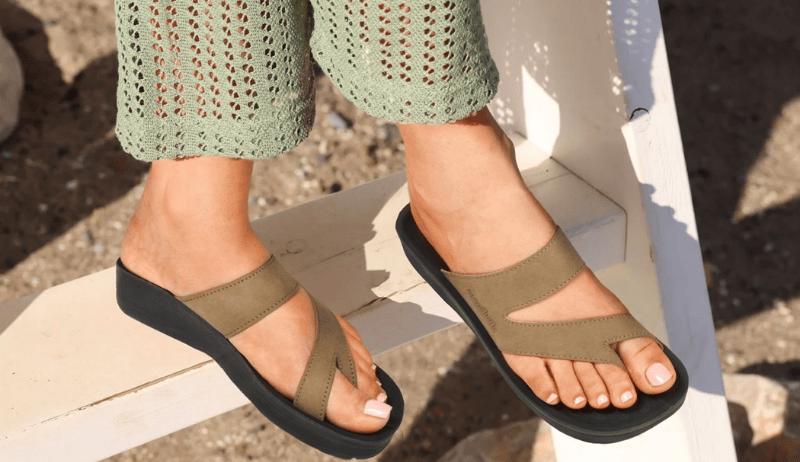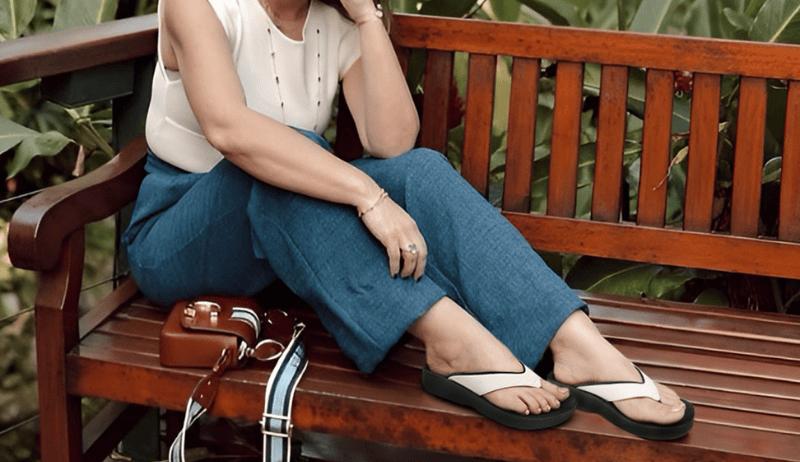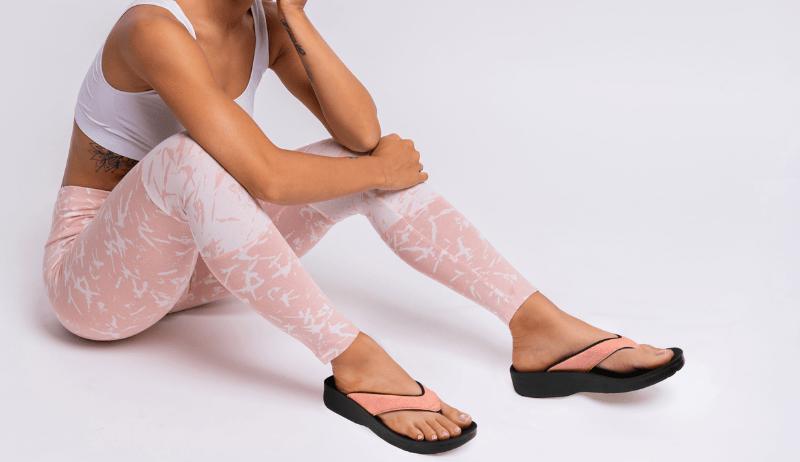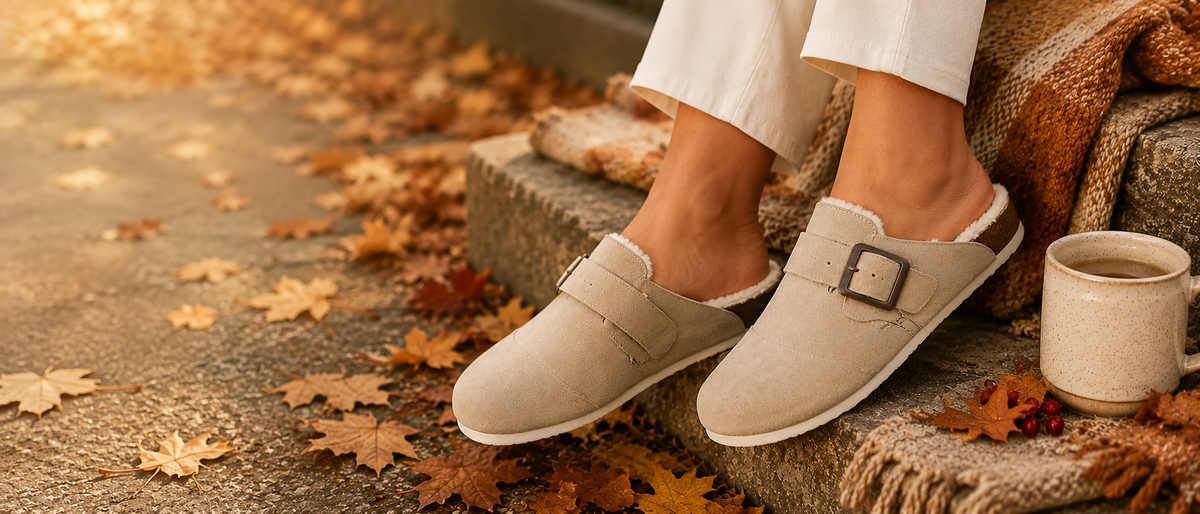
Somewhere around the third week of September, sandals stop making sense but boots still feel like overkill. That in-between stretch is exactly where clogs quietly do their best work, structured enough for a cool morning, open enough to breathe through a warm afternoon, and fast enough on and off that you never think twice about grabbing them. This is why they earn a permanent spot in a fall rotation instead of a seasonal afterthought. If you want to see what is holding up right now, Aerothotic's clogs collection is a good place to start.

Quick answer: Clogs work for fall because they solve the one problem sandals and boots each fail at separately. A sandal has no structure for a cold morning and nowhere to put a sock. A boot is overbuilt for a 60 degree afternoon and slower to put on. A well-made clog, leather or suede upper, cork or orthotic footbed, deep heel cup, splits the difference: bare-footed when it is warm, sock-ready when it is not, and on or off in one motion either way. The material and footbed still matter more than the silhouette, a flat unsupportive clog is no better than a flat unsupportive sandal.
Did you know? Clogs have a longer history than you'd think
- Clogs are one of the oldest shoe styles still worn today, with wooden versions showing up in Europe as far back as the 1300s, particularly in the Netherlands.
- The word "clog" comes from an Old English term for a block of wood, referring to the thick wooden sole early versions were carved from.
- Dutch klompen were traditionally carved from a single piece of willow or poplar and were worn as sturdy work shoes in farms and factories.
- Swedish clogs (traskor) with a wooden sole and leather upper became a fashion staple in the 1970s after gaining popularity across Europe and the United States.
- Modern comfort clogs owe much of their structure, a contoured footbed and deep heel cup, to orthopedic shoe designs developed for people who stand all day.
The fall footwear gap nobody talks about
Most footwear advice treats fall like a hard cutoff, sandals until a certain date, boots after it. Real weather does not work that way. A single week in October can swing from a 68 degree afternoon to a 44 degree morning, and neither a beach sandal nor a winter boot handles that whole range comfortably. The gap between them is real, and it lasts longer than most people plan for. We map out the earlier and later ends of that stretch in our fall sandals guide, which is worth reading alongside this one if you are building a full rotation rather than a single pair.
What a clog gives you that a sandal cannot
A sandal's whole design depends on warm skin and dry ground. Take either of those away and the open sides and toe post stop being a feature. A clog keeps the same one-motion convenience, no laces, no buckles to fight with, while adding a closed toe box and covered sides that hold in warmth and keep out wind. That structure is also what makes room for a sock, something almost no sandal can do without feeling wrong. Aerothotic's Atlas leather clog is built around exactly this shift, a plush cork footbed, deep heel cup, and suede leather upper that still slips on as fast as anything you wore in July.
"Finally sandals I can wear all day without heel pain."
— Sarah M., verified Aerothotic buyer
Not just any clog earns a spot in the rotation
The silhouette gets the credit, but the footbed does the actual work. A flat, unstructured clog with no arch contouring offers roughly the same support as the cheapest flip flop in your closet, it just looks warmer. What actually matters is a contoured footbed, a deep heel cup, and enough cushioning that a full day of walking does not undo the benefit of switching seasons in the first place. If arch support is the priority, Aerothotic's arch support sandals and clogs collection filters specifically for that, rather than making you check every product page by hand.
Where clogs beat both sandals and boots
It is not that clogs are better than sandals or boots in every category, it is that they are the only one of the three built for exactly this window. A sandal loses to weather. A boot loses to convenience and breathability, lacing up or zipping in for a five minute errand feels disproportionate, and feet run hot inside them well before it is actually cold enough to need that much insulation. A clog gives up a little of each extreme to stay useful across the widest range of fall days. Once you are ready to move fully into boot territory, our guide on transitioning clogs from fall to winter covers exactly when that handoff makes sense.
Sandals vs clogs vs boots for fall
| Feature | Sandals | Clogs | Boots |
|---|---|---|---|
| Speed on and off | Fastest | Just as fast | Slowest, laces or zips |
| Works with socks | Rarely | Yes | Yes, expected |
| Breathability | Best | Good | Warmest, least breathable |
| Light rain | Poor protection | Handles it reasonably | Best protection |
| Best for | Warm afternoons | The whole fall window | Cold, wet, or snowy days |
What to actually look for in a fall clog
Skip anything with a flat, unlined footbed or a stiff synthetic upper that will not flex through daily wear. Suede or full-grain leather ages better and resists light moisture, a cork or orthotic footbed distributes pressure instead of concentrating it under the heel, and an adjustable strap keeps the fit secure as you move between bare feet and socks. If you want that checklist confirmed rather than assumed, Aerothotic's APMA approved styles have already been reviewed by a panel of podiatrists against criteria like these.
Clogs are not a trend item that happens to look seasonal, they solve a specific problem that sandals and boots each fail at from opposite directions. Get the footbed right and the silhouette does the rest, structure when mornings turn cold, breathability when afternoons do not, and none of the friction of lacing up for a five minute errand. Ready to see what is available? Browse Aerothotic's clogs collection and find the pair built for exactly this stretch of the year.
Related reads
- Fall sandals guide
- Transitioning clogs from fall to winter
- Back to campus footwear guide
- Why arch support matters
- What podiatrists recommend
Frequently asked questions
Are clogs actually warm enough for fall?
A leather or suede clog with a lined footbed handles most fall temperatures fine on its own, and adding a sock underneath extends that range further into cooler mornings without needing to switch to boots.
Can you wear socks with clogs?
Yes, and it is one of the main reasons clogs work through the fall transition. Unlike an open sandal, a clog's closed sides and covered toe box accommodate a sock comfortably, which most sandals cannot do without feeling awkward.
Are clogs better than boots for everyday fall wear?
For most of fall, yes, since clogs slip on and off in one motion, breathe better than a boot, and still handle mild rain and cooler mornings. Boots make more sense once temperatures drop further or snow becomes a regular factor.
Do clogs offer enough arch support?
It depends entirely on the construction. A clog built with a contoured cork or orthotic footbed and a deep heel cup offers real arch support, while a flat, unstructured clog offers about as much support as a flat sandal does.
Are leather clogs good in light rain?
Suede and full-grain leather resist light rain reasonably well and can be treated with a protectant spray for extra resistance. Neither is meant for standing water or heavy downpours, but for a damp fall walk they hold up better than most people expect.
Are Aerothotic clogs APMA approved?
Many styles carry the APMA Seal of Acceptance from the American Podiatric Medical Association, meaning a panel of podiatrists reviewed the design against criteria for supporting foot health, not just seasonal styling.