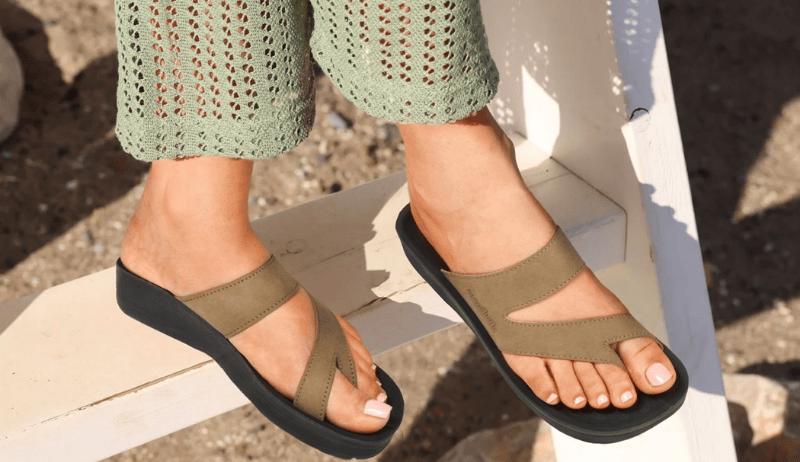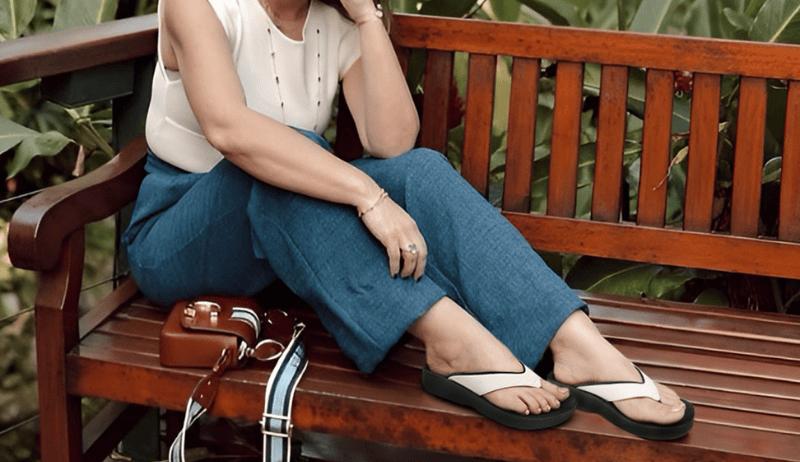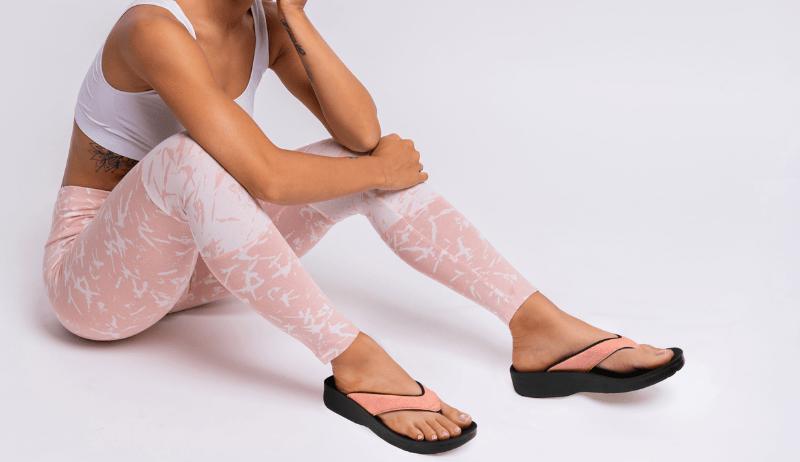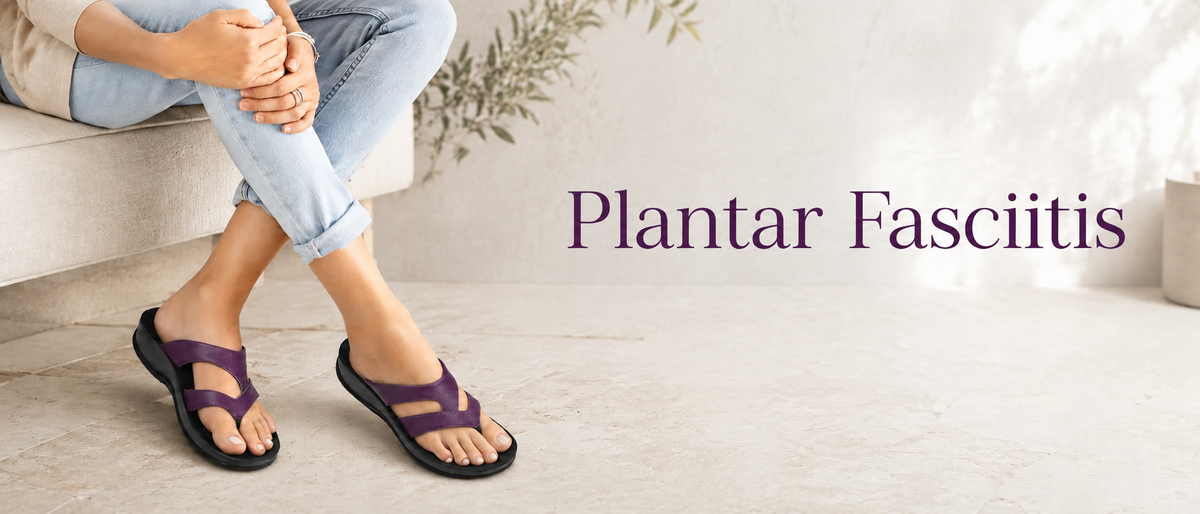
Ask five people managing plantar fasciitis whether flip flops help or hurt, and you will get five different answers, most of them confidently wrong in at least one direction. Some swear off flip flops entirely until they are fully healed. Others insist going barefoot is the real fix. Neither extreme holds up once you look at what is actually happening under the foot. This guide separates the myths from what the mechanics of the condition actually support, so you can stop guessing and start recovering with footwear that helps instead of quietly working against you. If you want to see what a recovery-appropriate flip flop looks like, Aerothotic's plantar fasciitis sandals collection is a good place to start.

Quick answer
Flip flops do not universally help or slow down plantar fasciitis recovery, the construction decides which one happens. A flat flip flop with no arch contour lets the foot roll inward with every step, which works against recovery. A flip flop built with a contoured arch, a deep heel cup, and a soft toe post can actually support recovery and be worn daily without the setbacks a flat sole causes. The category is not the problem, the flat sole is.
Why this question does not have a one-word answer
The question "do flip flops help or hurt plantar fasciitis" gets asked like it has a single answer, but it is really two different questions wearing the same sentence. What a flat, unsupportive flip flop does to a healing fascia is not what a genuinely supportive one does, and lumping them together is where most of the bad advice online comes from. The plantar fascia needs consistent support to stop the arch from overstretching while it heals, and whether a given flip flop provides that or actively works against it comes down entirely to the footbed underneath, not the fact that it is a flip flop at all. Our guide on whether flip flops are bad for your feet covers the general mechanics if you want the full picture.
Myth or fact: recovery edition
Myth 1 of 5
Myth
All flip flops slow down plantar fasciitis recovery.
What actual recovery support looks like
Once you strip away the myths, the standard for a recovery-safe flip flop is simple: a molded arch that stops the foot from rolling inward, a deep heel cup that stabilizes the heel bone on impact, and a soft, wide toe post that does not need gripping to stay in place. Aerothotic's Solace flip flop was built specifically with that standard in mind, a yoga-mat-style cushioned footbed with real arch contouring, carrying the APMA seal so the claim is backed by a panel of podiatrists rather than marketing copy alone.

“The only sandals I can wear all day without foot pain. Worth every penny.”
— Verified Aerothotic buyer, Solace
Hear it from podiatrists on video
If you would rather see this explained than read it, a couple of short podiatrist clips cover the same ground, what actually supports recovery versus what just feels comfortable in the moment.
Watch: a podiatrist on sandal support
Instagram video, opens in a new tab
▶Watch: podiatrist-recommended features
Instagram video, opens in a new tab
Where are you in recovery?
Tell us, and we will point you toward what matters most right now.
The role footwear plays alongside everything else
Footwear is not the only factor in recovery, and treating it as the single fix is its own kind of myth. Stretching, rest, and in more stubborn cases professional treatment all play a role alongside whatever you put on your feet. What footwear can do is stop actively working against the other efforts, a supportive flip flop will not heal the fascia on its own, but a flat one can undo a week of careful stretching in a single afternoon of errands. Our roundup of the best flip flops with arch support for women covers more options if Solace is not the right style for you specifically.
Recovery-safe vs recovery-slowing flip flop
Hover a row to see it highlighted.
| Feature | Recovery-slowing | Recovery-safe |
|---|---|---|
| Arch shape | Flat, allows rolling | Contoured, holds arch position |
| Heel cup | None | Deep, stabilizes heel bone |
| Toe post | Thin, forces gripping | Soft, wide, no gripping needed |
| Daily wear during recovery | Works against progress | Compatible with progress |
| How to identify it | Footbed compresses flat under thumb pressure | Footbed resists with visible arch shape |
The myths around plantar fasciitis and flip flops mostly come from treating an entire footwear category as either good or bad, when the real dividing line runs through the footbed of any individual pair. A flat sole works against recovery regardless of what it is called, and a genuinely supportive one can be part of your daily routine without setting you back. If persistent pain does not improve despite supportive footwear and consistent care, that is the point to bring in a podiatrist rather than keep guessing. Ready to see what recovery-appropriate support actually looks like? Browse Aerothotic's plantar fasciitis sandals and build a routine around what the mechanics actually support.
More recovery-friendly sandals to consider
If a full flip flop is not your style, the same footbed standard, contoured arch, deep heel cup, real support, shows up in other Aerothotic silhouettes too. A quick shortlist:


Related reads from 2026
- Best flip flops with arch support for women 2026
- Plantar fasciitis sandals for summer 2026
- Are flip flops bad for your feet?
- Aerothotic vs Archies for plantar fasciitis
- What flip flops podiatrists recommend
Frequently asked questions
Tap a question to expand the answer.