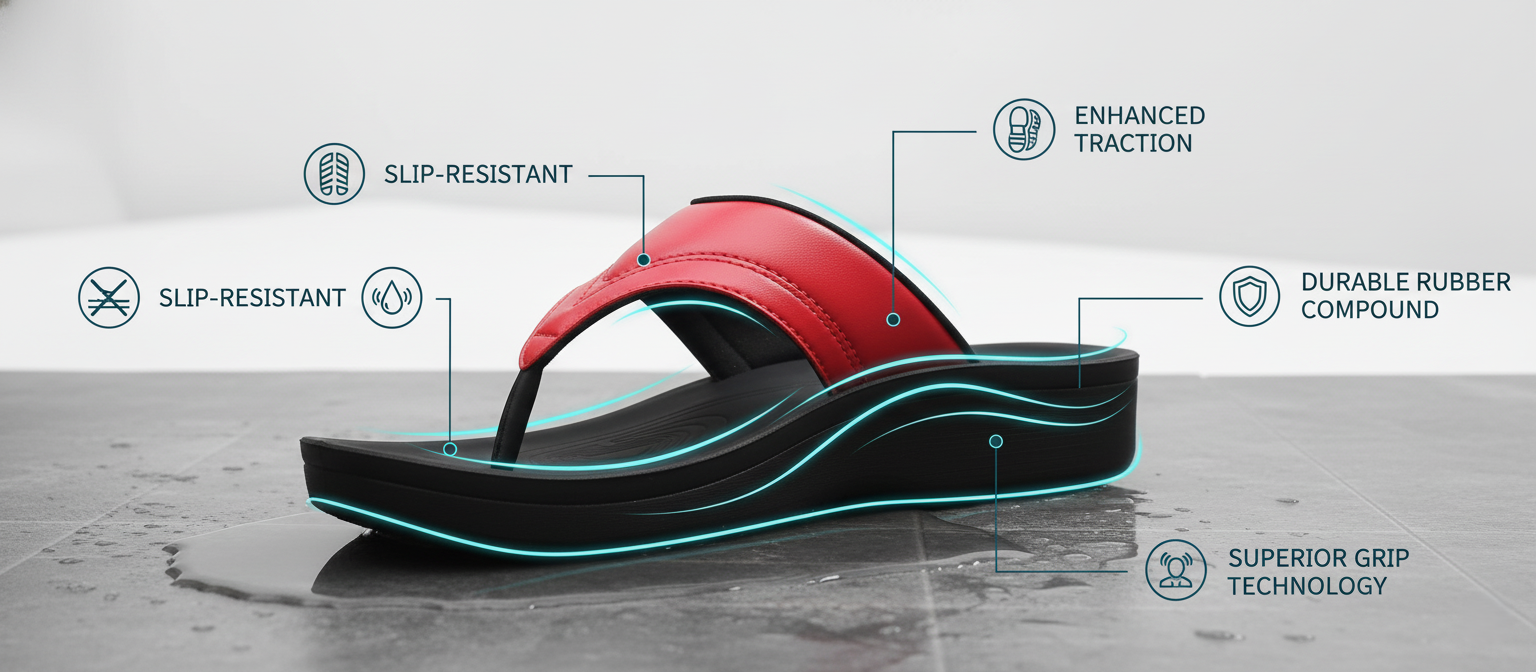
Flip flops are practically a summer staple. But if you have ever ended a long day in them with sore heels and aching arches, something is off.
You slip them on for a beach day, a quick grocery run, or a walk around the neighborhood and they feel perfectly fine at first. So are flip flops bad for your feet? The short answer is: it depends. The long answer is what this blog is here to explain.
Most flip flops on the market are designed for convenience, not biomechanics. That thin rubber sole between your foot and the ground may feel light and breezy, but it offers very little structure, cushioning, or support. Over time, that adds up to real discomfort and sometimes real damage.

One of the most common questions people ask is whether flat flip flops are bad for arch support, and the answer is almost always yes. A flat sole does not follow the natural curve of your foot. Instead, it forces your arch to work overtime with every single step.
Your plantar fascia, the band of tissue running along the bottom of your foot, takes on more strain than it should when there is no contoured footbed holding your arch in place. The result? That familiar tightness in the heel after a long day. That burning feeling along the arch. Sometimes even pain that radiates up into your ankles and calves.
If you have been wondering whether flip flops can hurt your arches, this is the mechanism at work. Your arch is not being supported, so it compensates in ways that lead to overuse and fatigue. If you already deal with conditions like plantar fasciitis or flat feet, the situation can get worse much faster. Explore the plantar fasciitis sandals collection at Aerothotic to understand what your feet actually need from footwear.
Let us be specific about the foot problems caused by flip flops, because they go beyond just general soreness:
Repeated strain on the plantar fascia from walking on flat, unsupportive soles is one of the leading causes of this painful heel condition.
Without adequate support, the arch gradually loses its ability to hold its shape, especially over long periods of wear.
The heel takes a hard landing with every step in a thin sandal. Over time, this can trigger inflammation or bony growths. Browse Aerothotic's heel spur sandals if this is a concern.
Gripping the toe post changes how your forefoot muscles work, worsening existing bunions or contributing to misalignment over time.
Flip flops offer zero ankle support, which increases the risk of rolling your ankle on uneven surfaces throughout the day.
Poor foot mechanics travel up the chain. When your feet are not moving correctly, your knees and shins absorb the imbalance.
Here is something a lot of people skip: flip flops actually have to fit correctly to function as intended. So how should flip flops fit? Run through this checklist before you buy:
The Perfect Fit, Step by Step
Your heel should sit fully on the footbed, not hanging off the back edge.
Your toes should not curl over the front of the sandal. If they do, go up a size.
The toe post should sit comfortably between your first and second toe without rubbing or pressure.
The straps should hold the sandal in place without you having to grip with your toes to keep it on.
No more than a finger's width of space between the footbed edge and the sides of your foot.
A poorly fitting flip flop forces your toes and foot muscles into unnatural positions just to keep the shoe on. That kind of constant muscular effort adds fatigue and significantly raises your injury risk.
Here is the good news: flip flops do not have to be bad for your feet. The problem is not the sandal style itself. It is the lack of engineering. A flip flop built with a contoured footbed, deep heel cup, and proper arch support can be just as foot-friendly as a more structured shoe.
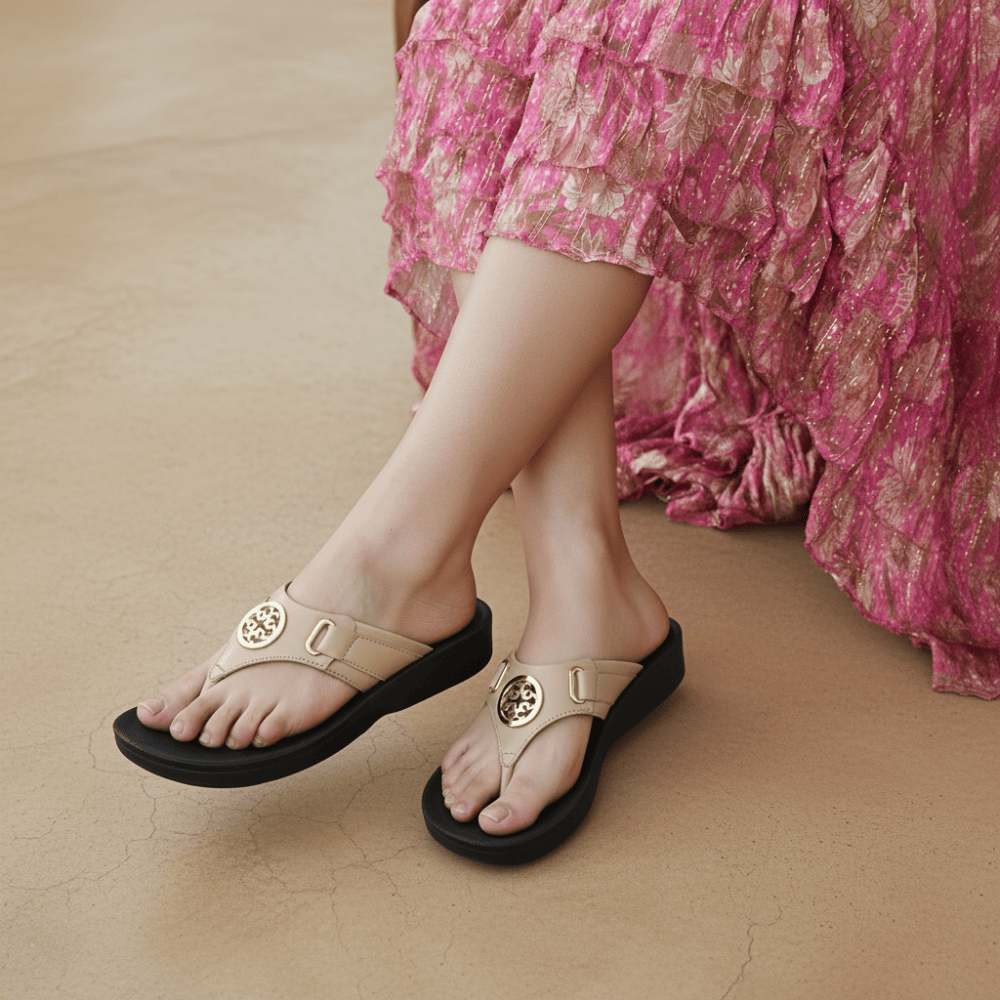
Hazel Women Thong Sandals
A thong-style sandal built on a podiatrist-approved footbed. Deep heel cup, contoured arch support, and all-day cushioning in a clean, everyday silhouette.
Shop Now →The good news is there are plenty of supportive options to choose from. Here are a few more worth knowing about, depending on what your feet need:

Podiatrist-approved with a contoured orthotic footbed, deep heel cup, and cushioned support built for long days on your feet.
Shop Now
Engineered to cradle your arch from the first step. Ideal for anyone dealing with flat feet, overpronation, or general arch fatigue.
Browse Collection
Built specifically to reduce heel and arch strain. The deep heel cup and orthotic footbed work together to take pressure off the plantar fascia.
Browse Collection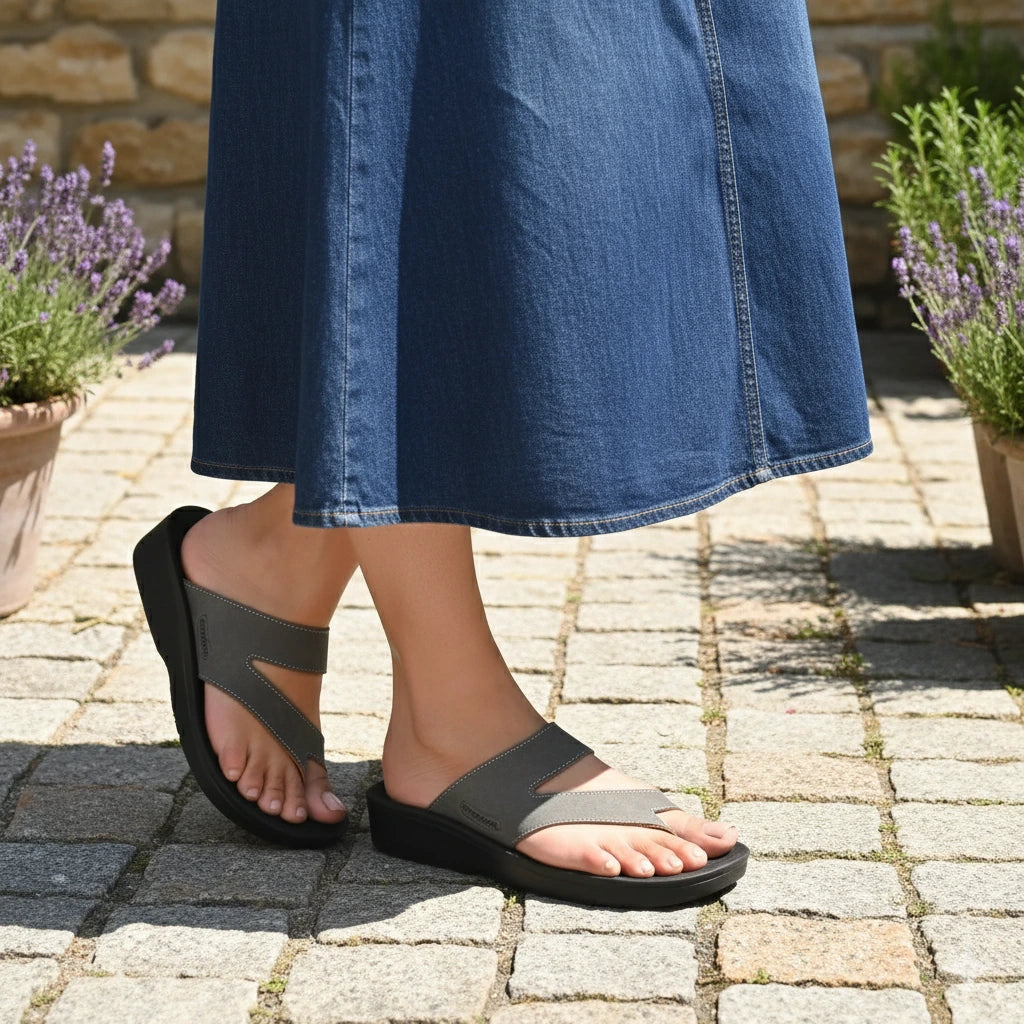
If your arches sit low or collapse under pressure, these sandals are designed to provide the structure your feet are missing, without sacrificing style.
Browse Collection
Thick, shock-absorbing cushioning under the heel pad helps absorb impact and reduce the inflammation that makes every step painful.
Browse CollectionThe problem is not the sandal style. It is the lack of engineering. Choose flip flops that work with your feet, not against them.
Flip flops are perfectly appropriate for short-duration, low-intensity use. Jumping in and out of a pool, walking from a beach towel to the water, or slipping on something quick inside the house are all reasonable use cases for a basic pair.
Where they become a problem is when people wear them for extended walking, travel, or all-day use without any support built in. If your flip flops are your go-to shoe for hours at a time, your feet will eventually tell you that something needs to change.
People managing flat feet especially need to be careful. The flat feet sandals collection at Aerothotic is a great starting point for finding footwear that accommodates low arches without forcing you to give up the open-toe look you love in warmer months.
The Bottom Line
Are flip flops bad for your feet? Standard flat flip flops, worn regularly and for long stretches, can absolutely contribute to arch pain, heel discomfort, and a range of other foot problems. The fix is not to throw out your sandals entirely. It is to be smarter about which ones you choose.
Look for flip flops with real arch support, a contoured footbed, and a secure fit that does not require your toes to grip. Make sure they fit your foot properly from heel to toe. And if you are already dealing with foot pain, do not wait for it to get worse.
Your feet carry you through every single day. They deserve footwear that actually supports that.