Which Is Actually Better?
The research says it depends on the walk you're about to take

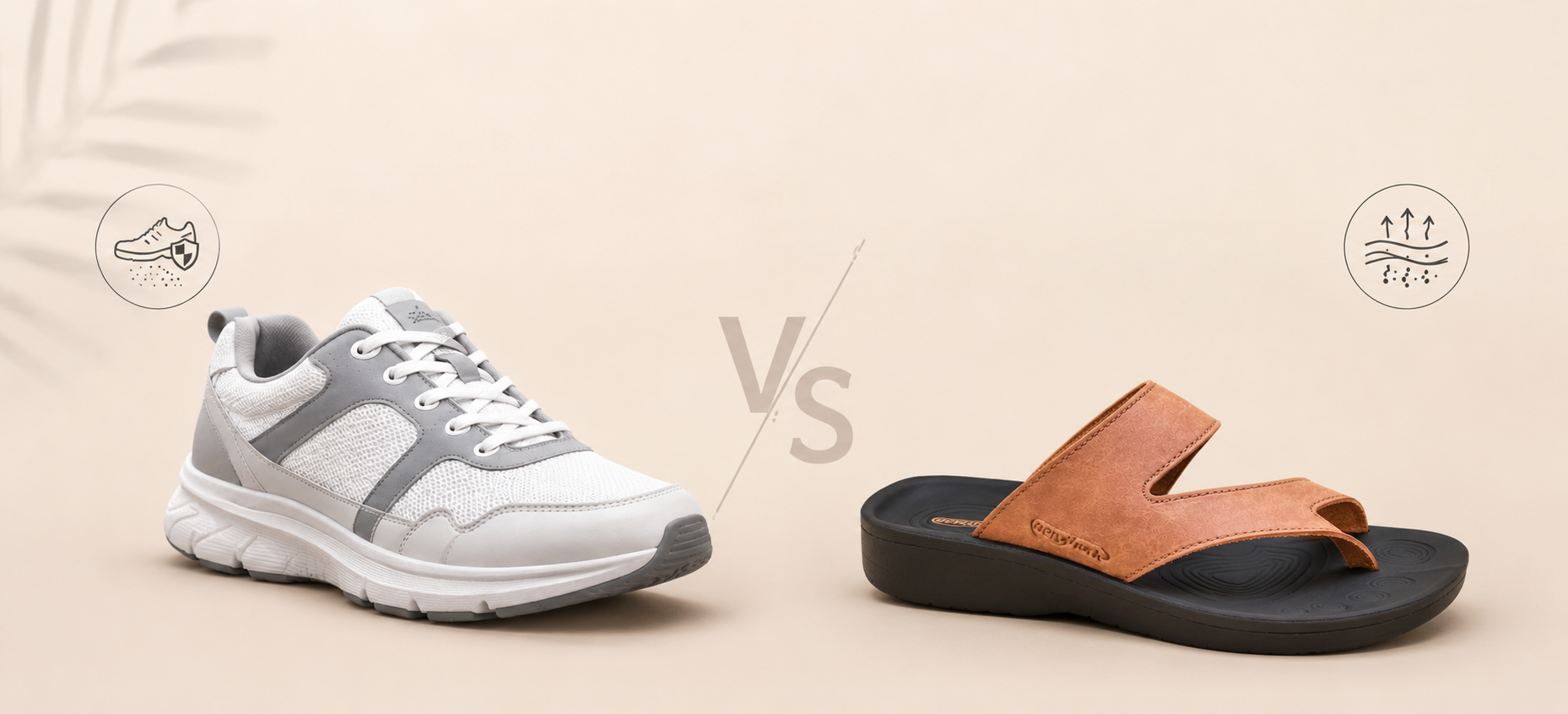
You're packing for a trip and staring at your closet. Shoes, or sandals? It seems like a small decision until your feet are three miles in and one choice is clearly winning. The honest answer is that neither option is universally better, the research shows they change your gait, your impact forces, and your comfort in different, measurable ways. Here is what the biomechanics actually say, and how to tell which one you need today.
What the Research Actually Shows
A gait biomechanics study comparing shoes, sandals, flip-flops, and barefoot walking found that shoes produced a smaller loading rate at initial impact and a greater dorsiflexion moment in early stance compared to sandals and flip-flops. In plain terms, shoes spread out the shock of each step more gradually, while sandals let more of that impact land at once. That is a real, measurable difference, not just a feeling. Separately, research comparing minimally-shod and conventionally-shod populations found that people who habitually wear less restrictive footwear, including sandals, tend to have stronger, stiffer foot arches, since the foot muscles are doing more of the stabilizing work themselves instead of relying on a rigid shoe structure.
Neither finding crowns an overall winner. It just means shoes protect you more from repetitive impact, while unstructured sandals ask more of your foot's own strength, for better and worse depending on your feet.
Head to Head, By the Numbers
When Each One Actually Wins
The Catch With "Regular" Sandals
Most of the research showing sandals perform worse than shoes was done using standard, flat flip-flops with no arch contouring, since that is what most people default to. A flat sandal offers close to nothing in the way of shock absorption or arch support, which is exactly why the loading rate looks higher in those studies. An orthotic-grade walking sandal with a contoured footbed, deep heel cup, and real arch support closes a meaningful part of that gap, since it is doing structurally similar work to a shoe's midsole, just without the enclosed upper. This is the difference between "sandals are bad for walking" and "flat, unsupportive sandals are bad for walking," and it is a bigger difference than most people assume.
Which One Fits Today's Walk?
Tap an answer for each question and watch the meter lean.
How far are you walking?
What's the terrain?
How's the weather?
Getting the Fit Right Matters More With Sandals
A shoe that is slightly too big is hidden by laces and a tongue that can be tightened. A sandal has nowhere to hide a bad fit, so sizing mistakes show up immediately as slipping heels, straps that dig in, or toes hanging off the front edge. Feet also swell over the course of a walk, more so in sandals since there is less structure holding everything in place, which is exactly why measuring properly before you buy matters more here than it does for closed shoes. If you are unsure how a style should fit, this guide to measuring for the perfect fit walks through exactly what to check, and Aerothotic's size chart is worth a look before ordering a new style, especially if you are between sizes.
What If You Have a Specific Foot Condition?
The shoes-versus-sandals question changes shape a little if you are also managing a specific foot condition, since some features matter far more than others depending on what you are dealing with.
- Plantar fasciitis: a deep heel cup and contoured arch matter more than the shoe-versus-sandal question itself. See our guide on habits that make plantar fasciitis worse or browse the plantar fasciitis sandals collection.
- Bunions: a wide, open toe box usually matters more than shoe versus sandal, since narrow shoes tend to aggravate bunions faster than an open sandal does. Our buyer's guide to sandals for bunions covers exactly what to look for, and the bunion sandals collection is built around those same features.
- Flat feet: arch support becomes non-negotiable in either category. The flat feet sandals collection and the arch support collection are both good starting points.
Building a Two-Pair Rotation
The most practical answer for most people is not choosing one category forever, it is having a good option in each. A supportive walking shoe for long, uneven, or high-mileage days, and a properly built orthotic sandal for shorter, hotter, or more casual ones. Rotating between two pairs also gives each one time to fully dry out and recover its cushioning between wears, which extends the life of both. If you are starting that rotation from scratch, the best sellers collection is a reasonable place to see what holds up best for other walkers, and the new arrivals page covers the latest styles if you want more options to compare.
A Few Walking Sandals Built To Compete
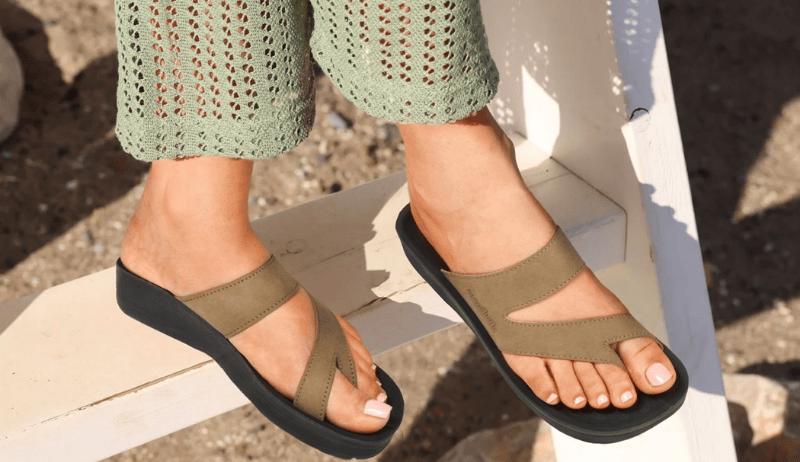
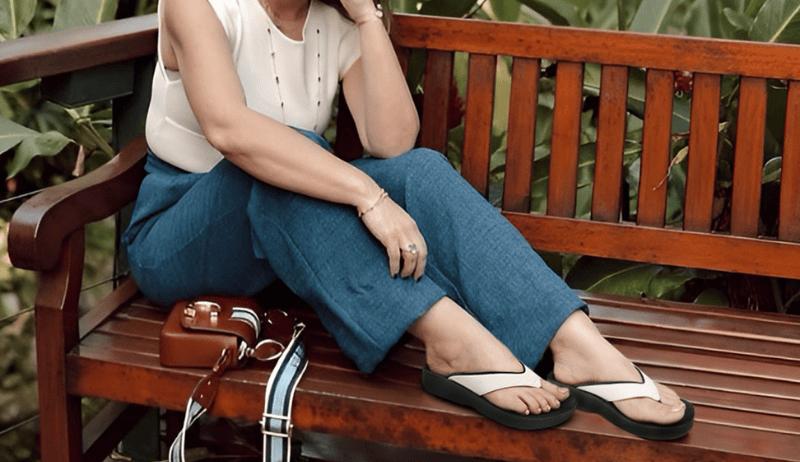
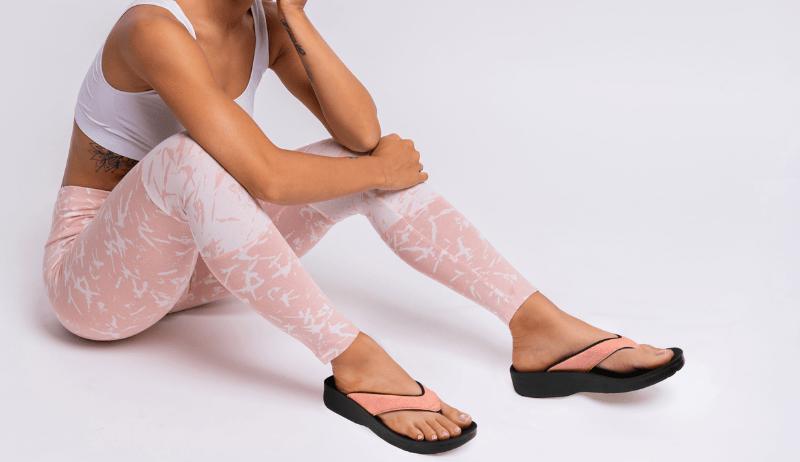
These three close the gap the research points to, contoured footbeds and real arch support, so you are not choosing between comfort and protection.


Flumen Arch Support Flip Flops
An ergonomic footbed built for exceptional arch support on longer walks.
Aerothotic footwear is APMA accepted, meaning it has met the American Podiatric Medical Association's criteria for promoting good foot health. This is a helpful reference point when comparing footwear, not a substitute for medical advice.
Dealing with heel pain specifically? See our breakdown of 7 everyday habits that make plantar fasciitis worse before you decide between shoes and sandals.
Frequently Asked Questions
Are walking sandals as good as walking shoes for long walks?
For walks longer than 3 to 4 miles, walking shoes generally offer more consistent shock absorption. A well-built orthotic sandal narrows the gap but most people still notice more fatigue on very long distances in sandals.
Why do my feet hurt more in flip-flops than sneakers?
Standard flip-flops have a flat, thin footbed with no arch contouring, so the foot has to work harder to stabilize itself with each step, which is exactly what gait research on footwear loading rates has found.
Are sandals better for foot health than shoes?
It depends on the sandal. Research on minimally-shod populations found stronger foot arches associated with less restrictive footwear, but that benefit applies to well-designed sandals, not flat, unsupportive ones.
How often should I replace walking shoes versus walking sandals?
Walking shoes typically need replacing every 300 to 500 miles, or about every 4 to 6 months for daily walkers. Sandals do not wear the same way, but a contoured footbed should still be checked periodically for flattening.
Are sandals okay for walking with bunions?
Often better than closed shoes, since an open toe box removes the side pressure that narrow shoes place directly on the joint. Look for a wide, strap-free front rather than thin straps positioned right over the bunion.
Do I need different sandals for flat feet versus a normal arch?
Yes, generally. Flat feet benefit from firmer, more structured arch support to compensate for the arch's own reduced stiffness, while a normal or higher arch has more flexibility to work with a slightly softer footbed.
Related Reads
The real answer to "shoes or sandals" is not one or the other forever, it is knowing which one fits the walk in front of you. Long, uneven, all-day on your feet, reach for the shoe. Hot, short, want to feel the air, reach for a sandal that is actually built to support you, not just cover your feet. Whichever category you're shopping, the full comfort sandals collection and arch support styles are both good places to start.
Find Your Next Walking Sandal
Contoured footbeds, real arch support, and all-day comfort, built to hold up to actual walking.
Shop All Comfort Sandals