A clear, practical look at what actually helps a bunion feel better in sandals, and what to avoid completely.

Quick answer
The best sandals for bunions have a wide, open toe box, soft adjustable straps that sit away from the joint, a contoured footbed, and real arch support. Anything narrow, stiff, or flat will make the pressure worse, not better.
A bunion changes the math on what your feet can comfortably wear, and most regular sandals were never designed with that bump in mind. The straps sit in the wrong place, the toe box is too narrow, and what should feel breezy ends up rubbing and aching by midday. The good news is that the right pair does exist, it just needs a few specific features working together. Our bunion sandals collection was built around exactly this problem, but the same principles apply whether you shop with us or anywhere else.
What a Bunion Actually Is
A bunion forms when the joint at the base of your big toe shifts out of alignment and pushes outward, creating that firm bump along the inside edge of your foot. It tends to develop gradually, often over years, and gets worse with footwear that compresses the front of the foot. Genetics, foot structure, and years of narrow or pointed shoes all play a role. None of that is something a sandal can fix on its own, but the right pair can take a real amount of daily pressure off the joint, which is where footwear choice actually matters.
It is also worth noting that bunions rarely show up alone. Flat feet and overpronation often go hand in hand with bunion development, since the same instability that lets your arch collapse also lets your forefoot drift out of position over time. That is part of why the same sandal features that help bunions, a contoured footbed and proper arch support in particular, tend to help a whole range of related foot issues at once.
What to Look For in Bunion-Friendly Sandals
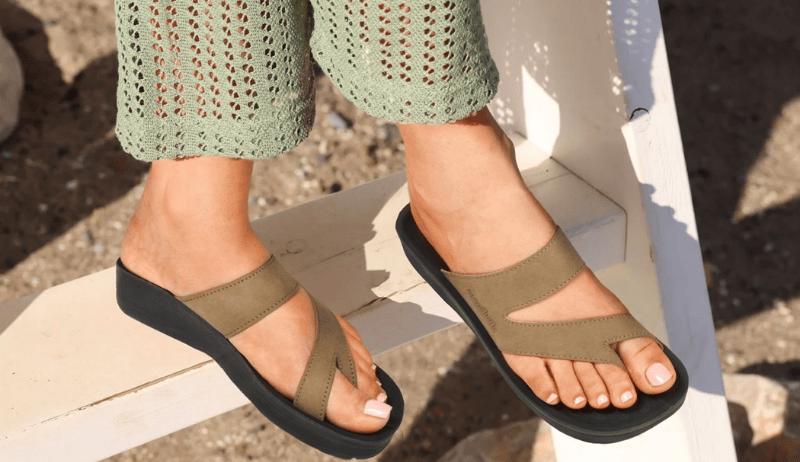
Four features do almost all of the work here, and they all show up together in well-designed orthopedic sandals. A wide, open toe box gives the joint room instead of squeezing it. Soft, low-friction uppers (suede, leather, or a soft synthetic) won't dig into the bump the way stiff straps do. A cushioned, contoured footbed protects the area from impact, and proper arch support keeps your weight distributed evenly so the forefoot isn't absorbing more pressure than it should.
Wide Toe Box
Soft Uppers
Adjustable Straps
Cushioned Footbed
What to Avoid If You Have Bunions
A few common sandal features consistently make bunion pain worse, and they are worth ruling out before you buy anything.
Narrow or pointed toe boxes that compress the forefoot and press directly on the joint.
Thin straps positioned right across the bunion, where they will rub with every step.
Flat, unsupportive soles that let your weight shift forward onto an already strained joint.
Any heel height beyond a slight lift, which pushes more body weight onto the forefoot.

Regan Split Toe Sandals
A split toe design that lets the forefoot splay naturally instead of compressing it.
Shop Regan →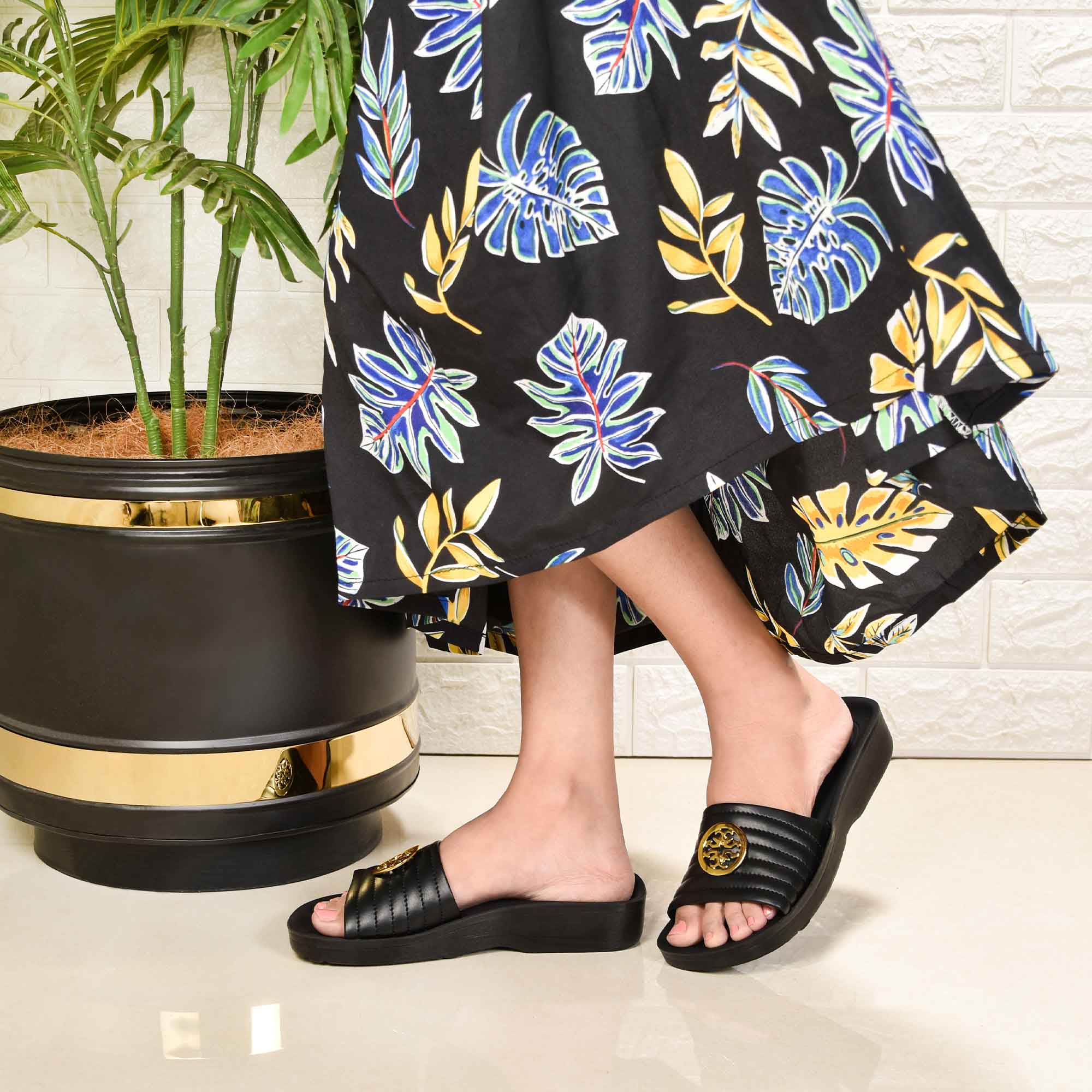
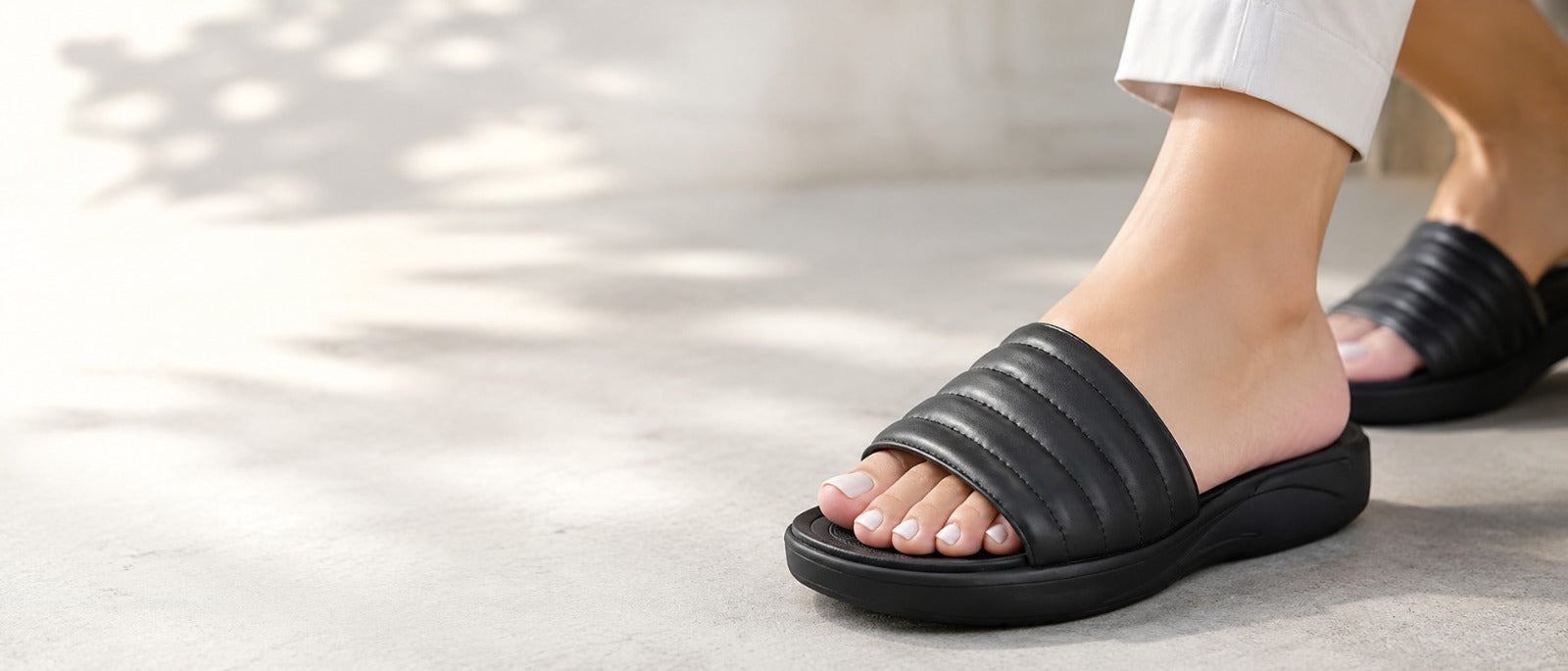
Otis Orthopedic Slides
An open, strap-free slide that keeps any pressure entirely off the joint.
Shop Otis →Living With Bunions: Small Habits That Help
Footwear does most of the heavy lifting, but a few daily habits make a real difference alongside it. Non-medicated bunion pads can reduce direct friction inside any sandal. Rotating between two pairs gives a footbed time to decompress instead of compressing the same spot every day. Icing the joint after a long day on your feet helps with swelling, and it is worth limiting high-impact activity on days when the area already feels irritated. None of this replaces a conversation with a podiatrist if the pain is worsening, but it does make daily wear noticeably more comfortable in the meantime.
When you are shopping, the APMA seal is a useful shortcut. It means a panel of practicing podiatrists reviewed the design and agreed it genuinely supports foot health, rather than just claiming to. Aerothotic's APMA approved styles are a reliable place to start if you would rather not evaluate every feature yourself. Two practicing podiatrists also walked through Aerothotic's sandals firsthand and shared their take in this podiatrist review, if you would rather see the reasoning than just take our word for it.
Common Questions
Are flip-flops bad for bunions?
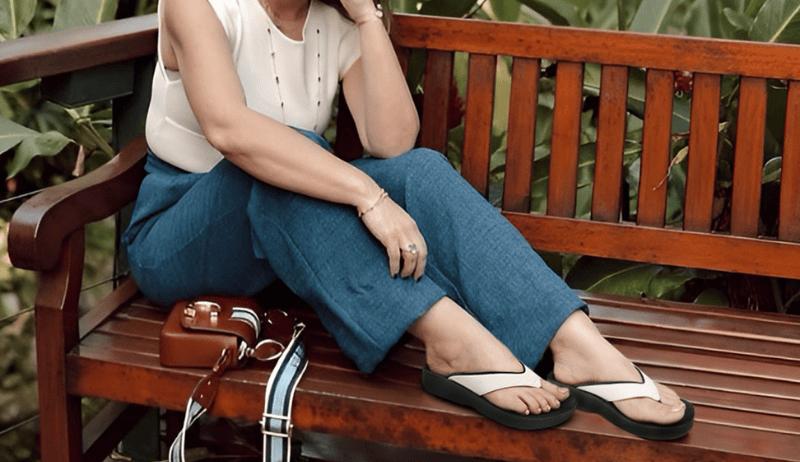
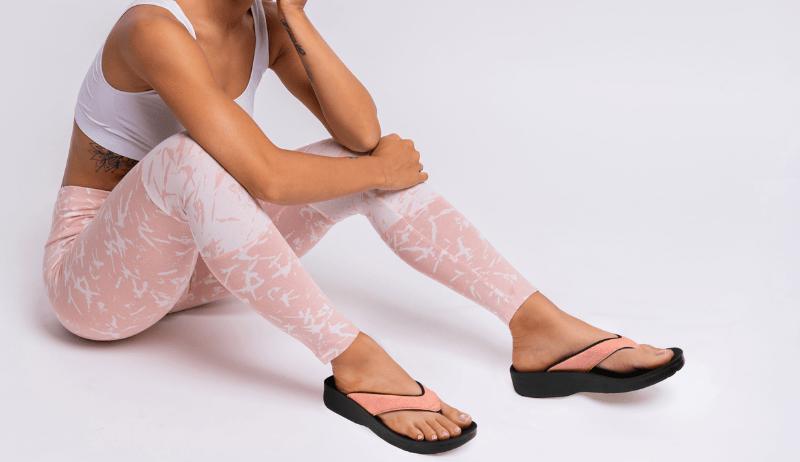
Standard flip-flops usually are, since the toe post sits close to the joint and there is no arch support to take pressure off the forefoot. A flip-flop with a wider toe box and built-in support avoids both problems.
Is walking barefoot better for bunions?
On soft, even ground, going barefoot for short stretches can help your foot muscles work naturally. On hard pavement or for long distances, it tends to add strain rather than relieve it.
What shoe feature matters most for bunions?
Toe box width consistently makes the biggest difference. A wide, open front matters more than almost any other single feature when it comes to daily bunion comfort.
Comfort That Actually Considers Your Feet
Wide toe boxes, soft straps, and real arch support, built into sandals you'll actually want to wear.
Shop Bunion Sandals Browse Arch SupportRelated Reads