If you've ever taken your first step out of bed in the morning and felt a sharp, stabbing pain in your heel, you already know how miserable plantar fasciitis can be. It's one of the most common foot conditions out there — and unfortunately, one of the most misunderstood. What a lot of people don't realize is that the sandals sitting right in their closet could be quietly making things worse every single day.
So before you slide on your favorite pair of summer sandals, let's talk about which styles to avoid, why they're so damaging, and what your feet actually need to heal.
First, What Is Plantar Fasciitis?
For those who are newly diagnosed or just connecting the dots, what is plantar fasciitis? Simply put, it's inflammation of the plantar fascia — a thick band of tissue that runs along the bottom of your foot, connecting your heel bone to your toes. When that tissue is overstretched, strained, or overloaded, tiny micro-tears develop, causing pain that typically feels worst in the morning or after long periods of rest.
Plantar fasciitis symptoms typically include:
- A stabbing or burning pain near the heel, especially with your first morning steps
- Stiffness and aching after sitting or sleeping for extended periods
- Discomfort that eases with movement but returns after long activity
- Tenderness along the arch or the bottom of the foot
The good news is that plantar fasciitis treatment usually doesn't require surgery. A combination of proper footwear, daily plantar fasciitis stretches, physical therapy, and adequate rest can make a real difference. But none of that helps much if you keep stepping into the wrong shoes.
If you're also noticing foot fatigue and achiness beyond the heel, it's worth checking whether these five signs of poor arch support apply to you — poor arch support and plantar fasciitis often go hand in hand, and addressing both together makes recovery significantly faster.
Why Some Sandals Aggravate Plantar Fasciitis
Not all footwear is created equal, and sandals — as much as we love them — are among the worst offenders for people managing this condition. Why some sandals aggravate plantar fasciitis comes down to one core issue: lack of structural support.
Your plantar fascia is under constant tension when you're on your feet. Supportive footwear distributes body weight evenly and reduces the load on that tissue. Sandals that are flat, thin, or flimsy do the exact opposite — they force your plantar fascia to absorb every bit of impact with every step. Over time, this doesn't just stall your recovery; it can actively deepen the inflammation and make plantar fasciitis symptoms significantly worse.
Plantar fasciitis also frequently co-occurs with other structural foot problems. If you deal with heel spurs or flat feet alongside it, the wrong sandal can compound all three issues at once — which is why footwear choice matters far more than most people realize.
The Sandal Types You Need to Avoid
These are the most common footwear mistakes that worsen plantar fasciitis — and the specific sandal categories behind each one:
Flat Flip Flops
Can flip flops worsen plantar fasciitis? Absolutely. Standard flip flops have no arch contouring, no heel cushioning, and force your toes to grip with every step — straining the fascia further. Not all are equal though: orthotic flip flops with built-in support are an entirely different story.
Paper-Thin Soled Sandals
Minimalist styles look neutral but deliver virtually zero shock absorption. Every heel strike sends the full force of impact directly into your plantar fascia, compounding inflammation with every mile you walk.
Completely Flat, Unsupported Sandals
Why unsupportive sandals hurt plantar fasciitis: a flat footbed causes your foot to pronate (roll inward), placing abnormal stress on the fascia. Even soft leather slides or cushioned flats can be guilty of this — always check for contouring beneath the surface.
No Heel Cup or Counter
Without a deep heel cup, your heel spreads outward on impact, removing the only protective barrier between your fascia and the ground. This is a feature many casual sandals skip entirely, and your feet pay the price daily.
Very High-Heeled Sandals
Extreme heel elevation shifts weight forward onto the ball of the foot, tightens the Achilles tendon, and disrupts natural walking mechanics — increasing plantar fascia tension from an entirely different angle.
Loose Backless Sandals
Sandals without a heel strap cause the foot to slide forward repeatedly, disrupting stride and forcing the plantar fascia to compensate in ways that quietly worsen over time. Backstrap sandals solve this problem directly.
What sandals should you avoid with plantar fasciitis? Any style combining flat soles, no arch contouring, poor heel containment, and a loose fit. Flat flip flops and thin-soled slides are particularly damaging because they tick multiple boxes at once. If you also live with metatarsal pain or bunions, those same sandal types will aggravate both conditions simultaneously.
Not All Flip Flops Are Created Equal
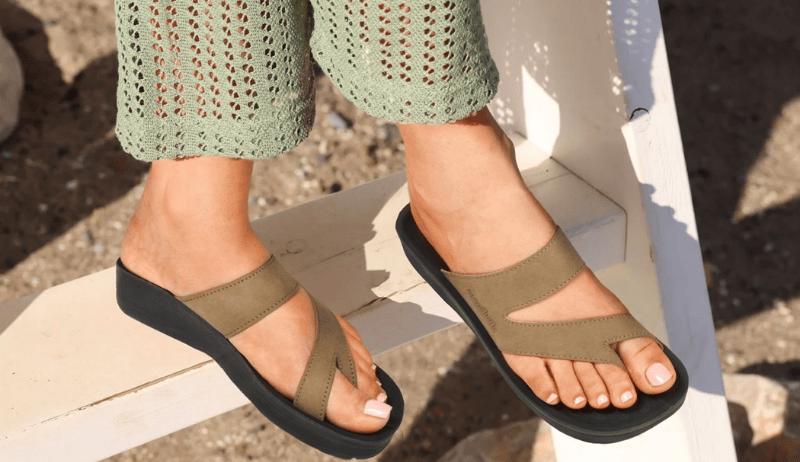
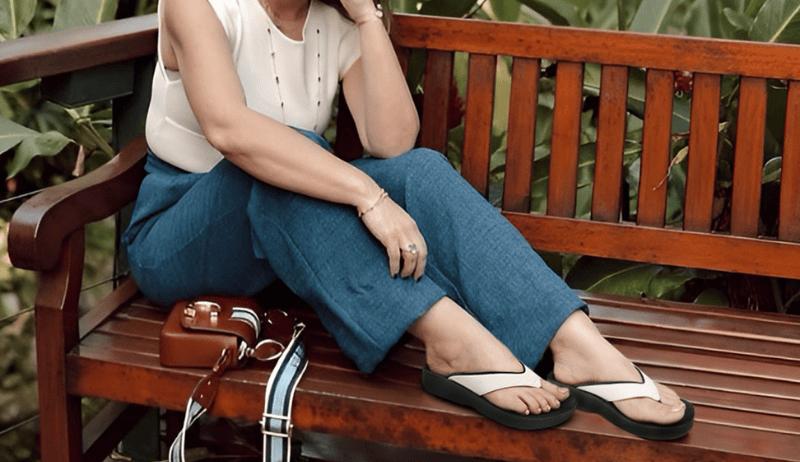
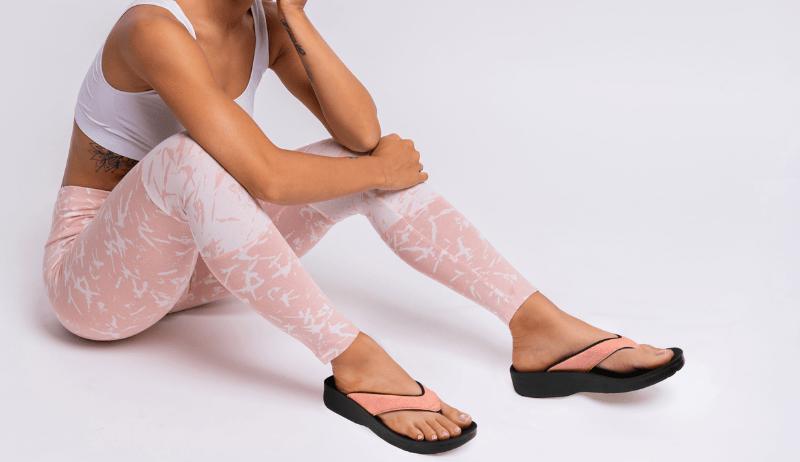
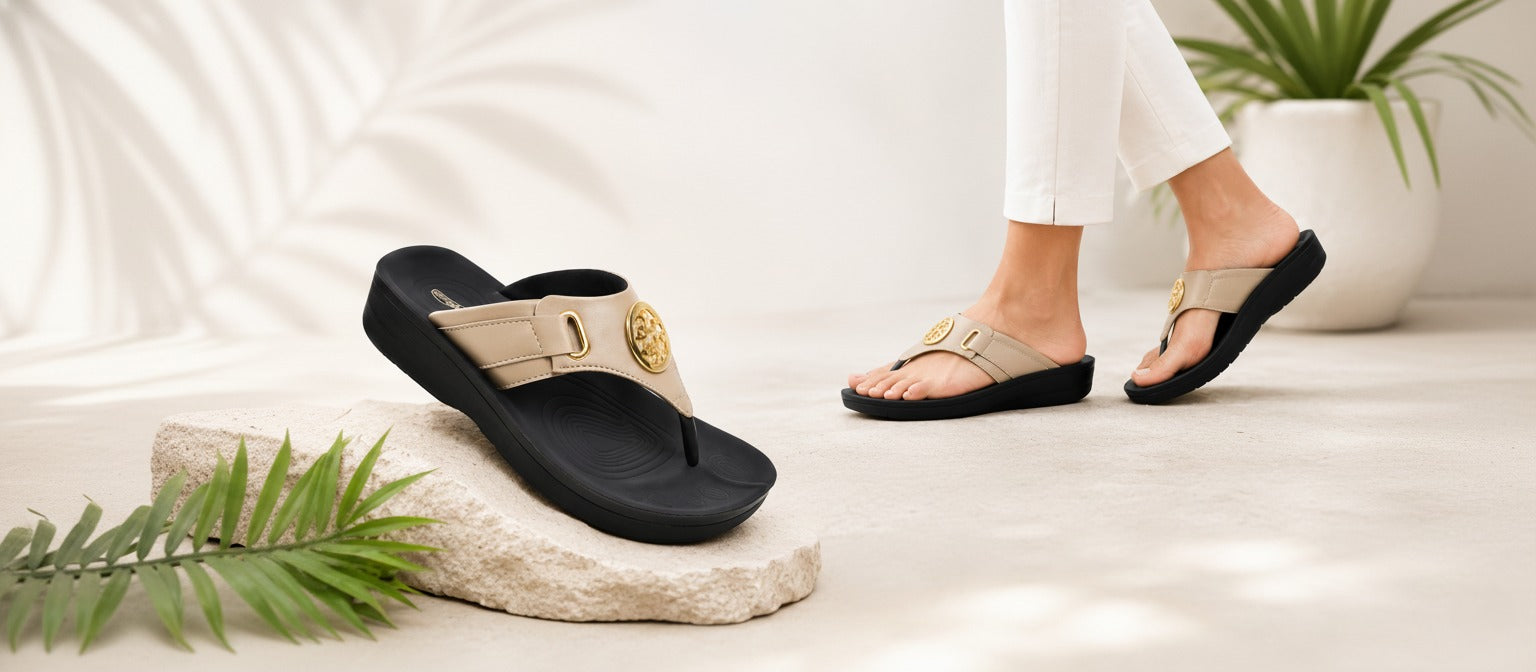
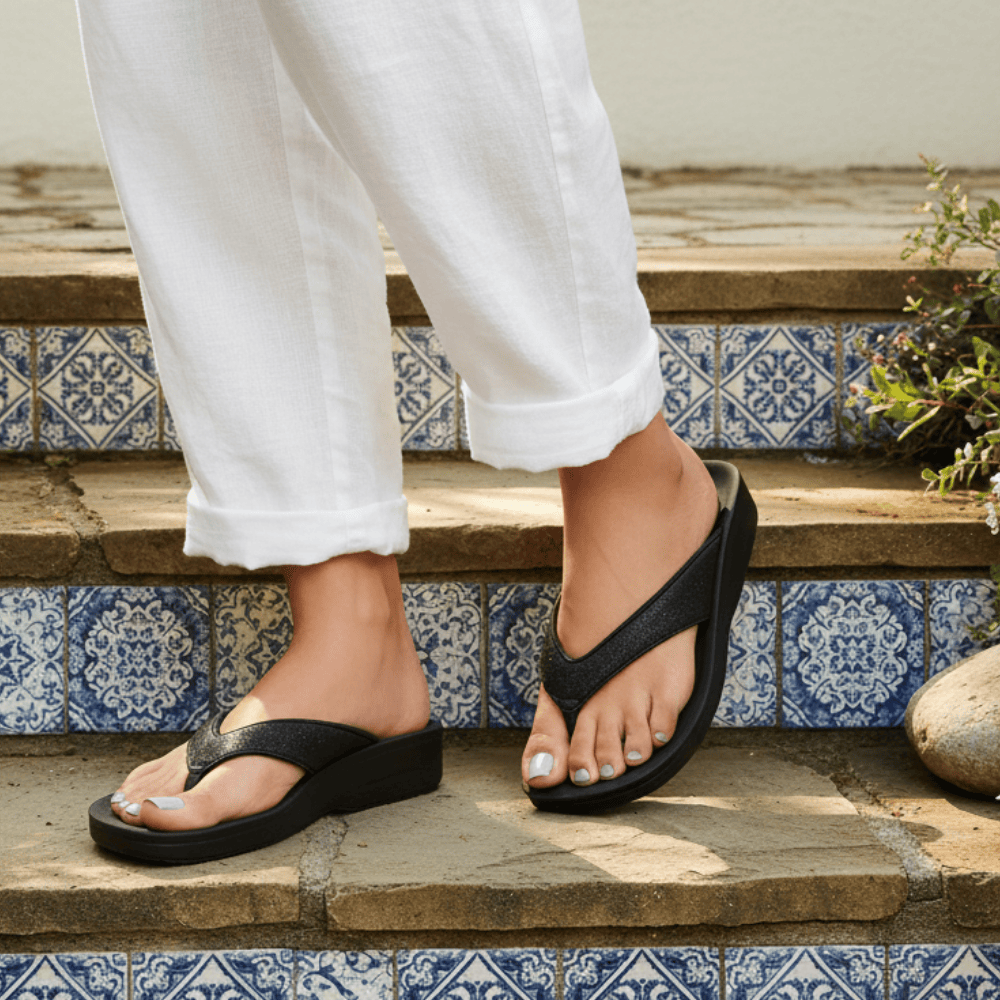
Aerothotic's orthotic flip flops are built with contoured arch support, deep heel cups, and cushioned footbeds — designed for people who still want an easy, breezy sandal without sacrificing foot health.
Browse Orthotic Flip Flops →What to Look for Instead
Knowing what to avoid is only half the equation. The right sandal can actively support your plantar fasciitis treatment by reducing stress on the fascia and keeping your foot in proper biomechanical alignment. Here's what actually matters:
- 🦶Deep heel cup — cradles and stabilizes the fatty pad of your heel, reducing fascia strain on every impact. This is the single most important feature to check for.
- 📐Contoured arch support — matches your foot's natural curve to prevent excessive inward rolling. The women's arch support collection is built around exactly this principle.
- ☁️Cushioned, thick midsole — absorbs shock before it reaches the plantar fascia, reducing cumulative strain throughout the day.
- 🔒Secure heel strap or back closure — keeps your foot locked in place, eliminating the compensatory toe-grip that strains the fascia with every step.
- 📏Slight heel elevation (1–2 cm) — gently reduces tension along the plantar fascia throughout the day, without the problems that come with extreme heights.
For breathable warm-weather wear, the thong sandal collection offers styles that keep airflow without sacrificing structural support. If you prefer something that slips on easily, look for an orthotic footbed rather than a flat one — that distinction changes everything. And don't overlook your indoor footwear: a proper supportive slipper matters just as much as your outdoor sandal, especially during those stiff, painful morning hours when the fascia is at its most vulnerable.
If you're unsure which style suits your foot shape, the guide to measuring for the perfect fit in slippers and slides walks you through exactly what to assess before buying — a small step most people skip that makes a meaningful difference in comfort and recovery.
Top-Rated Sandals for Plantar Fasciitis
Real arch support. Real cushioning. Designed by foot specialists.


Support Alone Isn't Enough
While choosing the right sandals matters enormously, plantar fasciitis treatment works best as a whole-body approach. Make sure you're incorporating daily plantar fasciitis stretches — especially calf stretches, towel stretches, and toe curls — which help relieve tension in the plantar fascia and genuinely accelerate recovery when done consistently.
It's also worth thinking about your footwear across the entire day, not just when you head out. Wearing unsupported shoes or walking barefoot on hard floors first thing in the morning — when the fascia is at its stiffest — can quietly undo a lot of progress. The Active Recovery collection is designed specifically for this window: gentle, supportive styles suited to post-activity wear and at-home use.
For those who want professional-level guidance, the podiatrist-recommended sandal guide covers exactly what foot specialists look for when advising patients — a useful reference whether you're managing plantar fasciitis or simply trying to protect your feet long-term. And if you want footwear that has already been vetted by professionals, the Podiatrist Picks collection takes the guesswork out entirely.
Plantar fasciitis is painful, frustrating, and slow to heal — but the wrong sandals make it so much harder than it needs to be. Flat flip flops, thin soles, unsupported footbeds, and loose straps all work against your recovery in ways that are easy to overlook. The sooner you switch to properly supportive footwear, the sooner your body can actually start healing.
Your feet carry you through everything. Give them the support they deserve.
Shop Plantar Fasciitis Sandals View Best Sellers