While most people assume that our feet swell more in the summertime due to longer days of heat and humidity, and that’s true—swelling often occurs during summer months. What you may not know is that feet swell in the winter months as well, sometimes to an even greater degree than in the summer. Most of us don't notice the swelling immediately in winter; however, swelling in winter feels different than in summer. Changes in moisture levels of your feet can create changes in temperature and humidity and cause swelling. You can feel the changes in your shoes (a feeling of tightness, heaviness, or slowness). There are several reasons for this unexpected swelling, explained in an everyday language that you can understand.
Cold Doesn’t Make Everything Smaller
People also think that cold makes things smaller because of the object's rigidity tightening and becoming smaller.
That certainly holds true in terms of our skin and shoulders and our whole body wants to retract or curl toward the center of our bodies during colder temperatures.
But where do you think cold affects our feet?
Cold is actually the only thing that causes a reaction in our feet that causes a tightening effect.
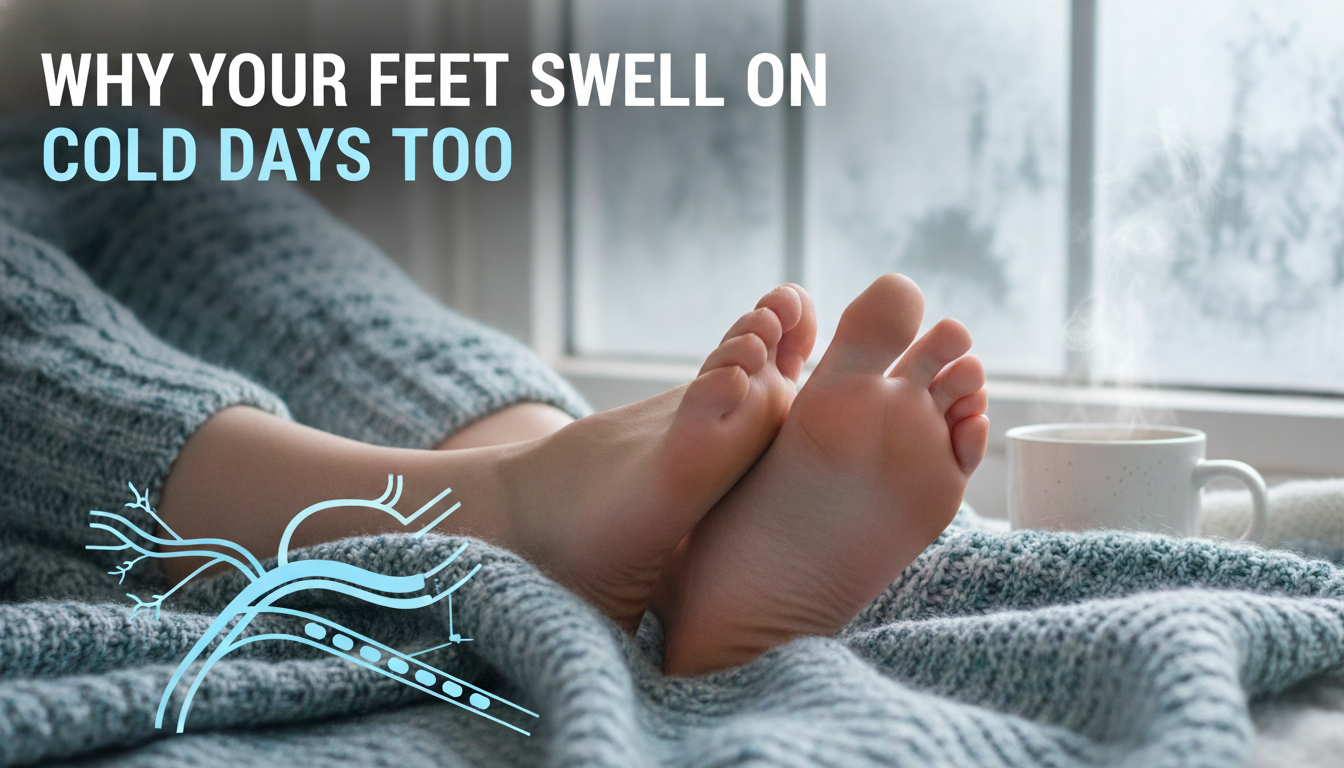
When we're cold, our bodies go into heat preservation mode, which means we take blood away from our feet to protect our organs.
Cold blood vessels are small because of reduced blood circulation and this slows down blood moving in our feet, meaning that blood will stay put, which leaves us with a full feeling in our feet:
- Shoes become too tight.
- Toes become uncomfortable.
- Ankles become stiff.
- Footsteps feel heavy.
It's not about how many times someone sees a visibly swollen toe.
It's about the inability of blood circulation to keep up with the demands of the body normally.
Winter Swelling Is Usually "Inside of Your Foot", Not Outside.
You can see the summer swelling. Your sandals leave impressions on the skin, and your ankle looks rounder than normal.
With winter swelling, it is hiding inside your foot; you can feel it more than you see it.
You will hear people say things like:
- "My foot feels swollen and heavy, like it's full."
- "My socks feel tighter on me in the afternoon."
- "My toes don't move as freely."
Cold temperatures create additional pressure on the soft tissues inside your foot:
The fascia and ligaments of the arch, the small spaces around your joints, and more.
Even though your feet may appear "normal", they are working harder than normal to keep themselves comfortable.
If you have any other conditions such as Plantar Fasciitis, Flat Feet, Metatarsal Pain or Heel Spurs, the winter will increase the amount of pressure in your sensitive areas.
Indoor Living Equals More Swelling
You would assume that because you spent all winter indoors, your feet would be protected.
A warm blanket? Cozy socks? Warm drinks? Less Walking.
As it turns out, your typical winter schedule is actually not doing you any favors.
Here is what you might not expect:
Extended sitting is one of the leading reasons for swollen feet.
In winter, we sit more.
- At work
- In our cars
- Sitting on our couches
- Laying in bed and scrolling through social media
When your feet are down and not moving, there is no movement of blood and therefore it causes a buildup of fluid around your ankles and feet.
This is why some wearers of compression socks can go to bed with normal legs but wake up with swollen feet.
Thick winter socks may actually do more harm than good
Many people are surprised to discover this.
Thick socks are intended to keep your feet warm, but too many people experience compression in the wrong places while wearing them instead!
Thick socks have the following characteristics:
1) They fit tightly around the ankle
2) They fit snugly in the middle of your foot
3) They are bulky across your toes
While thick socks will retain heat, they also trap heat and retain pressure - therefore, the combination of heat and pressure will cause swelling in your foot.
In particular, if you suffer from any of the following conditions:
1) Bunions
2) Hammer Toes
3) Morton’s Neuroma
The pressure of the thick sock will force your toes closer together, causing additional irritation in the winter months as compared to the summer months.
Footwear for Winter Aren't for Swelling of Feet.
Generally speaking, winter type shoes/footwear are very narrow, rigid, heavy, poorly vented and flat on the inside. Do not forget that these shoes/footwear are designed primarily for warmth, not foot mechanics; therefore, when you have to put your already very stiff, cold feet with limited blood flow into a pair of constricting winter type shoes, there is a strong possibility that you will also be creating excessive swelling of your feet.
The foot needs:
- Room to move
- Flexibility
- Good ventilation
- Proper arch support
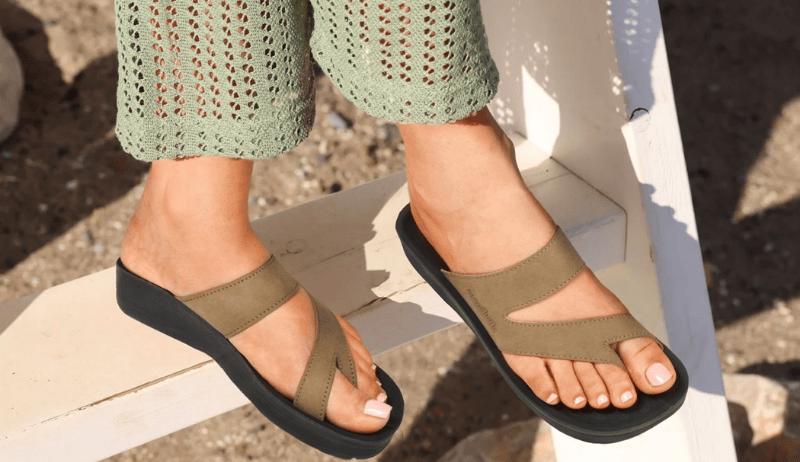
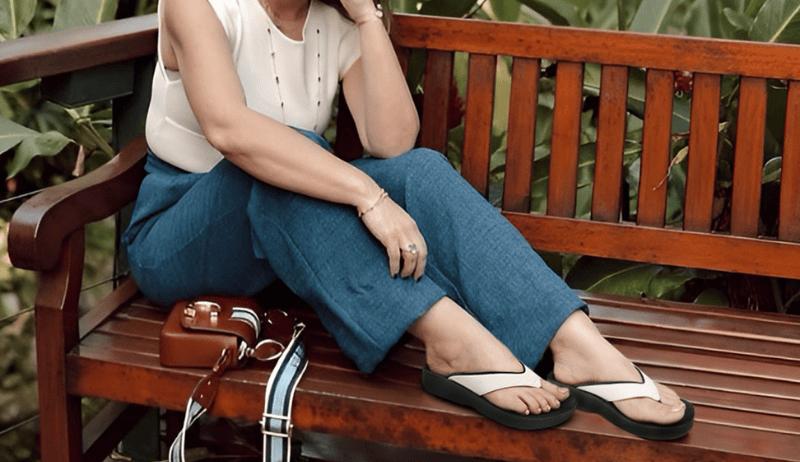
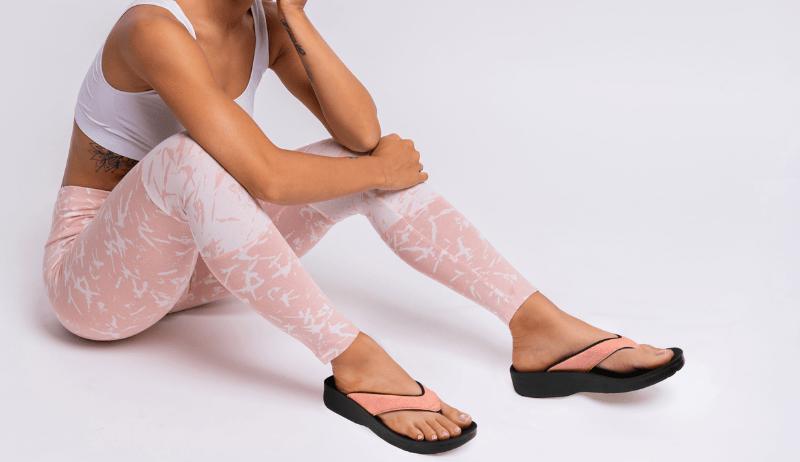
In general, winter type footwear falls far short of meeting any one of these characteristics. An orthopedic clog should be thought of as a type of footwear that most of us do not even know we need.
So How Can Orthopedic Clogs Help?
 As winter type footwear is becoming increasingly popular as a type of everyday footwear, it also tends to alleviate about half of all the hidden causes of foot swelling that most of us do not realize we have. Below, we will discuss in simple terms how orthopedic clogs help prevent all the hidden causes of foot swelling, without going into huge amounts of science with regards to combination anatomy.
- The Clog’s Comfort Restores your foot’s Space Left by Winter shoes.
- Winter shoes create the effect of squeezing your foot.
- Clogs allow your foot to have a free range of motion.
- A roomy toe box allows for your toes to naturally fan out, release any pressure, and allow blood to circulate.
- Just this benefit of a roomy toe box, will reduce up to 30 to 40% of the winter shoe tightness.
- Orthotic clogs also provide Arch Support, even though muscles may be tense and stiff from the cold.
Cold weather causes stiffness in the arch area of the foot.
If you have Flat Feet or sensitivity to the arch area of the foot, the tension on your foot is greater when the temperature is colder.
Orthopedic clogs are purposefully built to provide your foot with arch support, keeping your foot in the position it wants to be resting, while your muscles are too stiff to assist.
By doing this, it eliminates:
- Midfoot Swelling,
- Pressure on the Heel,
- Fatigue of the Arch
All of which typically occur throughout the day.
Control Winter's Inside Swelling
During winter months, yoo may notice that while the outside of your foot appears narrower than usual, you will see that inside of your foot appears wider due to swelling.
Clogs help with providing:
- Support under the heels (a must-have for anyone with heel spurs)
- Cushioned insoles that help cushion cold-sensitive metatarsals
- Support through gentle elevation and help move fluids through your legs.
- The inside of the foot is less irritated, relaxed, and congested.
You Can Slip Them On and Off With Ease
Swelling in winter is often fluctuating; sometimes in a few hours' time.
Clogs allow you to easily make micro-adjustments through the day.
Feeling Tight?
- Slip your foot out a little.
- Feeling Cold?
- Slide your foot back in.
- No bending needed. No extra pressure. Easy.
- This is why clogs are so common to people who experience:
- Slow blood circulation
- Cold feet or toes
- Swelling of the feet that comes and goes.
And Most Importantly: They Work for Indoors AND Outdoors
 The winter season is not about lengthy outdoor treks; instead, it is about:
- • a few quick grocery outings,
- • picking up the kids from school,
- • a quick trip to the porch,
- • walking through your office's hallway(s),
- • the kitchen of the home where people spend so much of their time,
- • all the hours of standing in your own home.
Clogs have fit perfectly into these routines; they don't create the suffocating pressure of boots or the flattening of the foot found in traditional house shoes.
Clogs are functional, but the most important thing to know is that they keep your feet comfortable during a time of year when we tend to avoid comfort.
To Sum Up: Winter Foot Swelling Can Be Quiet, but It is Real.
You might not notice how your feet become swollen in the winter, but they will be swollen because the cold typically causes swelling.
Because of the following factors:
- Slowly moving blood flow through the body,
- Stiffness of muscular and connective tissues,
- Bulkiness of thick socks,
- The restriction of your footwear because of tightness,
- The limited movement of your feet while indoor
Despite having cold days to worry about, winter is also an especially difficult time for our feet.
Orthopedic clogs are designed to allow for all the areas above that interfere with the proper functioning of your feet to be eliminated. Clogs provide ample room, support, cushion, and flexibility to your feet during the time of the year that we typically have the least amount of everything.
To conclude, winter does not have to mean cold, heavy, uncomfortable feet. Simply understand some of the surprising causes of discomfort and then select shoes that work with your specific winter activities.