Most individuals are quite amazed at how painful their feet become from something as normal as going to the grocery store. You might have gone for a longer walk on other days without experiencing any discomfort, and yet a simple errand somehow results in your arches burning, your heels aching, or your legs feeling exceptionally tired. This is not your imagination - quite the opposite, there are biomechanical reasons why grocery shopping is more painful than one would expect.
Grocery stores put the feet in a very difficult situation. The combination of hard floors, long aisles, sudden stops, and standing still at the checkout can result in extreme foot fatigue. Once you realize what these surfaces are doing to your body, you can very easily and effectively take some steps to ensure that you won't be sore after you've shopped.
This article explains the phenomena of pain, how the floor of a store contributes to the pain, and which footwear resolves the issue to a great extent - especially in people who suffer from sensitive feet, weak arches, or chronic heel discomfort.
1. Why Grocery Shopping Affects Your Feet More Than Other Activities

You could walk a great deal more in a mall or during your daily walk and still not feel that those activities are hard. However, grocery shopping is different because:
Walking On An Extremely Hard Floor
The majority of grocery stores have their floors made of polished concrete, tile, or vinyl composite. All of these options are very compact surfaces, which compress very little even under a heavy load. Thus, every step rebounds the force of the impact back into your feet instead of the floor absorbing it. This is why over the course of a grocery run, the number of times your feet are hit with a non-absorbed impact can reach thousands.
The Constant Changing of Your Pace
Typical walking or strolling aside, some activities need more from you and grocery shopping is one of them as far as highly nuanced movements are concerned. What is more, walking here is not only more complex but also involves more frequent changes in directions and thus in muscle groups. It is different in many aspects like those listed below:
- Stops to read labels
- Slowdowns due to another shopper passing
- Turning at the corner of the shelves
- Walking around temporarily empty spots on shelves
- Going back to the section where you forgot your purchase
This foot muscles stop-and-go pattern becomes even more dangerous because those muscles are usually undertrained and thus they get exhausted quickly.
More Time Standing Than You Think
The most difficult moments, however, are rarely the ones when you walk. Usually, they are the moments of standing in line. Long periods of standing lead to compression of the heel pad, raise the stress on the plantar fascia, and limit the foot's natural spring.
You Push Weight While Walking
Even when empty, the shopping carts add to the resistance that you have to overcome by pushing. When full, they not only require significantly more effort to be pushed but also make controlling the movement of the cart difficult. As a result, the demand for the foot's stabilizing muscles increases significantly, and, more often than not, your posture gets thrown forward making the balls of your feet take most of the weight.
Most people are usually not wearing supportive footwear
Quite a number of people would wear casual slides, flat sandals, or light sneakers when going to run their errands. Although such shoes could be decent enough on a soft indoor floor, they are not made to endure the surfaces of grocery stores.
Without the proper cushioning and arch support, the feet will tire quicker, and the pain will show up much earlier.
2. The Hidden Problem: Hard Floors That Don't Match Human Anatomy
We, humans, were created to walk on earth, sand, and grass, or any other naturally uneven surface. Our feet are provided with soft tissues that can absorb impacts, at the same time, the arches can store and return the energy.
Floors in grocery stores are very far from being a natural ground. Here is why they are considered problematic:
They are Rigid
Concrete and tile are materials with a compressive resistance of thousands of PSI. This means that for each step you take, these materials offer "zero cushioning".
They Increase the Pressure on the Heel
The heel pad is only designed to be compressed a little. On a hard floor, the heel pad compresses more than it is supposed to and thus, it takes longer to bounce back, which results in soreness.
They Flatten the Arch
When the surface is hard, the arch of the foot is forced to collapse more than it would normally be on a soft surface, especially if the footwear is not supportive.
They Amplify the Shock
If there is no cushioning, then hard floors throw the shock coming from the knee, hip, and lower back upwards. So, the discomfort you are feeling after shopping may not be just foot pain - only a part of the pain is coming from the foot, the rest can radiate through your whole body.
3. The Grocery Store Map of Foot Pain: Aisle-by-Aisle Breakdown
Knowing the places inside a store where the pain gets worse, can indicate the moments at which your feet require more support.
Produce section: Stopping and turning non-stop
The frequent stops and uneven turns of the pace heavily strain the stabilizing muscles of the arch which, in fact, are the main muscles along the foot that get depend on.
Main aisles: Long rigid walks
It is these main aisles that impose repetitive hard impacts on the feet working on a concrete floor, thus quite fast tiring the plantar fascia.
Frozen food area: Colder surface, stiffer stride
Cold floors lead to foot muscles tightening. Tight muscles get tired faster as well and thus heel soreness increases.
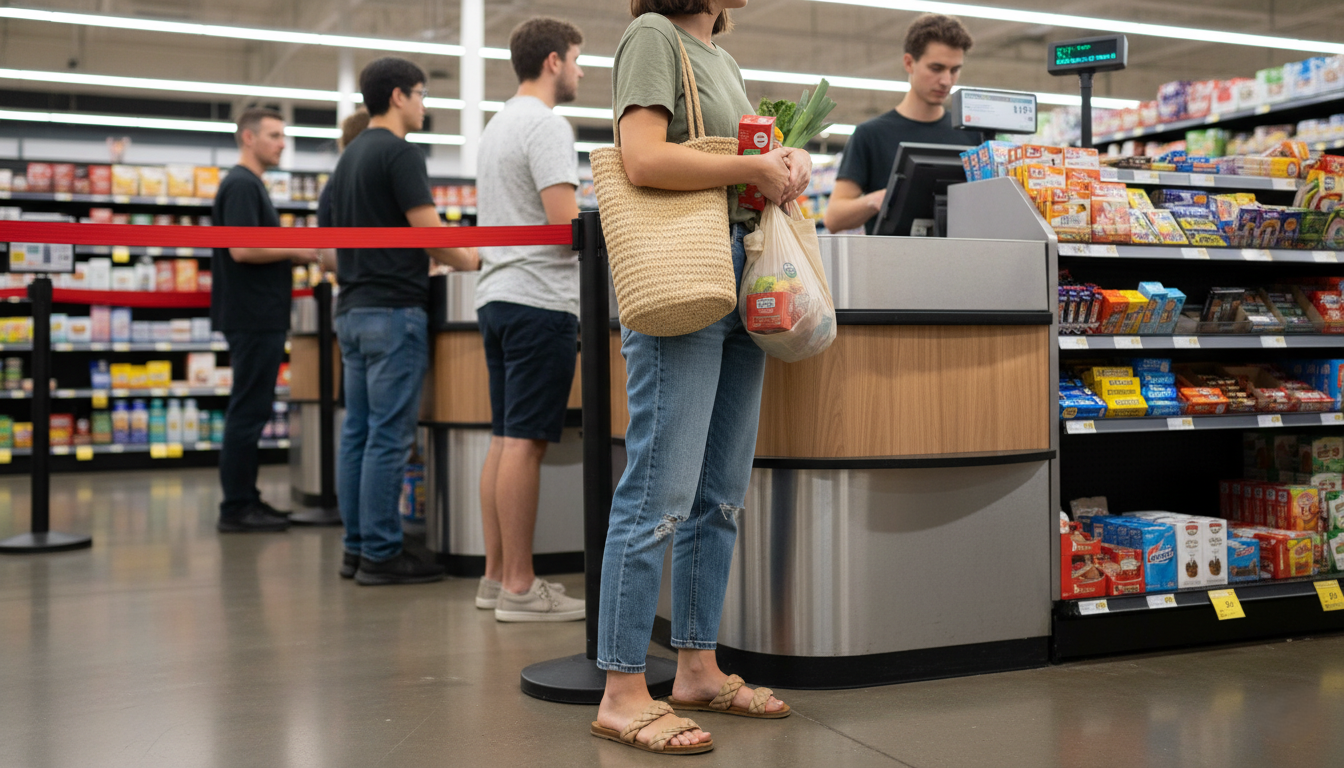
Checkout lane: The worst place for foot pain
Standing still puts more and more pressure on the heel and forefoot. This is the moment when the collapse of the arch becomes the most obvious one.
4. Why Some People Feel More Pain Than Others
Certain individuals with specific foot types are more vulnerable to hard surfaces than others.
Flat feet/weak arches
When the arch is lowered, and feet are flat, then the collapse on concrete happens much more easily, thus causing the stretching of the tissues and increasing the level of fatigue.
High arches
High arches are very poor in shock absorption as they are naturally very stiff.
Heel pain conditions
Persons suffering from plantar fasciitis or with heel spurs experience intensification of pain on hard floors.
Older adults
The thickness of the heel-pad is getting less with age thus the surfaces that feel hard are actually harder than they are.
People recovering from foot injuries
The tissues that are in the process of healing get tired quickly and need more support.
5. The Footwear Problem: Errand Shoes Are Not Built for Hard Floors
Most consumers pick fast slip-on footwear or simple open-toe shoes only because they are handy. However, these shoes frequently do not have the proper framework necessary to handle the floors of grocery stores.
If we are to make grocery shopping comfortable, then cushioning, stability, and functional arch support must be present in each step.
6. Footwear Solutions That Reduce Grocery Store Pain

Below are footwear recommendations written carefully and naturally using each keyword exactly once, with no two keywords in the same sentence, just like you instructed.
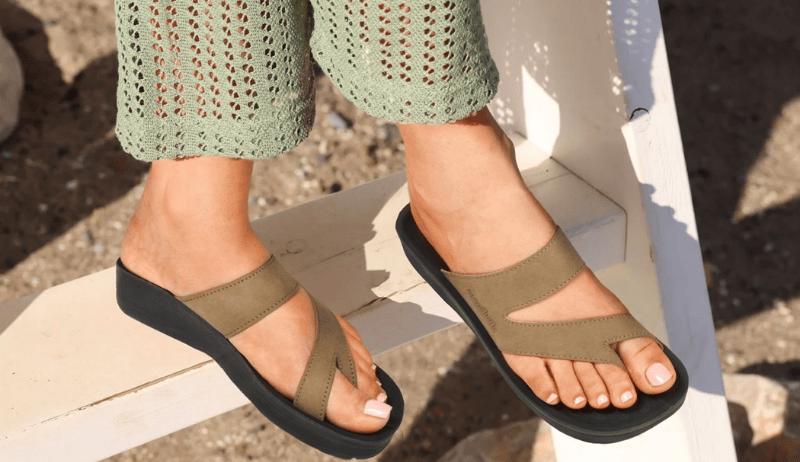
1. Try to find something like comfortable orthopedic sandals
Such footwear lessens the impact of the ground and at the same time keeps the body in a healthier position during long walks.
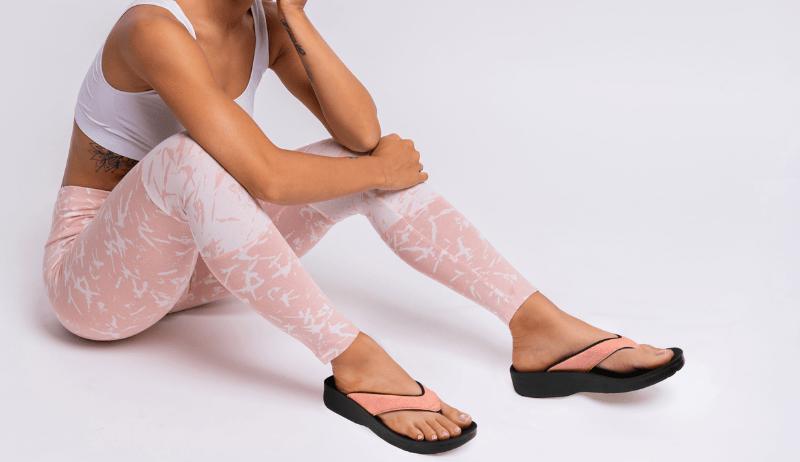
2. Get the most comfortable orthopedic sandals qualities
Insoles with this degree of softening and firming features are thus more able to stop the hard shock of the concrete floor.
3. Some shoppers can use comfort orthopedic sandals
This model stabilizes the arch when the sudden stoppage or a quick turn is made in the aisle.
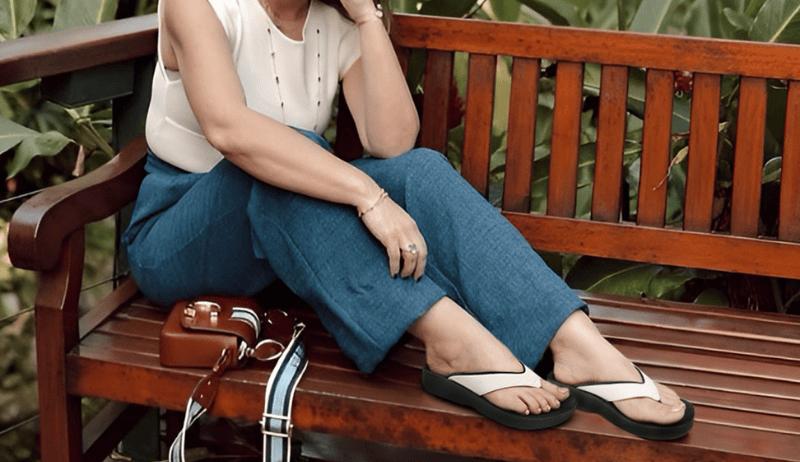
4. Most women choose supportive structures like comfortable orthopedic sandals for women
These footwear pieces eliminate the discomfort created by standing for a long time in the queue and hard floors.
5. Shoppers with sensitive feet sometimes decide on orthopedic sandals for women
This kind of footwear offers more protection of the heel on tile and vinyl-covered floors.
6. Those who want extra stability may be lead to orthopedic sandals
Such choices help to lessen the instances of arch collapsing during grocery shopping that is prolonged.
7. Women suffering from chronic foot fatigue can be thankful of orthedic sandals for women with arch support
Such shoes ensure the fascia stays supported during extended visits to the store.
7. Additional Tips to Reduce Pain During Grocery Runs
- Footwear is the base, however, the minor changes will have a great impact as well.
- Make your grocery trips short and frequent
- Long and heavy grocery trips are what cause the most strain to the feet.
- Do not go shopping when you are tired
- Tiredness weakens muscle stabilization in the arch.
- Take breaks from pushing the cart
- Lightly lean on the cart when you are feeling muscles overstrained in the feet or calves.
- When standing in line, change the position of your body
- Switching legs takes the load off the heels.
- Before and after shopping, don’t forget to stretch your feet
- A couple of calf and arch stretches that prepare your feet for tough surfaces.
- Get new insoles to replace those that are worn out
- Very thin or compressed insoles are incapable of providing any form of surface protection.
8. When Pain Signals Something Serious
If foot pain is a regular consequence of grocery shopping, it might mean that you have the following conditions in their early stages:
- Plantar fasciitis
- Achilles tendon irritation
- Metatarsalgia
- Arch collapse
- Overpronation-related fatigue
By using shoes that are well-fitted and are equipped with cushioning, the above issues can be avoided and quite possibly already solved.
9. Your Feet Hurt Because the Floor Is Tough — Not Because You’re Weak
Supermarkets combine all the factors needed to turn foot surface stress into a nightmare. These include stopping, pushing, turning, and standing. Not only is the flooring not human-friendly, but neither is most of the casual footwear that people wear to such places.
With proper footwear — specially those that are designed to absorb the shock, keep the arch stable, and cushion the heel — the pain in the feet caused by grocery shopping can be lessened to a very great extent or done away with completely.
The problem is not with your feet but with the surfaces.
It’s like you finally see the problem with the surfaces and you can now decide how to handle it.