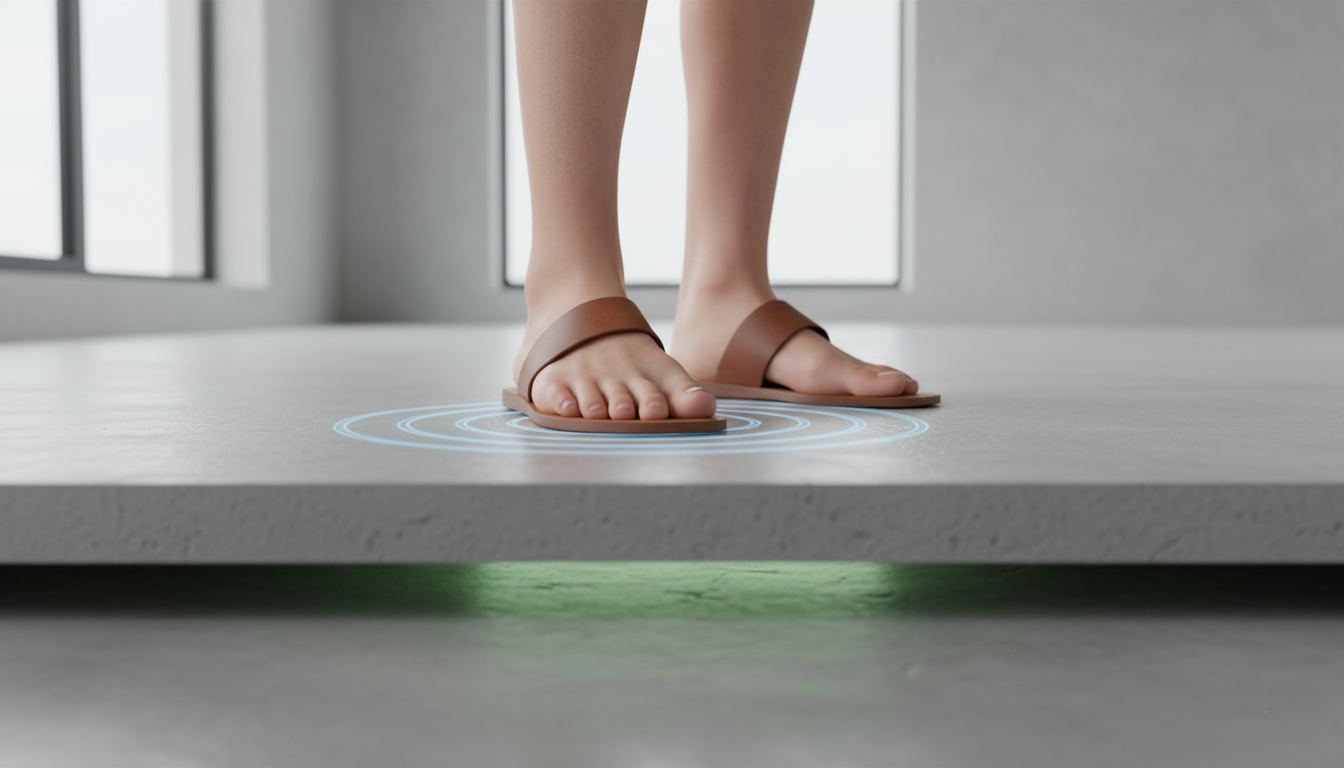
You may not think about how hard modern life is on your feet. While you may not be jumping, running or doing a job that requires a lot of physical activity, the walking surfaces of today will change how your feet function. Today, we often walk on hard surfaces such as tile floors, concrete sidewalks, office buildings and other urban areas — all of which are the same in that they do not return energy back to your foot.
Your foot was designed to bend and move with the ground, not a hard floor. By altering the way the foot absorbs impact and changes in its alignment over time, it is your foot that adapts to these alternative surfaces. Understanding how these surfaces affect how the foot functions and to develop ways to combat it.
To Understand the Difference Between Natural Ground and Modern Floors
When your foot is on natural ground it moves dynamically. Soft dirt, grass, and irregular ground forms allow your foot to bend and move naturally so the arch can flex and return back to form again. This ability to flex and return creates a more equal loading among the muscles, joints and connective tissues of the body than the hard floor systems that we have now. The hard surface floor is not designed to provide the same flex and force-absorbing characteristics as natural ground. The hard surface floors instead reflect force on the foot, causing changes in the way that shock is transmitted. Over time, these changes alter the way that your foot moves and functions. This is why you should pay more attention to your shoes that you wear every day and not just to the occasional shoes you wear for activities.
How Impact Travels Through the Foot over Hard Surfaces

When someone steps onto a hard, flat surface, the compression shock will be quickly shipped through the heel, midfoot, and forefoot with very little loss of energy. The amount of effort that muscles must expend to stabilize the foot will be naturally increased by using footwear that does not aid in providing support for stabilizing the foot due to the lack of support of the shoe.
This also causes the small stabilizing muscles that provide stability to lose their ability to absorb constant shocks over time. This leads to a gradual build-up of muscle fatigue causing them to tire and fail resulting in a gradual misalignment which increases the stress and strain to the arch and heel.Footwear provides an interruption to this reaction.
The Feeling of Foot Fatigue for Many People Without an Apparent Cause of Pain
Due to the gradual development of low-level stress that develops over time due to a hard surface; this is why most people will complain of achiness, heaviness, or tightness as opposed to sharp pain.
The slow development of low-level stress means that the body has time to create adaptations that feel normal even though the adaptations are due to the increase in low-level stress; only to later create discomfort at the end of the day or during the period of rest.
Footwear that provides support for natural shock absorption will also help to eliminate the underlying cause of foot fatigue.
Slip-On Shoes: Daily Convenience vs Daily Shock
The convenience of easy to put on shoes, often comes at the cost of support and structure. Although many casual shoes put the emphasis on easy, the manufacturers have failed to develop footwear that addresses how they handle impact.
When women's slip-on clog shoes are well-designed, they will provide a solid foundation for your foot to relieve the impact created by daily activities without sacrificing the everyday need for wearability.
By being designed with both ease of wear and support capabilities, they will become a part of your healthy daily activities instead of being viewed as a trade-off.
Cushion vs Actual Impact Control
Cushioning alone will not effectively absorb the impact to your foot. When the cushioning material compresses, it creates a cavity for your foot and as the foot pushes down, it pushes the foot out of alignment with the rest of the body.
In order to effectively control the actual impact to your foot, a proper balance of firm resistance and contouring to the foot is needed. Your foot should not only be supported by cushioning, but it should also have resistance to push against.
It is this balance that makes women's comfort clogs designed for everyday wear so much different than regular cushioning-only types of shoes.
Why The Material Selected Affects Your Foot's Ability To Absorb Shock
The materials selected for your shoes will play an important part in how your foot handles the shock caused by daily activities. Many synthetic materials will create inconsistencies in the quality and thus will compress in varying degrees, which creates a reduction in the soles' ability to support your foot.
Natural materials will adapt to the shape of your foot in a more consistent manner than synthetic, and therefore maintain a solid structure. The consistency of natural materials will help maintain your foot alignment and comfort, as well as maintain stability between the shoe and the ground. Quality leather remains stable and maintains its shape when worn many times.
The Importance of the Footbed in Distributor of Shock

The footbed is where true impact absorption occurs. Flat soles transfer impact directly upwards, while contoured footbeds spread out the force on a wider area.
When pressure is spread evenly, there is no excessive load on any one particular area of the foot, therefore reducing fatigue and allowing the feet to function in a more mechanical way.
Cork Footbed Clogs are excellent examples of how effective a shaped footbed can be against hard charging surfaces.
The Importance of Shape vs Thickness.
People often think that thicker soles provide more protection; in fact, shape is much more important than thickness.
The proper shape of the footbed provides the necessary arch support, heel stabilization, and forefoot/core movement capability allowing for the ability of the foot to function naturally. Adding height without the proper contour will only serve to add weight without providing control.
Well-engineered Footbed Clogs focus on form versus excess padding.
Over Time Hard Floors can Cause Arch Problems
The arch of the foot is a natural shock absorber; however, it depends on flexibility and support. The arch must work harder to absorb shock when walking/standing on hard floors. Eventually, this can lead to over-pronation or arch fatigue, which causes discomfort to more than just the foot.
Using clogs with arch-supporting footbeds will help keep the arch healthy during long periods of standing/walking.
Combining Style & Structure
Supportive footwear doesn't have to be clinical in appearance. When the material and method of construction are carefully considered, design and function are able to work together.
The combination of soft upper materials and structured footbeds provides a footbed that is both comfortable and stable (supportive).
This balance can be found in the products produced by the highest quality women's suede clogs.
Buckle Strap System and Impact Control
The way your shoe fits determines how the body distributes force. If your shoe does not fit properly, your foot will slide inside the shoe and create friction (increasing the risk of injury) and cause instability.
By using an adjustable design, your foot has more direct contact with the outsole, reducing any unwanted movement, and increasing your control.
This is why clog styles that utilize buckle strap systems are particularly effective at keeping your feet aligned when walking on concrete and asphalt surfaces.
Open Footwear and Shock Absorption on Hard Surfaces
Open footwear styles tend to not have the support structure that is necessary for effective impact control. If there is no stable base to your foot, your body will absorb a greater amount of shock than is ideal.
However, with the right construction, open footbed styles can still offer effective support.
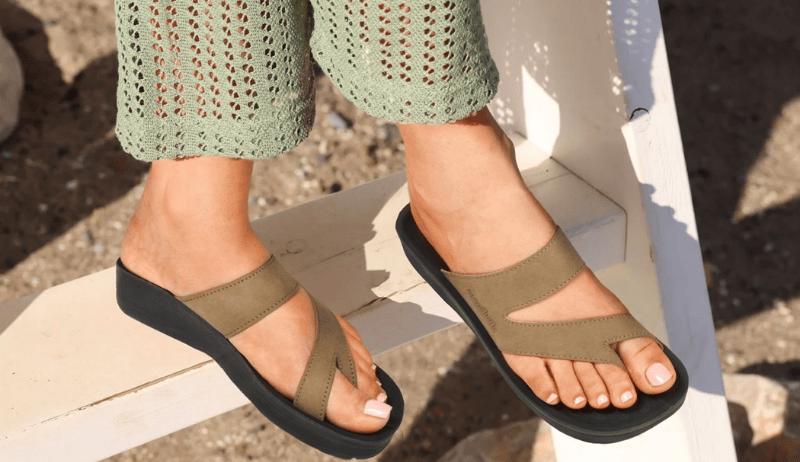
The best constructed leather clog sandals will provide both stability and breathable flexibility.
Think About the Footwear You Wear Every Day

Today, many people will spend much of their time walking on hard floor surfaces, but this does not have to lead to discomfort when wearing shoes. Choosing the right type of shoes to provide adequate arch support for the feet can help to alleviate the stress on the feet caused by walking on hard surfaces.
Shoes that are made to allow the foot to move naturally and comfortably will make it easier for a person to transition into wearing shoes without putting a strain on their body while making that transition.
While people have been given feet that can move naturally, they were not made specifically to walk on a hard surface.
Keep Your Feet Protected From Hard Surfaces
Hard floors are counterproductive to the way that the foot works; they create fatigue and pain by not allowing the foot to properly absorb the shock from the hard surfaces and when done over time create an increased risk for injury.
Clogs and sandals that provide adequate arch support enable the wearer to improve balance and stability and to benefit from better shock absorption. Shoes designed properly will increase the satisfaction for the wearer when carrying out normal daily activities.
To protect your feet properly, start from the ground up.