In case every morning your foot size seems to be different, you are not imagining it. A great number of women experience changes in fit, width, swelling, and comfort needs from one day to another. There are some mornings that your shoes feel perfect, while on the other days, the same pair of shoes might feel tight, restrictive, or even painful. Such inconsistency makes footwear shopping puzzling and can cause you to be frustrated, especially when you have spent money on pairs that only feel good half the time.
The fact is very simple: foot size still changes daily, and it is quite normal. However, picking the right footwear for a variable size needs a certain strategy, being aware, and changing your comfort view. This manual gives an explanation as to why foot size changes, the way to understand your real needs, and the method of choosing shoes, particularly slippers and home footwear that are compatible with your body's daily changes. No matter if you are a fan of winter slippers for women, fuzzy slippers for women, women's winter slippers, or warm slippers for women, having footwear that is capable of adjusting to your foot's natural patterns is the key to comfort that lasts and foot health.
Why Does Foot Size Change from Day to Day
Daily foot size variations are the result of several factors, and knowing these factors can help you to select the right and more adaptive footwear.
1. Natural fluid retention
Almost everyone can find mildly swollen feet due to the accumulation of fluid in the feet after a long period of standing or sitting. That's the reason why shoes may fit differently in the morning and evening.
2. Body temperature changes
In a warmer environment, the soft parts of the body get slightly bigger, and it influences the fit of the shoe. This is the reason why your comfortable winter slippers for women may feel tight on cold mornings, but after your feet warm up, they get looser.
3. Hormonal fluctuations
Women usually notice that there is more variation around menstrual cycles, pregnancy, or periods of hormonal change. This can even make very flexible modes like fuzzy slippers for women feel as if they are changing.
4. Physical activity levels
If you are walking more than usual or doing some exercises, then your feet will be temporarily wider and also there will be some swelling.
5. Weight changes
Even temporary fluctuations (for instance, due to hydration) can influence the width of the foot.
6. Foot conditions
For instance, plantar fasciitis, bunions, arthritis, and circulation problems may cause daily changes in your foot shape. Providing extra support through styles such as women's winter slippers will help your foot to be comfortable during these changes.
The Problem With Buying to Your “Smallest” Size

Most women choose the size that fits them on their "good days"—the days when swelling is minimal and everything feels normal. However, this creates a big problem: the shoes that fit perfectly on days when the foot is small become uncomfortable on days when the foot is swollen, tired, or inflamed.
- Toe compression
- Arch strain
- Side pressure
- Poor circulation
- Blisters
- Heel rubbing
Deciding on footwear based on your smallest size is a sure way of discomfort when your foot is even slightly larger. This is the reason why adjustable, forgiving, and supportive home footwear, like warm slippers for women, are usually better than rigid shoes during days of fluctuation.
How Daily Footwear Should Adapt to Daily Foot Changes
In order to find a pair of shoes that feels good every day, one has to think of adaptability rather than perfection. The aim is not looking for a shoe that fits the foot exactly but finding a shoe that is able to adjust to the foot's needs.
Here is how to do it:
1. Choose flexible uppers that stretch without collapsing
The foot has to be accommodated rather than trapped. Soft, high-quality uppers are great during periods of swelling; however, do not wear overly loose shoes that collapse inward when you walk.
Adaptive uppers are very beneficial when choosing orthopedic Slippers because they provide structure and at the same time allow for natural expansion.
2. Select footwear with structured footbeds (not flat foam)
Feet can change but the proper alignment has to be maintained. A well-constructed footbed keeps the arch supported, the heel stable, and the forefoot properly aligned.
Besides this, the structure can also help in preventing tendon strain on days when the foot is wider or heavier. Here is where the supportive recovery slippers can provide a great benefit as they can give stability without movement restriction.
3. Choose styles with adjustable openings
Any kind of footwear, including slippers, can be benefited from adjustability. The features such as hook and loop straps, elastic panels, or stretchy collars allow a foot to find its natural zone of comfort.
In case of swelling in the morning that makes it difficult to put on a pair of shoes with a closed back, you can easily wear the ones like womens winter slippers if they have adjustable entry points.
4. Pick shoes with wider toe boxes
A spacious toe box is a must in the case of handling width that fluctuates. It prevents the toes from being compressed, allows the toes to spread naturally, and reduces friction.
This is very important if a woman is experiencing hormonal swelling or heaviness of the feet in the evening. The roomy toe design makes a great pair with breathable warm slippers for women that do not restrict the forefoot.
5. Look for materials that keep their shape over time
Low-quality foam and thin fabrics will stretch fast and lose their structure. They might provide comfort at the beginning, but after that, they will stop giving support completely.
Good materials such as memory foam blends, elastic-knit uppers, or structured interiors are still stable while at the same time they can be comfortable around swelling. Even the most comfortable options like fuzzy slippers for women should be able to maintain their shape in the long run.
6. Think about indoor/outdoor versatility
Feet will not swell so much if they are properly supported throughout the day. Footwear, which is slightly suitable for outdoor use, allows you to go from indoor activities to quick outdoor errands without the need of changing shoes, and thus allows you to maintain the same level of support.
Solid soles and structured footbeds are the elements that are usually found in high-quality winter slippers for women, thus making them perfect all-day options for people whose size varies.
7. Always, everyday, and every size, arch support should come first
Whatever your foot may feel: small, swollen, tired, or cold, your arch will always ask for the same thing—constant support. Daily size fluctuations are not changing the structure of the arch—they only change the amount of weight and pressure the foot is subjected to. That is why support-giving options such as arch support slippers are the most important ones if you want long-term comfort. They provide the foot with growing, shrinking, resting, and recovering possibilities while still keeping proper alignment.
Why Slippers Are the Most Important Footwear for Fluctuating Feet
Majority of women fail to understand how important home footwear is. It may be that you are barefoot or in slippers for about 60-70% of your day. However, if those slippers are soft, flat, or unstable, then your feet are taking the strain every time they expand or contract. Supportive indoor footwear has the ability to lessen:
- End-of-day swelling
- Heel pain
- Arch fatigue
- Top-of-foot inflammation
- Midfoot strain
- Big toe pressure
The Best Types of Slippers for Daily Size Changes

Simply put, foot size variation does not mean that you need to have several shoe sizes. What you rather need is the right slipper features.
1. Structured home footwear for stability
Strong soles make sure that the foot does not turn inward. That way, the foot gets the same support in both narrow and swollen days. Such a degree of stability can usually be found in good recovery slippers.
2. Stretch-friendly materials for swelling
Perfectly breathable fabrics that can expand gently are your daily fluctuation remedy, especially if you are a woman and are looking for warm and comfortable slippers for women with real foot support.
3. Cushioned but not overly soft midsoles
Do not let yourself be fooled by gentle cushioning that becomes soft. What you want is a gentle cushioning on top of a firm base that goes on lifting your arch throughout the day.
4. Supportive designs for alignment
House shoes should not be only comfortable. They should also bring stability to the rearfoot and protect the plantar fascia. Here, a pair such as arch support slippers would be perfect.
5. Soft linings that prevent irritation
Evenly supportive slippers should also be comforting. Here is where the plush designs like the feminine fuzzy slippers, especially when vinculated with a structured footbed, come out into the scene.
How to Measure Your Foot When It Changes Size
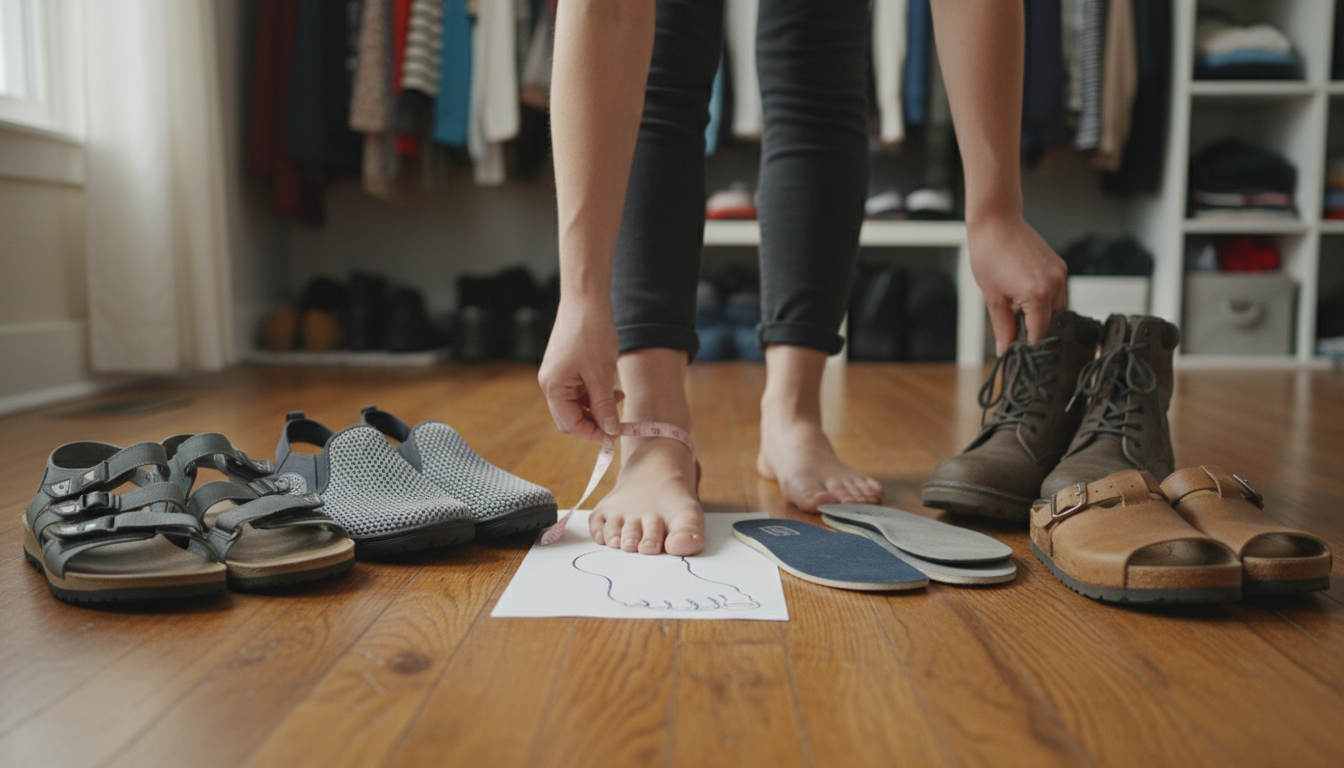
Normally, people measure their feet only once a year and most probably they do that when sitting. This is definitely not enough for people who have feet that fluctuate.
Here is how you should be measuring:
1. Measure both morning and evening
The measurement that corresponds to the morning is the one that depicts the natural foot shape; the night measurement depicts the swollen shape.
2. Measure while standing
Without support, the foot extends both in width and in length.
3. Note width changes, not just length
While the width changes more on a day-to-day basis than the length, you should not forget to note it also.
4. Compare your largest measurement to your smallest
Make a decision on the kind of footwear that will be able to accommodate the biggest version of your foot without feeling loose on the small days.
Adaptive sizing features in womens winter slippers are very good at accommodating these changes.
When to Replace Your Footwear (Especially if Your Size Varies)
In case you have fluctuating foot sizes, it is even more important that you replace your footwear on time.
It is time for a new pair when you experience the following:
- The footbed feels flat
- You experience heel pain in the morning
- Slippers that are tight only on swollen days
- The upper parts appear overstretched
- The arch support that you've been using no longer feels supportive
- The sole is overly flexible where it shouldn’t be
Supportive home footwear such as orthopedic Slippers are usually more durable because they keep their structure even with the daily variations.
Foot Size Can Change—but Comfort Shouldn’t
Foot size may change on a daily basis, but comfort should not be a matter of luck.
With the help of footwear that is meant to adapt—be it via structured support, flexible uppers, roomy toe boxes or adjustable features—there is no reason why your feet should ever be uncomfortable. This can happen every day, no matter how they change.