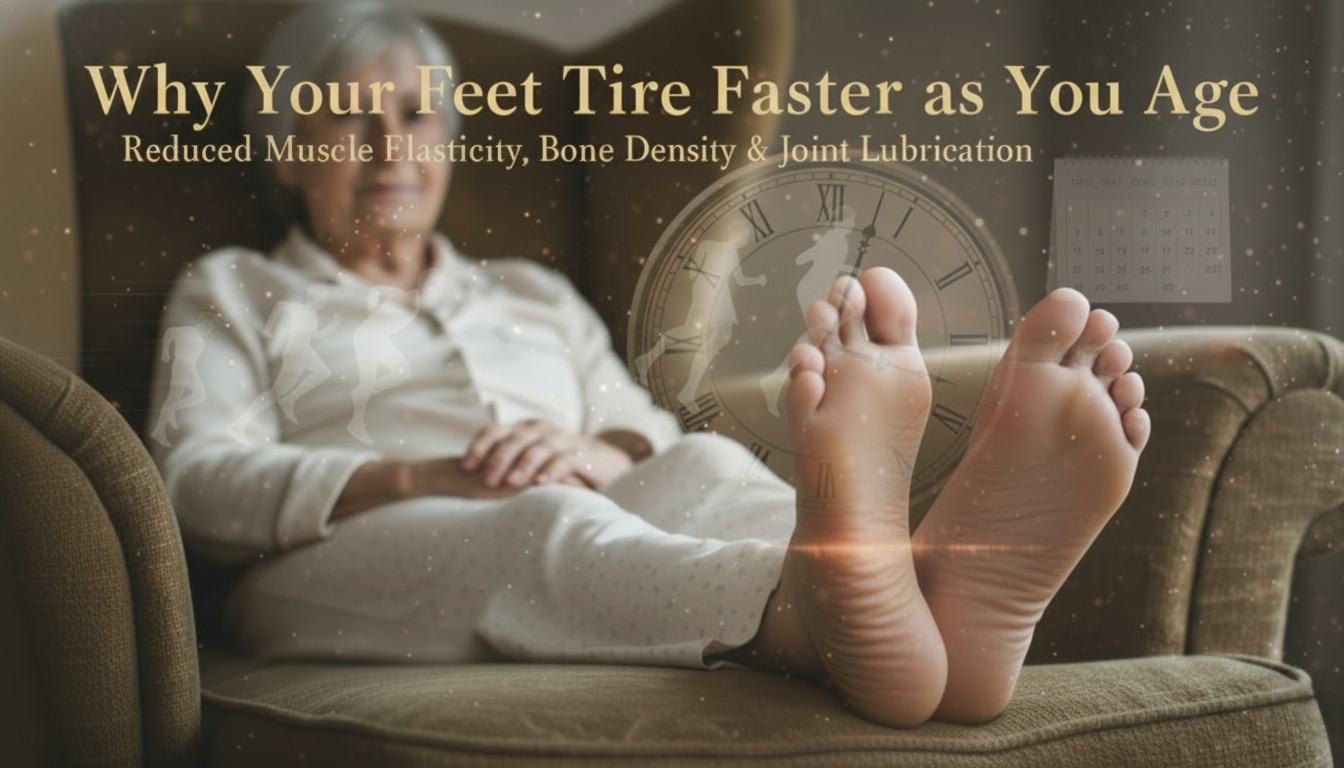
Aging is not something that instantly makes people inactive. Actually, a good number of adults continue to be active and busy with work, errands, exercising, and taking care of the house. However almost everyone observes a very peculiar change after their mid-30s: the feet get tired quicker, start aching sooner, and take longer to recover. The part of the body that used to be the easiest suddenly shows signs of very early fatigue, even if the rest of the body is still strong.
This gradual change is quite normal — albeit also preventable. Knowing why your feet get tired quicker as you age makes you take good care of them before pain becomes a constant companion. What you wear on your feet is very important in lessening fatigue, making your walking more efficient, and keeping your feet in a good condition for a long time.
This article explains the real reasons of the changes in an aging foot, why just being active is not enough, and how supportive footwear can make you comfortable again and increase your endurance.
How Aging Changes the Foot — Quietly and Gradually

The majority of people think that foot aging is very dramatic — for example, the collapse of the arches, joints hurting, deformities becoming visible. But the very first changes are much more modest and they happen deep inside not far from the skin. The feet become less enduring not from one big event but from numerous small changes that have been happening for many years.
1. The Fat Pads Under Your Heel Start to Shrink
The bottom side of the foot is equipped with natural cushioning pads that take the impact of the steps. With aging these pads get thinner gradually making the heel extremely sensitive to pressure. Even a nice smooth floor suddenly becomes a lot harder, rougher, and less forgiving.
2. Ligaments Loosen — Especially Around the Arch
Ligaments support the shape of the arch, however, they very gradually lose their elasticity between the ages of 30 and 50. When they become weak the arch gets more and more dependent on the muscles to keep it lifted. This causes the foot to get tired, feeling of being tight, and pain after just a short period of standing or walking.
3. Muscles Lose Strength Faster Than You Think
The small stabilizing muscles of your feet become weaker earlier and faster than big muscles of the leg or core. These “micro-muscles” are responsible for balance, posture, and shock absorption, which means that once they become weak, fatigue will appear very quickly.
4. Natural Shock Absorption Declines Over Time
Bone become less flexible. Joints get smaller. Cartilage gets dry. These changes make every step sound sharper and more tiring for the feet — even if it is a low-impact movement that is part of the daily routine.
5. Circulation Slows, Affecting Foot Endurance
With aging the efficiency of blood flow is reduced which means the feet are getting nutrients slowly and the recovery time is longer. Besides, poor circulation may also cause morning stiffness and swelling that will be worst towards the end of the day.
Why Activity Alone Doesn’t Prevent Foot Fatigue
Keeping yourself active is a must if one wants to be healthy in the long run. But being active does not necessarily strengthen the structures that are inside the foot. There are many people who walk, go to the gym or work standing on their feet and still suffer from early fatigue — most of the time the reasons are:
Their footwear does not provide arch support. Their walking pattern changes without them realizing it. Their foot muscles work to make up for the weakening of the foot structure. Their aging joints become more pressured each year.
Activity is certainly good, however, without the correct support it cannot cancel out anatomical aging.
This is the point at which footwear can act as an efficient corrective tool — most notably the types intended for alleviating strain and regaining stability.
The Real Reason Foot Fatigue Hits Earlier as You Age
The explanation is straightforward: aging affects the foot’s capacity to evenly distribute pressure.
When pressure distribution is not balanced the body reacts by:
- Using certain muscles more than others
- Putting too much weight on the arch
- Making the heel stiff
- Tightening the calf
- Straining the ankle
These in turn produce the well-known combination of soreness, tightness, and tiredness that become progressively worse with each decade if no action is taken.
However, there is a silver lining. One can stop the fatigue cycle and in fact turn it around by using the correct footwear and engaging in mindful habits.
How Supportive Footwear Breaks the Fatigue Cycle
Your feet might be getting older but that does not mean they have to feel that way.
Proper footwear brings harmony back into the system by providing the structural support that the feet have been losing little by little throughout the years. This lessens muscle overwork, enhances pressure absorption, and facilitates the return of the foot to its previous state of normal functioning.
Here are the ways that footwear achieves the greatest impact:
1. It Reduces Overuse of the Arch Muscles
An arch that is weakening has to work more than before in order to remain lifted. Supportive sandals take away that tension, giving the arch the security it needs without the overuse of small stabilizing muscles.
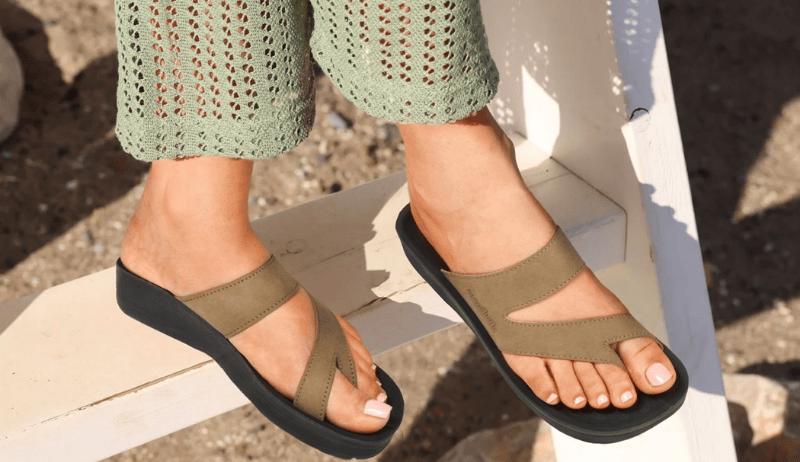
Just to illustrate, arch support sandals for women are the perfect midfoot stabilizers and slow down the process of everyday arch fatigue during routine tasks.
2. It Aligns the Heel to Reduce Fat Pad Strain
If the heel is at the right angle the weight is dispersed naturally instead of hammering one spot over and over again. This is what saves the heel from getting exhausted too quickly and lessens soreness.
3. It Supports Better Balance and Posture
Footwear which gives support to the foot not only the knees, hips, and lower back but also helps in staying aligned. When your posture gets better ,your feet are freed from absorbing the unwanted impact.
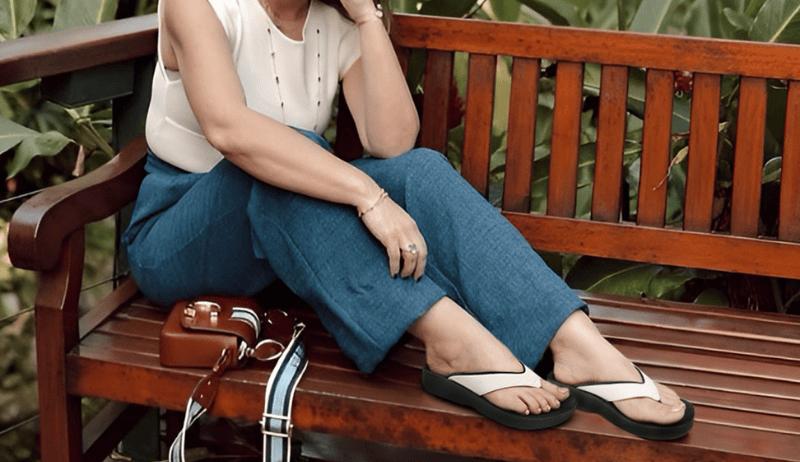
This is the reason why womens sandals with arch support can be a great booster of daily comfort even for those active women who are already used to walking frequently.
4. It Replaces the Shock Absorption Lost With Age
When the natural shock absorption is at a low point, technology can fill the gap. Every step is softened by modern midsoles thus the heel, arch, and ball of the foot are less strained.
5. It Reduces Tension on the Forefoot and Toes
The feet tend to become wider as one gets older. However, shoes and sandals with supportive structures prevent the front of the foot from being the most pressured part.
An excellent example of such a model is womens arch support sandals that help weight to be distributed evenly from heel to toe.
Everyday Signs Your Feet Are Fatiguing Faster (And You’re Missing It)
Typically, age-related fatigue does not reveal itself in a radical manner. Rather, it accumulates subtly:
- After walking on smooth floors you feel a dull ache.
- The soles of your feet feel hot or tired at the end of the day.
- While standing still you cannot stop shifting your weight from one foot to another.
- During the morning time mild soreness in the arch is felt.
- The aisles of grocery stores or long corridors seem more difficult to walk through.
- Your feet take longer to recover than before.
These little indications are your body's early warnings - not of frailty, but of structural changes occurring beneath your skin.
Why Highly Supportive Sandals Are Enough to Make a Significant Change

To reverse the effects of age-related fatigue, complex treatments or custom inserts are not necessary. What you need is simply consistent daily support.
Sandals are especially good because they:
- Absorb the impact with closed heels and padded soles
- Support the arch with a structured footbed
- Allow the foot to remain stable through a contoured design
- Help coordination through guided alignment
- Relieve muscle overwork through targeted support
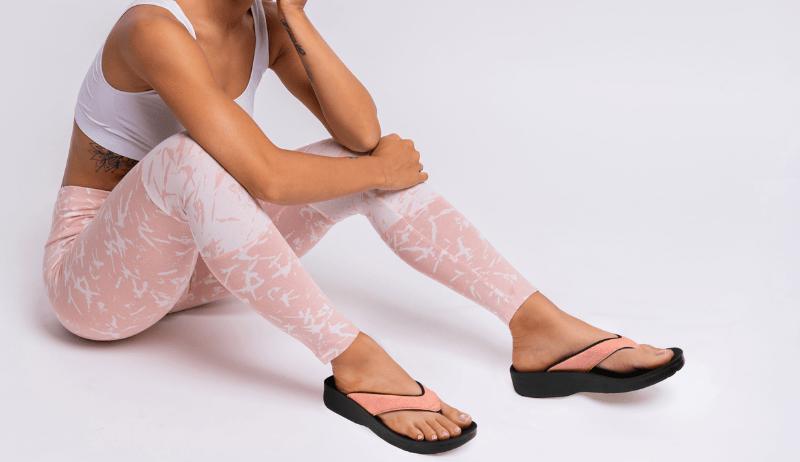
Good quality pairs like the best arch support sandals for women are the ones that help bring the foot back to its normal mechanics and still allow you to be on the move without the pain that comes with aging.
How to Choose the Right Footwear When You Are Getting Older
First of all, here are the things that you should consider:
1. A Well-Defined Arch Support Platform
It should conform to the natural shape of your arch - not too high and not too flat.
2. Deep Heel Cups
By doing this, they help the heel to rest in the center thus the pressure is removed from the thinning heel pads.
3. Cushioning Midsoles
These assist in restoring the shock-absorbing function which has been lost due to aging.
4. Broad, Dependable Bases
As feet get wider with age, narrow footwear becomes a cause of fatigue.
5. Lightweight Design
Using heavy footwear this way the legs have to do the work harder.
All the mentioned characteristics facilitate the retaining of the foot's natural alignment even when structural changes take place.
Practical Daily Habits That Can Help You Reduce Foot Fatigue
Besides wearing the right shoes small changes in your life will bring huge results:
- Before taking a long walk warm up your feet with ankle circles and toe stretches.
- Interrupt your long standing periods by short sitting breaks.
- Interrupt long sitting periods by doing fast foot and calf movements.
- Wear supports indoors as well, not only outdoors.
- Stay away from flat, hard surfaces, especially when you are barefoot.
- Make sure you drink enough water, as lack of it makes foot tissues stiff.
- Being consistent is much more important than being intense.
Aging Does Not Have to Mean Tired Feet
Foot fatigue is not a result of you slowing down - it results from the fact that your feet need more support than before. Aging does not weaken your willpower, your energy, or your abilities. It just changes the biomechanics of your feet and those changes call for targeted support.
The right footwear will allow you to be active, comfortable, and pain-free for years to come. And supportive sandals - made with structure, cushioning, and stability in mind - offer precisely the kind of reinforcement that aging feet require.
Your feet may be undergoing the process of aging but that doesn’t mean they have to feel older. If you have the proper support underneath you, they certainly won’t.