Most people believe that foot fatigue is caused by long walks, long workdays, or wearing the wrong shoes. While these can contribute to the problem, there is a more significant issue that is usually ignored — one that gradually develops over years without symptoms. This problem is foot muscle atrophy, and it ranks as one of the main reasons of persistent fatigue, weakness, and discomfort in adults.
However, the term “atrophy” which sounds scary, basically means the small muscles inside your feet are becoming weaker. These muscles are very important for balance, stability, posture, and shock absorption. So when they become weak, your feet will get tired quicker, your walking will be less efficient, and the rest of the body will start to compensate for the lost strength.
This article covers foot muscle atrophy causes, effects on your daily life, and how using supportive footwear can not only relieve the strain but also help your feet to regain their proper function.
What Is Foot Muscle Atrophy?
Your foot is made up of more than 100 muscles, ligaments, and tendons. Several of these muscles are very tiny. They are not just the foot movements — they provide micro-stability, minor changes in pressure, and correct the position during each step.
Foot muscle atrophy means the muscles that are made less active in the foot weaken due to:
- Inactivity
- Poorly supported footwear
- Aging
- Persistent tension
- Prolonged sitting
- Flat, hard surfaces
- Impaired circulation
Unlike the muscles in the legs or the core, the tiny ones in the feet become weaker silently, without immediate pain or obvious changes. It is only when the weakness becomes very significant that symptoms start to appear.
Reasons Why Atrophy Leads to Continue Foot Fatigue
The feet are the ones that hold the weight of the entire body. When some of the muscles do not function at full strength, other structures have to do the extra work.
In the absence of proper muscle engagement, you can have:
- Heavier than usual steps
- Fatigue occurs quicker during errands or jogging
- Feeling of tension in the arch
- Burning sensation in the ball of the foot
- Difficulty standing still
- More soreness after simple chores
Most people have described their feet as feeling “tired for no reason.” The reason being that the muscles which are meant to support the foot are no longer doing their full job.
The Surprising Everyday Habits That Accelerate Foot Muscle Atrophy

Atrophy is hardly the result of one single incident. It is brought about by numerous small habits that gradually lead to a loss of foot strength over time.
1. Long Hours of Sitting
Sitting reduces the blood flow to the feet, which in turn reduces muscle nourishment and tissue repair slows down. Weak muscles become even weaker if they are not used frequently.
2. Walking on Hard Floors All Day
In tile, concrete, and hardwood the feet are forced to take the full impact without any help.
3. Wearing Unsupportive Footwear
Flats, thin sandals, and generic foam footwear are products that allow the arch to collapse without steps being repeated.
4. Limited Barefoot Strengthening
Most people wear shoes for the major part of their day and hence never develop natural foot strength.
5. Inconsistent Movement
Short bursts of movement with long intervals of resting will weaken the endurance muscles.
How Atrophy Interferes with the Foot’s Natural Mechanics
Normal feet use muscles to:
- Support the arch
- Stabilize the heel
- Control the toes
- Absorb shock
- Correct pressure changes
However, when those muscles lose volume and strength, then nothing stays the same.
Weak arches collapse more easily
This overly works and, therefore, quickly exhausts the tendons.
The heel absorbs more of the impact
Since the muscles are not doing the job of absorbing the shock, the heel pad is compressed more than before.
Balance becomes less efficient
It may be that you feel more unsteady when going down the stairs or walking on an uneven surface.
Toes hold the ground too much
This leads to the development of clawing or hammertoe that increases discomfort.
Foot muscle atrophy impacts the part of your step that is most intimate with you — even if you don’t realize the change.
The Concealed Domino Effect of Weak Foot Muscles
Foot muscle atrophy leads to foot problems only. Weak muscles cause posture misalignment which then affects the ankles, knees, hips, and lower back.
Some of the most typical long-term side effects may include:
- Shin splints
- Knee pressure
- Tightness of the hip
- Lower back pain
- Loss of stamina
Being easily “worn out” after simple tasks
When the feet are unable to stabilize, the body works harder on other joints. This is what leads to a cycle of whole-body fatigue that many take for old age — while it is actually preventable.
How Proper Footwear Can Help Prevent Formation of and Reverse Atrophy

Choosing the right footwear can be an effective way to slow atrophy almost definitely and at the same time reduce fatigue caused by muscle weakening.
Supportive sandals contribute to improvement of the situation in three fundamental ways:
1. They Provide Support for the Arch
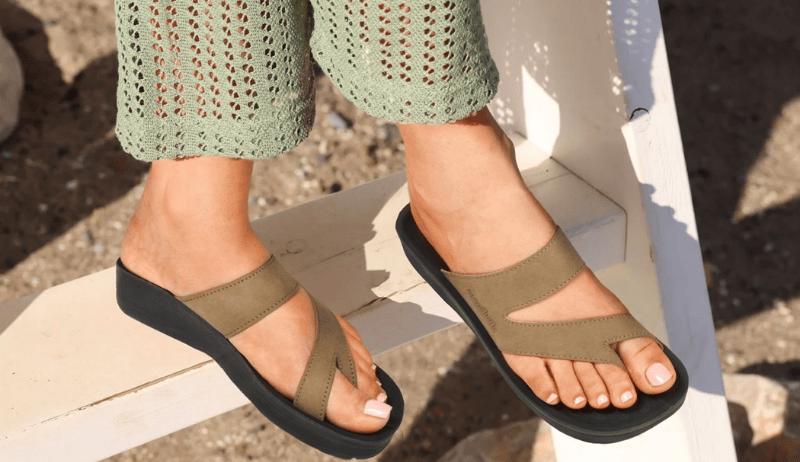
An adequate footbed is what limits the overuse of small muscles that are already fatigued. A pair like comfortable orthopedic sandals helps to bring back proper midfoot alignment.
2. They Absorb Impact So That Muscles Do Not Overwork
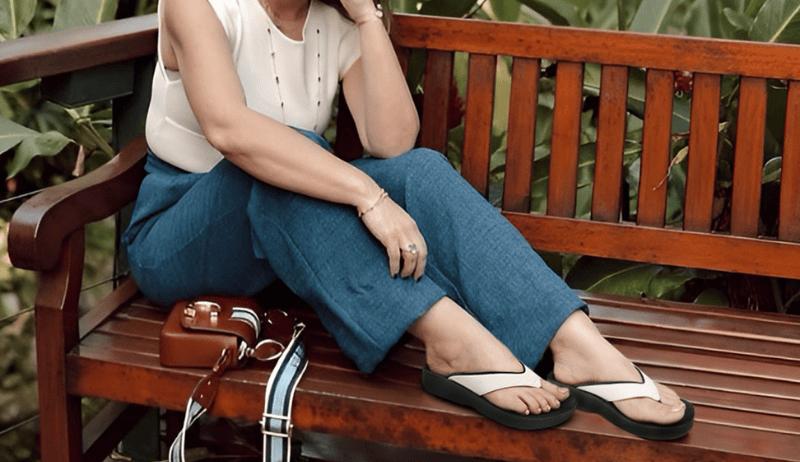
When the ability to absorb shock gradually goes with age, good footwear takes over this function by placing the shock absorber in the midsole. Luxurious models similar to the most comfortable orthopedic sandals do not let the heel and forefoot take extra loads caused by repetitive stress.
3. They Encourage Healthier Foot Positioning
A properly contoured anatomy allows muscles to get activated in a normal way instead of compensating for imbalances. A well-designed option like comfort orthopedic sandals gives better posture a lift with every step.
4. They Facilitate Recovery During Everyday Movements
The majority of atrophies deepen when one engages in routine tasks such as doing chores, going for errands, or daily walking. The suitable pair like comfortable orthopedic sandals for women takes away the strain during these everyday moments.
5. They Contribute to Muscle Rebuilding Over Period
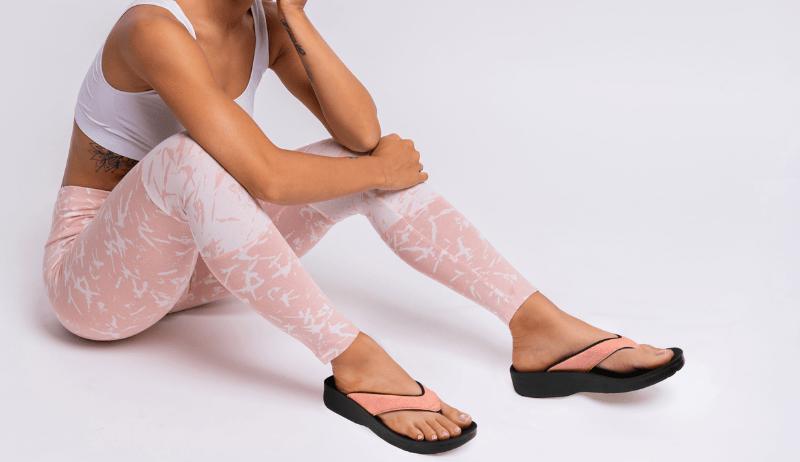
Regular provision of support is what helps weakened muscles to have some rest and, eventually, be able to rebuild their strength. Supportive midsoles found in orthopedic sandals for women take off the pressure that is usually the main reason for foot fatigue.
6. They Bring About Heel to Toe Alignment Improvement
A balanced footbed is what makes it possible to prevent the forefoot from being subjected to excessive pressure. A supported design such as that of the orthopedic sandals can turn even a long walking day into an enjoyable one again.
7. They Guard the Arch Against Folding
The quicker atrophy becomes if the arch keeps folding regularly. A piece of footwear that is designed like orthopedic sandals for women with arch support lets the arch stay lifted without the muscles being forced to overwork.
How to Know If Atrophy Is Already Affecting Your Feet
If you are at all active, but atrophy can already be on its way. Check out these signs:
- Your short walks make you feel exhausted.
- Walking seems to be getting more and more difficult with each step.
- You find the arches of your feet to be uncomfortable late in the day.
- You do not stand evenly but move the weight from side to side.
- The feet of yours “need time to adjust” in the morning.
- Shopping for groceries in the store feels like walking a lot and being tired quickly of it.
- You are more inclined to sit rather than stand as compared to before.
These are the very first symptoms of muscle function reduction.
Simple Daily Habits to Improve Foot Muscle Strength
Proper wearable foot gear makes things very easy, but daily habits are imporant too.
1. Toe Spread-and-Lift
Help the foot muscles that are deep inside your foot to get stronger.
2. Short Foot Exercise
This is the and most effective way of training one’s arch to become naturally oriented.
3. Calf Mobility
It lessens the impediment from tense muscles.
4. Barefoot Strengthening (In Safe Places)
If your feet are already well-supported it helps them to become more stable.
5. Break Up Sitting Time
Do it for at least one minute every hour to keep your toes, ankles, and arches active.
6. Hard Surface Should Be Avoided When You Are Barefoot
Going for this will help in preventing heel pain as well as saving the muscles from becoming exhausted.
Every habit you build helps reverse the fatigue cycle.
Atrophy Is Reversible — Fatigue Doesn’t Have to Stay
Foot muscle atrophy isn’t a life sentence. It’s merely a symptom that shows that your feet need more support, structure, and consistency than previously. By realizing what is causing your constant fatigue, you are empowered to make the change.
Supportive footwear is what stabilizes your feet when they are weak and you cannot do it yourself. Daily rituals are what make the depleted parts strong again. And a concerted effort towards foot health lets you do the things that require use of the feet with pleasure again.
They hold you up, your feet are the ones doing the heavy work — so give them the support that will enable them to stay in good shape.