Many individuals are unaware of how their daily walking postures affect the long-term condition of their feet. Your arches—the three complicated curves that soften your landings—are built to bear the weight of your entire body with every step. Small, harmless daily habits can overt time change the results of the arches, creating pain, fatigue, inflammation, and even chronic conditions such as plantar fasciitis.
The worst part of all? You may not ever feel it as the habits are silently messing with the arch structure over months or years.
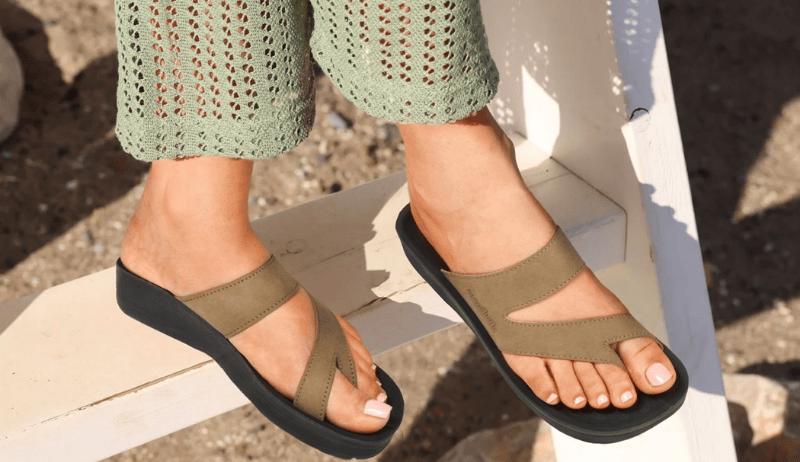
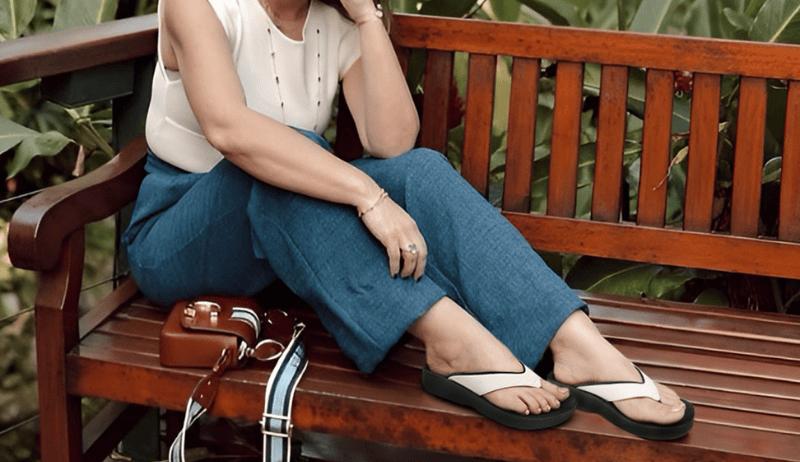
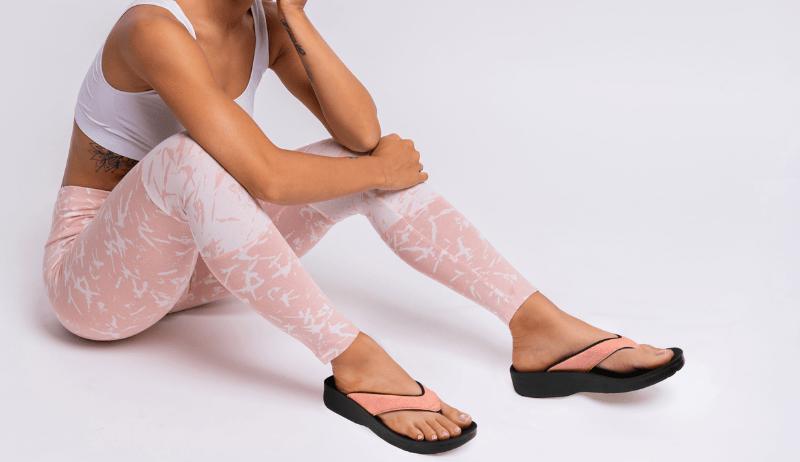
If your feet are often tired, your heels hurt in the morning, or you observe discomfort after walking or standing, then one (or more) of these habits is the culprit. The best part is, each habit has a solution—and often resolving the habit starts with better footwear like Orthopedic Sandals or Women’s Arch Support Sandals which realign the foot and bring back arch function.
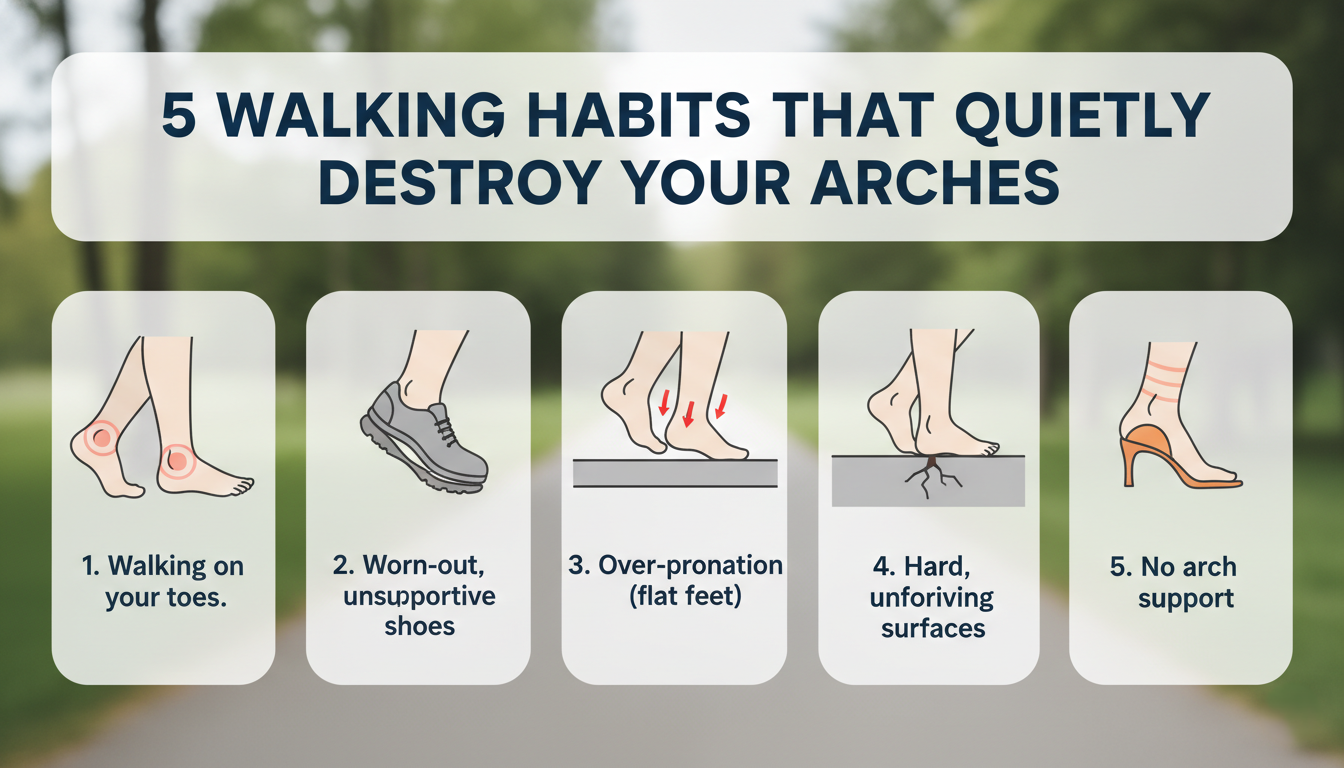
Let’s discuss (and how to reverse!) the 5 walking habits that are silently breaking down your arches.

Habit #1: Walking With Collapsed Arches
It is common for women to walk with their arches slightly simultaneously downwards, also referred to as "overpronation." You might not notice it, but your shoes definitely will: the inside edges of the soles wear away much faster.
As your arch collapses with every step due to overpronation, the plantar fascial band underneath your foot stretches and puts strain on the heel as well as the midfoot. Eventually, this can lead to the following:
- Plantar fasciitis
- Pain in the heel
- Changing to flat feet
- Misalignment of the knees and hip
- Inflammation of the arch
What Causes It to Happen
Contributing factors include weak musculature of the foot, worn-out shoes, prolonged standing on hard floors, and genetics.
How to Fix It
- Strengthen your feet by performing toe curls, towel scrunches, calf stretching, etc.
- Do not walk barefoot on hard surfaces for prolonged periods of time.
- Select shoes that actively work to stabilize the arch.
- Shoes made for biomechanical support, such as Women's Arch Support Sandals, orthotic sandals for women, or plantar fasciitis sandals for women, will prevent your arch from collapsing immediately down and will reduce the strain put on the rest of your body.
Habit #2: Short, Shuffling Steps
Although short steps may seem innocent enough, the load is on your forefoot, and your feet lose their natural heel-to-toe motion. This gait pattern transfers nearly all your body weight to the ball of your foot and your arches.
Here are indications that you are shuffling:
- You hear “slap-slap” when you walk
- You experience pressure in the front of your feet
- Your feet get fatigued quickly with simple movement
How it harms your arches
Shuffling restricts normal ankle motion and forces your arch to stabilize every micro-movement and also puts increased stress on the ligaments that stabilize the arch structure.
The solution
- Practice longer strides
- Roll through the step; heel → midfoot → toe
- Perform ankle mobility exercise with weights or resistance bands
-
Supportive shoes; Orthopedic Sandals or recovery sandals can guide your foot through a correct stride biomechanic, reducing the load on the forefoot and allowing the feet to return to a more natural gait.
Habit #3: Wearing Totally Flat Shoes All the Time
Although flat sandals, ballet flats, loafers or fashion sneakers can be adorable, they provide little or no arch support. When you wear them over time, your foot has no help to absorb the impact. It has to do it completely on its own without a structure to help disperse the weight.
Flat shoes may lead to:
- Fatigue in your arches
- Pain in your feet or heels.
- Tight calf muscles.
- Aches in your toes.
- Long-term inflammation in your plantar fascia.
This is one of the easiest habits to overlook because it can be comfortable initially - however, the damage is often done quietly over time, and the long-term effects are visible.
So what do you do?
If you love to wear simple shoes, you could rotate the simple shoes you love with supportive shoes, like:
- recovery sandals after a lot of walking.
- orthotics sandals for women for daily wear.
- Orthopedic Sandals, which will help maintain a structured alignment.
- Women’s Arch Support Sandals for comfort + biomechanical support.
- Shoes that are supportive will help absorb shock, help to hold your arches in place, and help to towards avoiding collapse of your arch over a long-term period.
Habit #4: Walking with Your Toes Out
Most of us walk with our toes slightly pointed outward. Generally speaking, this seems innocuous; however, this habit places the responsibility of supporting your body weight on your arches from unnatural angles, causing your feet to roll inward with each step instead of evenly distributing the pressure.
Some of the problems it causes when walking outward (a.k.a "duck walking") are:
- arch strain
- plantar fasciitis (heel pain)
- tight IT band
- stress on the joints in the hips and knees
- bunions
Why it happens
- weak glutes
- tight hip flexors
- flat feet
- old injury
The fix
- monitor your walking and practice walking with your toes straight ahead
- do glute strengthening exercises like side walks, clamshells, and bridges
- wear shoes that support the arch, and do not allow for excessive rolling inward
example: women's plantar fasciitis sandals are designed to keep the heel in the center to limit internal rotation and support the arch while walking- with every step.
Habit #5: Over-Striding (Taking Excessively Long Steps)
Over-striding, which is prevalent in fast walkers, results in your heel striking the surface with excessive force. Your feet scrabbled to stabilize your entire body weight with the center of gravity behind stride.
The stiff impact of the heel harms the plantar fascia, the Achilles tendon, and the arch muscles.
- Signs of over-striding
- loud foot strikes
- hairline fracture in the heel
- pain in the shin area
- tight calves
How your arches become weakened
With such a hard impact, it flattens the foot too quickly, overstretching the arch of the foot with each step—a process that leads ultimately to chronic fatigue and inflammation over time.
The solution
- Shorten your stride
- Lean slightly at the forward position versus backward
- Steps under your body
-
Wear streamlined footwear that absorbs the heel shock with an element of support
Bonus Habit: Walking Barefoot on Hard Surfaces
Our modern residences are full of hard-surface products like tile, marble, and hardwood - surfaces that do not match the way our feet have evolved to walk. Walking with the support of a hard surface, with none of the shock absorption you would find in a supportive shoe, means the arches absorb every ounce of the impact.
This, in turn, has resulted in:
- Gradual arch collapse
- Morning pain in the heel
- Tightness under the foot
- Early signs and symptoms of plantar fasciitis
The fix
Instead of a traditional flat slipper around your home, wear supportive indoor sandals.
Recovery sandals & Women’s Arch Support Sandals are excellent options for indoor wear since they include cushioning, arch contouring, and the stability of a performance sandal.
Ways to Reverse Arch Damage - Start Today

As mentioned earlier, arches can be protected - and even strengthened - with some intentionality:
1. Wear Arch Support Footwear - Every Day
Fastest way to repair damage as a result of changing the habits. Appropriate footwear will position the foot, stabilize the arch, and absorb the impact. Choices include:
- Orthopedic Sandals
- Women’s Arch Support Sandals
- Plantar fasciitis sandals for women
- Recovery sandals
These will help stop the inward rolling, lift the arch, and ease strain.
2. Strengthen Your Feet
You may wish to try some of the following:
- Toe spreading
- Marble pickups
- Calf raises
- Towel curls
- Strengthening will keep your arches resilient and supportive.
3. Stretch the Plantar Fascia and Calf Muscles
Tight calves might be one of the top silent causes of arch collapse. Lengthening the muscles will help you walk without pain for the duration of the day.
4. Replace Old Footwear
If the footbed is flat or heel cushioning is dark and compressed, it is time to buy some new ones.
5. Walk with Neutral Alignment
Toes forward, even gait, weight evenly dispersed.
Rehabilitate Your Arches
The condition of your arches is dependent on the daily practices you do when walking—all of which mostly go unnoticed until you develop pain. From over-striding, to flat shoes, to walking barefoot on hard surfaces, the 5 habits listed above have incrementally weakened your arch structure and are the triggers to your discomfort, fatigue, and long lasting issues including plantar fasciitis.
However, it is possible to rehabilitate your arches. A supportive shoe—Orthopedic Sandals, recovery sandals, and plantar fasciitis sandals for women—will provide the appropriate stability and cushioning your feet need to work normally. When implemented alongside proper walking habits, strengthening exercises, and appropriate alignment practices, arches can remain healthy for the duration of your life.
Every day, your feet carry you. It is not a luxury to protect your arches—it's a necessity.