Typically, within five seconds of slipping on a pair of shoes (they look soft, feel soft, seem cushioned), most people can decide if the shoe is going to be comfortable and/or supportive of their foot.
In reality, however, it takes time for users to develop or experience pain in the feet as a result of wearing an unsuitable shoe. Pain develops over time due to collapsed arches, tired ankles from standing at work, heel pain in the morning hours after working all day, and aching toes after completing a long day in a shoe.
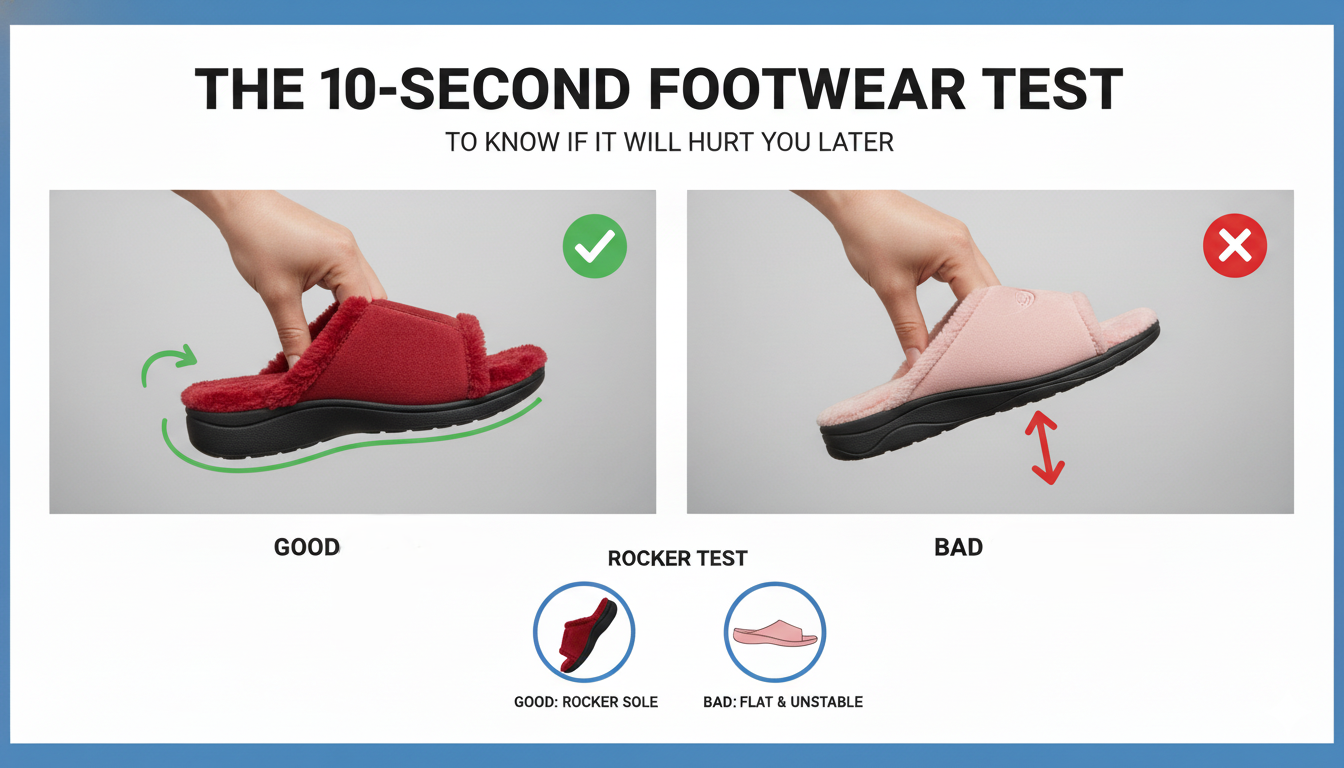
To assess whether a shoe or slipper will cause strain, or if they will support the user's feet as intended, foot specialists use the 10-Second Shoe Test to evaluate footwear.
This test provides a quick and easy way to determine whether the footwear will cause wear and tear on the user's body. The test can be completed in the store or at home. It is important to understand the reason a person's footwear fails them, especially during the winter, when warm and cozy, yet structurally weak, footwear options such as "Women’s Fuzzy Slippers" and "Women’s Winter Slippers" are common.
Reasons for Hard Problems Due to Soft Shoe Construction
 We tend to think about comfort when we think about softness, but foot specialists believe that the excessive amount of 'softness' in the shoes worn is one of the main reasons to have preventable foot pain.
When shoes become excessively flexible (bent) or can bend (twist) easily without providing adequate arch support, your feet are forced to provide all the necessary support. Over time, this culminates in;
- Arch Fatigue
- Heel Pain
- Ankle Strain
- Toe Over-gripping (common in flat house slippers)
- Tight Gastrocnemius Muscles
-
Poor Postural Alignment
This is the reason why even very comfortable slippers for women can be harmful when they have no arch/supported structure as these slippers can feel comfortable when they are worn the first time, but after one week of daily use, the arches may start collapsing after each step taken.
Shoe Testing in 10 Seconds Show the Above Stated Issues Almost Immediately.
The 10-Second Shoe Test
You only need your hands and 10 seconds. Here’s exactly what to do:
Step 1: Bend the Shoe (Forefoot Flex Test)
To perform this Task take hold of the shoe with both hands; now bend the shoe by lifting the toe portion upward.
Rule of Thumb:
The only part of the shoe that should bend while doing that is the Front Third of the Shoe... Where your Toes actually bend naturally. If your shoe bends all the way back on itself like a soft taco? This indicates a serious issue with the Shoe.
Why do you care?
Bending at too many points makes your foot muscles work harder, increasing arch fatigue and heel stress. Even Recovery Slippers should have some degree of Structural Support to avoid having the Midfoot collapse with each step taken.
Step 2: Twisting of Footwear (Torsion Testing)
Place your heel in one hand and your ball of foot in your other hand. Now twist your shoe to the left and right.
The rule:
If your footwear provides support, it will provide very little or no ability to be twisted.
A shoe that twists like a towel being wrung dry will not provide stable support for your foot.
Why you should care:
When your footwear is too easy to be twisted, your ankle and arches have to make compensatory movements (in addition to whatever shoes and clothing you wear on top), especially when walking or standing on tile or wooden flooring. The compensatory motions made due to excess torsional movement will lead to stiff, sore feet at certain times (like the morning).
Step 3: Testing the Footwear's Arch Support System (Testing for Arch Support)
Position the shoe side-to-side and press down hard onto the center (mid-sole).
The rule:
If the mid-sole collapses easily when pressure is applied (like pushing down), then the mid-sole is not firm, and therefore, the shoe is not providing sufficient structural support for your arch or foot.
Why you should care:
The arch support area maintains the arch's upright position. Footwear that has weak midsoles, such as many styles of fuzzy slippers selling to women, will negatively affect flat feet and exacerbate plantar fascia strain by providing insufficient structural support.
Step 4: Check Stability of Heel Cup
To check the stability of the heel cup, apply pressure to the back of the heel area. The heel cup should feel firm and supported (not flimsy or soft). If the heel cup was to collapse (which means it would allow the foot to roll in or out), it could lead to pain in the heel, knee, and lower back.
Step 5: Lift the Shoe for Weight Test
Pick up the shoe with one hand. The shoe should feel light weight but still have enough structure to be supportive. Almost always, if the shoe feels really light weight (extremely light), there is something wrong with the shoe's design regarding how well it will support the arch of the foot. Quality slippers (including orthopedic slippers) are made out of more supportive materials than ultra-lightweight foam that compresses in less than a week.
What Next with Worn Out?
Once A Shoe or a Slipper Fail One of the Shoe Testing Processes, It Is Often Indicated By:
- Little or No Arch Support
- Bad Shock Absorption
- Increased Fatiguing of Foot Muscles
- Increased Pressure on the Heel and Front of the Foot
- Chronic Misalignment
As such, it is also recommended by Foot Health Professionals that you should consider upgrading your regular slippers as well as your regular outdoor shoes.
Most people are walking in their homes on hard surfaces 8-12 hours every day throughout the winter months. If you have a pair of warm slippers for women that have not passed any of the above tests, then when you are wearing them around your home, you are basically walking on the floor (at an average temperature of 65-75 degrees) as if barefoot with no protection.
The Footwear That Passes the Test—and Protects You

Let’s look at the types of footwear that generally pass the 10-second test and support long-term foot health.
1. Surgical Slippers
Ortho slippers provide adjustable Fabric support with a midsole that conforms to your foot's shape.
They also relieve:
- Heel Pressure
- Arch Pressure
- Over Pronation of the foot
Unlike your regular fuzzy slippers, orthotic slippers will keep your feet in alignment and prevent them from collapsing to the inside of the foot.
2. Supportive Slippers
Supportive slippers are perfect if you suffer from sore arches or heel pain in the morning.
Benefits:
- Helps Maintain the Arch and Natural Heel.
- Eliminates stress on the plantar fascia.
- Provides stability on flat surfaces within your home.
If your slippers support an arch and have a heel cup, then they fit in this category.
3. Sore Feet Recovery Slippers
- Recovery slippers help to relieve tired, sore, or swollen feet.
- Most recovery slippers are constructed from lightweight materials that can be folded or bent easily, while providing ample cushioning under the foot.
They provide shock absorption while maintaining a soft feel on the bottom of the shoe.
4. Structured Winter Slippers For Women
Comfortable styles of footwear should be designed to provide support; they should not be flimsy.
1. A good quality winter slipper designed specifically for women will:
- Be made with a reinforced midsole
- Be made with a cushioned heel cup
- Have a stable outsole
These slippers will help keep your feet warm and provide ample support. This support is particularly important during the winter months, when the foot muscles tend to be more "stiff" than during the warmer months.
2. Slippers that are considered comfortable but do not meet the "10 second test" are as follows:
- Thin foam slippers
- Loose, fuzzy slippers made for women
- Extremely flexibly warm slippers made for women
- Flat slip-on slippers with no contour
- Very cheap indoor slippers
These slippers do not provide any support (they will fold, twist, collapse, and offer no resistance), so your feet are left to do all of the work with no support!
What to Look for When You Can't Try Shoes On
When you cannot try the footwear (shoes/slippers) on your feet, ensure you confirm the following information from the product description of the footwear:
- Product description contains "Arch Support Slipper(s)" or "Orthopedic Slipper(s)"
- Product image(s) show a firm heel counter
- Product image(s) show a structured/rigid midsole (the material between the outsole and insole)
- Product description mentions rebound technology (for example, "rebound").
The brands that we know for being reputable brands and comfortable did so BECAUSE they produced shoes/slippers designed for ARCH SUPPORT and LONG TERM COMFORT, not just for "softness."
Protect Your Feet in Just Ten Seconds
Foot pain develops slowly, not suddenly overnight.
Common foot pain issues are caused by daily habits, with poor shoe choices being one of the main culprits. For example, if you wear shoes that don't provide the right amount of support, you may develop arch collapse, heel pain, or ankle fatigue.
To find out if your shoes are giving you what you need, here's how to perform a simple 10-second test:
Whenever you purchase women's winter slippers for warmth or arch support, or if you are looking for recovery slippers to help relieve tired feet, always test your new purchase by doing the 10-second shoe test.
Be sure your shoes support your feet; they do not need to hurt you!
It takes only 10 seconds to determine if your shoe is helping or hurting you.