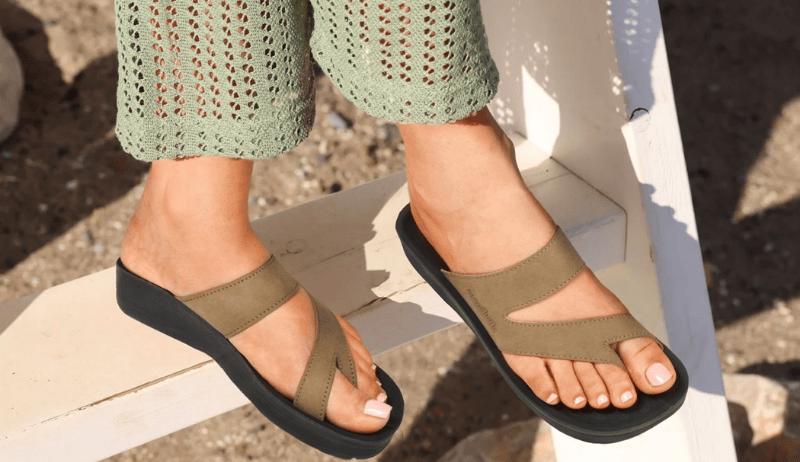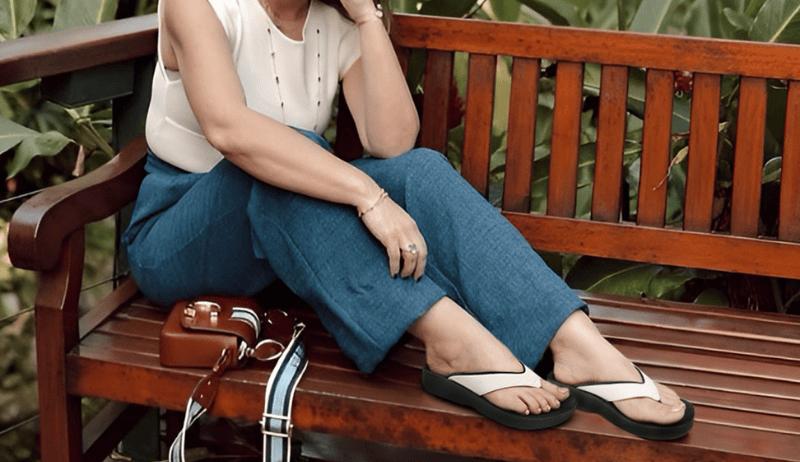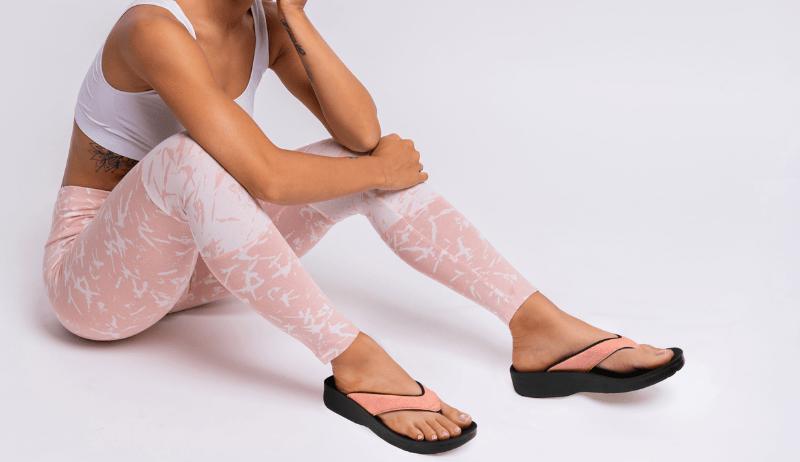
While many women think of purchasing sandals as a simple matter of choosing a color and their "normal" shoe size and checking to make sure they are comfortable for the first few seconds of trying them on, foot experts have found that the majority of women make a critical error when selecting sandals based on foot measurement.
Women typically use only one measurement when determining their sandal size: foot length.
They do not take into consideration width, arch height, heel depth, or midfoot volume.
As a result, the sandals may feel okay initially, but over time can result in rubbing, sliding, arch strain, toe gripping, and/or wobbling.
Unbeknownst to many, the same mis-measurement process occurs even more frequently with slippers, most notably winter slippers, fuzzy slippers, and other soft, seasonal footwear. Because slippers are stretchy, cushioned, and often disguise other fit problems, women may sometimes select sizes that initially feel comfortable but ultimately lead to misalignment and inadequate muscle support for their feet.
This article will explain the failure of conventional sizing methods, discuss other foot-measurement factors that are relevant, and how the use of supportive footwear options such as orthopedic slippers, arch-support-only slippers, recovery slippers, and more can enhance daily comfort.
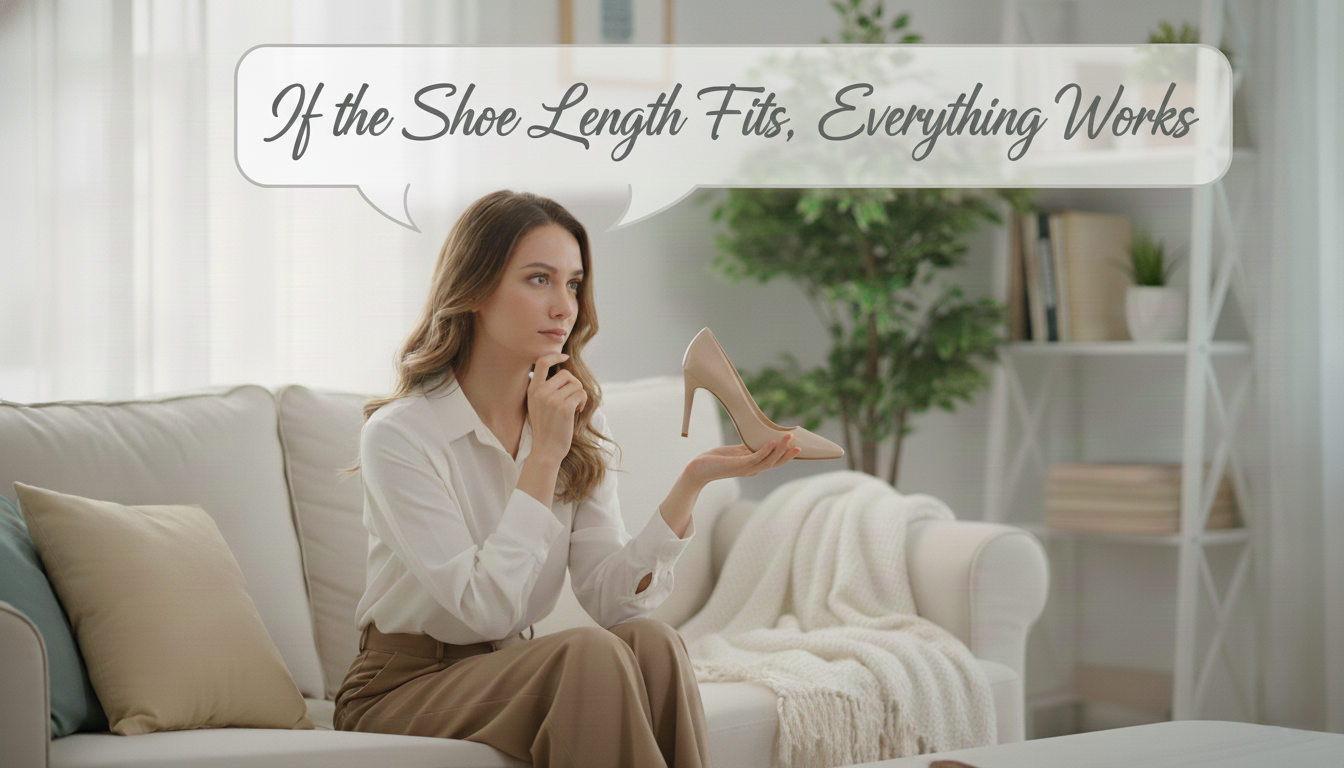
The Assumption: "If the Shoe Length Fits, Everything Works"

Most women believe they have found the right size of footwear if their toes don’t touch the front part of the shoe and their heel rests on the back area of the shoe.
However, this is just one aspect of finding the right shoe.
When it comes to length alone there are other factors to consider:
How does your arch carry your weight?
How does your heel fit into a cushion in the shoe
How does your forefoot fit into the shoe width wise?
How deep is your mid-foot into the shoe?
How do your toes splay?
Does the slipper compress under your weight or collapse?
Due to the stretching and compressing of slippers compared to more structured outdoor shoes, it can be difficult to determine what size will fit correctly.
For example, a person who wears a size "true 39" in sandals might struggle with determining their slipper size. With slippers usually just stretchy, most women buy them for the initial feel of coziness on the first day. A week later they find that the slipper is now too loose, flat or unstable for them.
The Influence of Incorrect Footwear Sizing on Foot Pain
Wearing shoes based solely on foot length can contribute to:
- over-pronation (where feet roll inward)
- fatigue of the arch
- slipping of the heel
- tight tendons due to "gripping" of the toes
- blisters caused from rubbing against the side of the foot
- increase in discomfort from plantar fasciitis.
Slippers contribute to these issues; for example, although fuzzy slippers are nice and plush initially, over time the lack of structural support causes the arch to drop lower and lower. As a result, many people do not realize there is a fitting issue until it becomes painfully evident.
Experts recommend that you consider the support and structure of the shoe rather than just the length of the foot.
How Mistakes in Sizing Sandals Translate into Mistakes with Slippers
You can easily see if a sandal fits correctly since it exposes the entire foot.
However, a slipper that is designed to keep your feet warm and cozy can easily hide these problems.
|
Footwear Type |
What Women Usually Feel First |
Underlying Measurement Issue |
|
Sandals |
Rubbing, slipping, toe gripping |
Wrong width + arch placement |
|
Soft fuzzy slippers |
Cozy at first, loose later |
Wrong volume + compression |
|
Warm slippers for women |
Sinking sensation, no support |
Incorrect arch height match |
|
Relief or discomfort |
Heel depth + arch alignment |
The Measurements That Really Matter (And Most Women Don’t Consider)

When shopping for supportive sandals or slippers, the measurements to take into account are much more than just the length of the sandal/sleeper.
Below is a summary of the key points—and how these measurements impact daily comfort.
The Measurement of Arch Height—An Unseen Critical Measurement
Many women do not know what type of respiratory support they have:
- Low Arch
- Neutral Arch
- High Arch
Regardless of which type of respiratory support you have, this measurement is critical, because it will tell you where your foot needs support, how much cushioning you actually require and how your slipper should support your midfoot through cradling.
Arch support slippers are built precisely for this reason, so that the arch of your foot does not collapse down into the softer foam.
When you only take length into account and buy a slipper, you could also wind up with:
- An arch that is too far forward.
- An arch that is too high.
- No arch support at all.
This is one of the main reasons that some women’s winter slippers seem comfortable at first, but end up causing fatigue later on, as the slippers compress and flatten due to the pressure of your weight.
A Common Misconception About Women's Foot Width
Women assume that their feet are "normal," however, there are several factors that affect foot width: Age, Pregnancy, Weight Loss/Gain, Inflammation, and Daily Activity. Stretchable slippers can conceal foot width, causing women to believe that their slippers fit well. In one week's time, the shoe will be loose and the foot will not have proper support from the shoe.
Orthopedic slippers are designed to provide lateral support to the foot in addition to cushioning and therefore help maintain foot position, even when foot widths change.
Tip: Understanding Heel Depth and Stability
Heel depth determines the stability of the foot in a number of ways: how well the foot fits, whether the heels can move side to side, and how well the shoe will absorb shock. Shallow heel cups allow for more wobble; while deep heel cups, commonly found in recovery slippers, keep the heel located and aligned.
When women select slippers based on length only, the result is a heel cup that does not properly fit the heel.
Footwear Volume (AKA Midfoot Volume) is the Most Commonly Ignored Measurement
Footwear volume determines how much vertical space your foot takes inside your slippers.
If your slippers have:
Too little footwear volume = Slipper tightness/slipper compression
Too much footwear volume = Slipper sliding/slipper instability
Soft, furry slippers for women collapse easily, allowing the footwear volume to increase and causing your foot to slide forward as you walk.
On the other hand, warm, structured slippers for women hold their shape well, preventing that "sloppy" feel.
Why Proper Footwear Size/Shape is Even More Important in the Winter Months
Cold weather causes foot joints to become stiff and limits overall foot mobility.
Thus a woman's feet will experience:
A tighter (more) plantar fascia (the tissue that supports the arch) - Less toe-spreading - A more Rigid (stiffer) arch
As a result, mistakes made in measuring for proper footwear size will be exacerbated in the colder months.
During the winter months, women walk more frequently on harder indoor floor surfaces; thus the lack of support in the slipper (or incorrect sizing in terms of width/arch height) means their feet will not be protected from the impact of these surfaces.
Because of this, as more podiatrists begin recommending high-quality winter slippers for women, many of these products now include supportive insoles.
Using the Foot-Shape Method vs Measuring Length for Shoe Size
To size shoes accurately, it is important to consider these factors in addition to length;
1) Arch Height; Low, Neutral or High, matching you with the proper support.
2) Depth of Heel Cup; Tells how stable your foot will be and how your foot will line up.
3) Volume of Mid Foot; Prevents sliding and tightness
4) Width of Foot at Ball; Allows the toes to spread out properly.
5) Compression Due to Use; Important for Recovery and Ortho slns as they soften going through the recovery process.
These two types of slippers use these features when they're being designed to create a structure in the base that doesn't allow them to sink, while the Ergonomically designed footbeds will conform to your individual shape without losing shape through use of the slipper.
What Supportive Slippers Do for Mistakes in Sizing

Women's fuzzy slippers offer no extra support; however, Women's Supportive Slippers support you if you've made an error with your size.
Types of Women's Supportive Slippers:
Orthopedic Slippers
Contains anatomical footbeds designed to be sturdy, support the arches properly, and support the heel for women who unknowingly selected a longer or wider size.
Arch Support Slippers
Helps to properly align your feet so that your toes are not grasping (a frequent problem when a sandal or slipper is slightly too long or wide).
Recovery Slippers
Are designed for tired, swollen, or painful feet. These slippers adjust to changing foot volumes better than other types of slippers, so they help compensate for variability in sizing.
Winter/Warm Women's Slippers
When constructed with interior support, they will not allow the arch of your foot to sag, as would occur in traditional plush material slippers, which will distort the fit of the slipper through wear.
Indicators Your Footwear is Too Small (Length May Be Correct)
- You feel as though your heel is coming out from under you when you walk on a hard surface.
- Your toes are grasping to maintain their position on the footbed of the footwear.
- Your arch is feeling unsupported or fatigued.
- The slippers that you wear have a tight fit initially, but they become increasingly loose over time.
- You tend to slide forward in your shoes while walking.
- The outer portion of your foot may experience irritation from rubbing against the sides of the shoes.
- If you walk on a hard surface, you may have a feeling of "flopping" or being unstable.
Most of the time this indicates an issue with either the amount of volume, width, or arch height alignment within your shoe—NOT the length.
What to Remember: The Length of a Shoe is Not the Most Important Thing
The majority of women buy sandals and more specifically slippers based solely on the measurement of length.
Length is easy to measure; therefore, it becomes the default measurement.
The true measure of comfort, stability and long-term foot health is determined by how well your shoe fits into each of these areas of the biomechanics of foot placement:
- Arch Height
- Heel Depth
- Width
- Midfoot Volume
- Structure and Support
This is why upgrading to the supportive categories of shoes such as Orthopedic slippers, Arch Support slippers, and Recovery slippers can be beneficial in correcting common sizing discrepancies and preventing foot fatigue, even when your size fluctuates throughout the year.
When you stop using the Length of your Shoe as a measurement and begin to focus on purchasing footwear that is more closely aligned with the actual shape of your foot, you are no longer guessing what size shoe you need based on how your foot looks on a size chart.