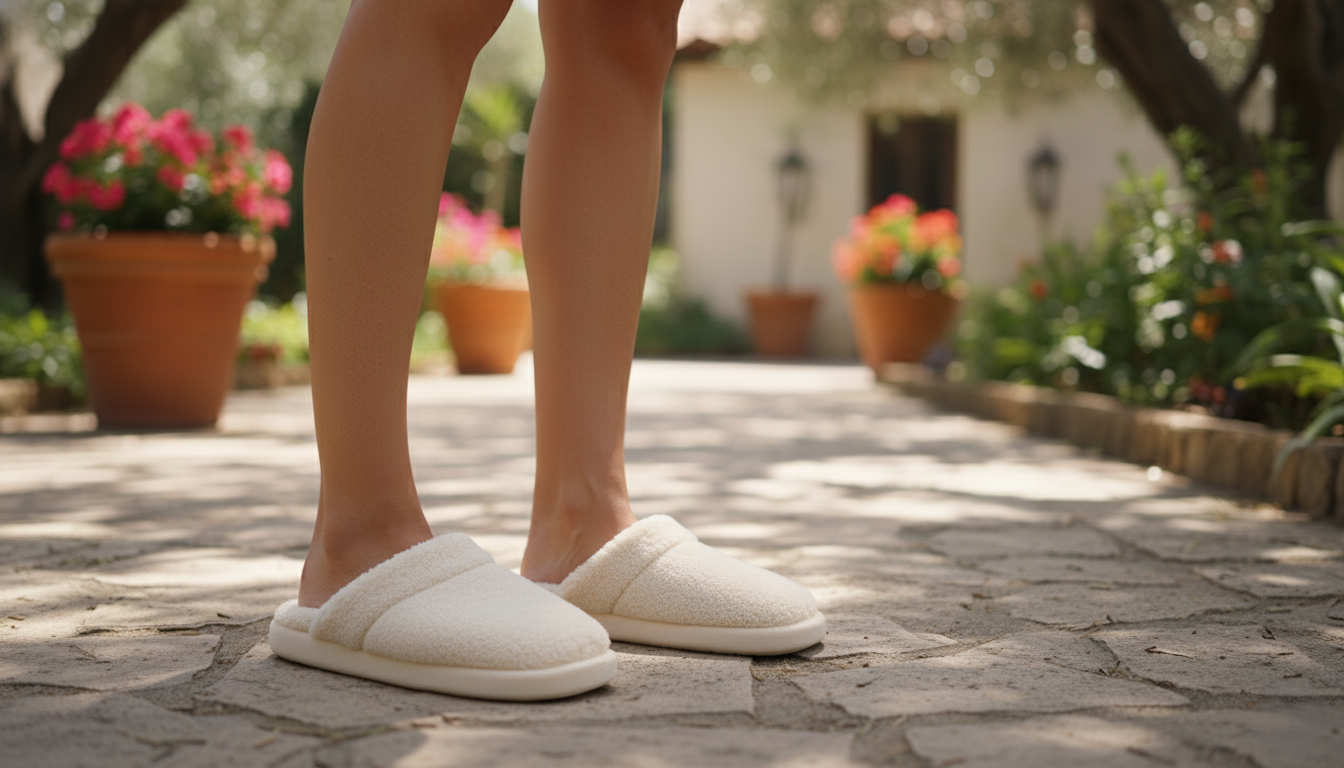
As the temperature goes down, we tend to select the softest, fluffiest slippers available. I know I enjoy for my feet to pod into soft foam after a long day. That first footfall is warm, gentle, and calming—especially during the winter months when we spend more time indoors.
Most people select slippers based solely on plushness, believing the soft feeling equates to comfort. Unfortunately, that plushness can numb your sore foot discomfort for a while, but usually, locations of discomfort lie beneath the plush cushion; hidden from your awareness. Most slippers/shoes are worn for hours at home (and often all day if it is colder weather), so the discomfort coincidentally and gradually builds up.
And now for the discomfort:
Foot fatigue, plantar fatigue, more painful arches, potentially more serious case of Plantar Fasciitis, or alignment issues that you have not even related to wearing slippers.
Cushioning Science: What It Can & Can’t Do
 Cushioning is a beneficial function—but in one capacity: sensory comfort.
What Cushioning Can Do
- Disperses pressure on heels and forefoot on initial contact
- Feels soft underfoot for immediate coziness
- Absorbs some shock from the ground with each step
- This is why most slippers feel good the first time you step into them.
What Cushioning Can’t Do
- Provide anatomical arch support
- Maintain foot positioning
- Stabilize the heel
- Correct overpronation
- Provide midfoot structure or rigidity
- Prevent strain on the forefoot
Cushioning is an experience of comfort strictly at the surface level. It makes the brain say, “Ah, this feels good,” without providing any biomechanical support to the foot.
In essence, you can feel comfortable while your foot is actually working way harder.
The Actual Issue: Slippers That Break Down
The cushiony slippers you enjoy start with their thick foam soles. However, after several days or weeks of wear, something predictable happens:
Compression of foam
Every step compresses the foam under your bodyweight. After a while, it becomes:
- Thinner
- Flatter
- Less supportive
Eventually, it experiences a sudden loss of structure.
Loss of arch support and heel containment
If the foam has collapsed, that means:
- The arch is sunk in
- The heel does not contain itself
- The foot rolls in (overpronation)
- The load has gone toward the ball of the foot
This is particularly damaging for people with flat feet, heel pain, or Plantar Fasciitis.
Why cushioning numbs the warning signals of pain
Soft cushioning behaves like a numbing layer (short term). It dulls the message of early stress signals:
- Slight strain in the arch
- Mild discomfort in the heel
-
A little compression in the forefoot
Once the foam has degraded… the pain! Or after hours - or days - of discomfort.
How cushioning can make certain foot conditions worse
Cushiony slippers may feel therapeutic, but for many common foot issues, the cushioning often adds to symptoms.
Plantar Fasciitis
When the arch has collapsed under soft foam:
- The plantar fascia has overstretched
- The pain increases in the morning in the heel
- The inflammation is worse
Most slippers without the necessary support trigger an occurrence of symptoms.
Flat Feet
The structural arch must be elevated, not softness with extra plushness. The cushioning you have in your sole will:
1. Allow excessive rolling inward
2. Fatigue more quickly
3. Put excessive strain on the ankles and knees
Heel Spurs
The soft soles will not stabilize the heel and increase:
1. Impact over and over again
2. Irritation with the heel spur
Now you start feeling sharp stabbing pain after standing/walking.
Bunions
Cushiony slippers with no structure allow the forefoot to pitch and spread too far increasing:
1. Joint irritation
2. Swelling
3. Misalignment of the big toe
The denominator in all the instances is the same, cushioning doesn't address and guide the mechanics of the foot.
Indoor Behaviors Who Worsen It
Here is the part most people do not take into account: the wintertime way of life makes soft slippers worse.
- Walking on Hard Tile or Marble Floors
- Indoor floor surfaces offer no shock absorption.
- Soft slippers provide no protection against this, causing heel and arch strain.
- Standing for Long Periods in the Kitchen
Winter typically means:
- Cooking at home more
- Staying indoors more
- Standing more on hard floors
Soft soles break down even faster under long duration pressure. Overly soft soles compromise stability. They allow for:
- Arch dropping
- Heel rolling
- Leaning forward
And this creates more stress on your feet.
Most winter slippers are:
- Wide openings
- No heel cup
- Loose structures
When the heel is allowed to move, it promotes:
- Unstable steps
- Toe gripping
- Metatarsal strain
Small movements every day manifest into chronic discomfort before you know it.
The Characteristics of Appropriate Orthopedic Slippers

Slippers should have softness without too much cushion to ensure that the cushioning does not become a problem. A real orthopedic slipper has:
1. Anatomical Arch Support
Not just foam but a molded contour to support your natural arch without collapsing.
2. Durability Mid-Sole
A mid-sole created to hold its shape and resist compression.
3. Heel Stabilization
A deeper heel cup will:
- Center the heel
- Reduce over-pronation
- Prevent rolling
4. Non-collapsing cushioning
The right periodic cushion absorbs shock while maintaining its form days later and will not flatten.
5. Contoured Footbed
A footbed created to align your body—not a slab of foam.
6. Fit
The slipper must hold the foot properly to ensure that you are not gripping with your toes and straining your mid-foot.
When all of these features are present and functioning properly, comfort is no longer an illusion, but rather structural.
How Aerothotic Slippers Help with Cushioning
Aerothotic manufactures medically engineered footwear, and it has created slippers to provide a solution for traditional cushioned slippers’ shortfalls.
Balanced Support + Softness
Aerothotic slippers come together with:
- Plush comfort
- Anatomically oriented arch support
- Stabilizing heel structure
- So the foot feels cushioned and aligned.
Anti-Pronation Features
Built-in support is specifically engineered to inhibit our feet’s propensity to pronate or roll in, which is extremely important if you are experiencing:
- Plantar Fasciitis
- Flat Feet
- Heel pain
Midsoles that Absorb Shock but Don’t Collapse
They absorb shock without collapsing in the process, which helps protect your feet from the hard floors in our homes.
Deep Heel Cup for Alignment
This helps keep your heel and foot in the proper place for alignment and ultimately keeps stress off the joints.
Warmth and Comfort Prepared for Winter
For these reasons, Aerothotic slippers are perfect for Winter—they offer:
- Exceptional support for long hauls indoors
- Warmth with cushioned comfort
- Use in daily wear on tile, marble, and hardwoods
Now that is the support every foot should have when it is cold out and you put slippers on as your indoor shoe.
Pro Tips: How to Test Slipper Support at Home
 Many people do not know how to tell if a slipper has real support. Here is how to check:
1. The Twist Test
Hold the slipper and try twisting it.
If it twists like a towel → it has no stability.
A supportive slipper should offer resistance.
2. The Heel Press Test
Press your thumb into the heel area.
If it sinks down right away → it will collapse under your weight.
3. Arch Placement Check
Stand in the slipper.
If the arch does not line up with your natural arch → it will create misalignment.
4. Balance Test
Stand on one foot.
If the slipper feels unsteady in your stance → this means poor heel containment.
Red Flags of “Too Much Cushioning”
- You sink all the way into the footbed
- Slippers feel unstable on hard flooring
- You feel more fatigued after longer wear while indoors
- You have pain in the heel or arch afterward
When to Replace Old Slippers
You should replace slippers when you notice:
- Flattened footbeds
- Heels that are askew
- Uneven wear
- Loss of arch shape
- Increased fatigue of the foot
Most soft slippers are only good for a few months; this is another reason the structured orthopedic options are worth it.
Softness Is Not Enough — Support Is the Answer
Soft slippers feel lovely for the moment in the winter when we are leaning on them for warmth and long indoor wear. But softness won't solve your problem and may just hide underlying problems. Before you know it, foot conditions like Plantar Fasciitis, flat feet or heel pain could be worse behind the softness.
The solution isn't more softness; it is about balanced orthopedic support.
Aerothotic slippers are made with that in mind and a design that includes softness with structure to give your feet alignment, stability and true long-term comfort.
If you want healthier, happier steps this winter, then check out Aerothotic's collection of orthopedic slippers, and feel the difference real support makes.