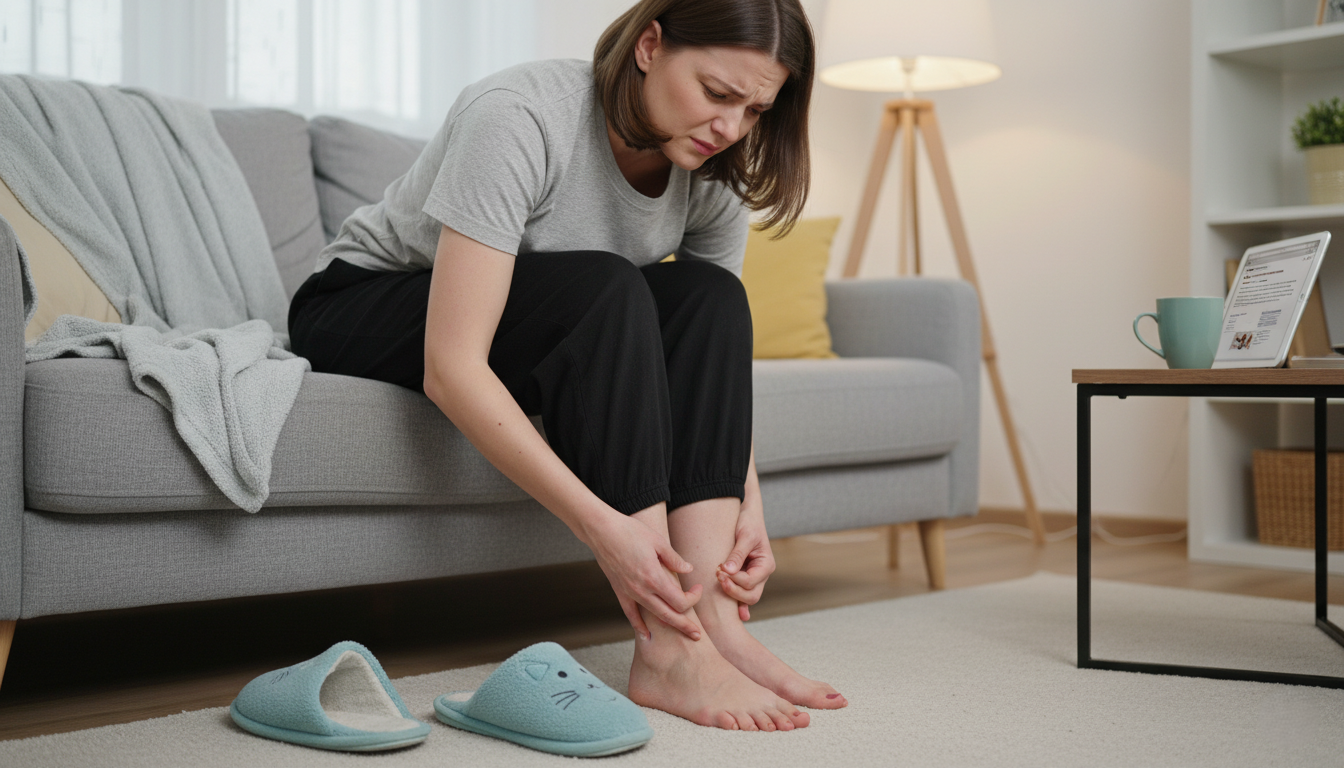
People generally understand that their feet will be sore and achy at the end of a long day outdoors. However, that discomfort will not typically carry over to when they are relaxing at home, but many women experience that same odd behavior— the moment they get into the house, take off their outdoor shoes, and mentally begin their indoor routine, the pain starts. A soreness or achy feeling in the arches of the foot, tightness or stiffness in the heels, some pulling near the toes, and seemingly misplaced tingling or pressure in the foot pads can all coincide with the experience. And to make matters worse, the pain usually disappears the moment they put their shoes back on and go back outside again.
This is usually not coincidental and can typically be explained by one common indoor footwear mistake that many don't even realize they are making.
If we can understand how it is that our feet can behave like this in our homes, then the rest will be about recognizing and being aware of the habits we build around comfort, and how the wrong choices will slowly and little by little overstress the structures of the foot.
The Concealed Dilemma Begins at Home
Outside of the home, individuals don sneakers, boots, or structured shoes with sufficient cushioning and stability (even if not ideal). They may not be great, but at least some part of the shoe acts as a base for the arch and prevents the heel from collapsing inward. But as soon a person steps foot in their home, it all changes. Many walk barefoot on hard surfaces; others put on thin, flat slippers, and others put on old, dilapidated house shoes that no longer provide any support whatsoever.
Because home flooring is typically tile, wood, or marble, the shock feeling of the floor upon each step is sharper. Those surfaces do not provide shock absorption or natural any cushioning. Eventually, this set-up creates a disconnect between what the feet actually need, and what is going on with the feet while relaxing at home. And the outcome is the common scenario many do not associate with shoes: foot pain that only occurs for some reason while at home.
How Indoor Flooring Makes Foot Pain More Severe

Though the indoor setting may feel comfortable, the flooring is not suited to the foot’s natural design. Hard surfaces cause the bottom of the foot to work harder because there is no compression beneath it to absorb or cushion the impact. If you are not wearing supportive shoes, the arch drops slightly with each step, the raw pressure goes directly to the heel, and the toes grip the floor to keep the body stable. All of this creates increased strain on the fascia, joints, tendons, and small stabilizing muscles.
This is why arch pain, heel pain, and forefoot fatigue often only develop when you are barefoot or in non-supportive slippers.
Winter Worsens the Pain
The cold weather alters everything. When your foot is exposed to low temperatures, the muscles, ligaments, and tendons of the foot will naturally tighten, the circulation will be slower, and the plantar fascia will become less flexible. Floors inside the home are even colder and stiffen the foot, making it more difficult with every step.
That’s obviously why women’s winter slippers become more than a seasonal comfort—they become a layer of protection to keep the muscles of the foot warm, engaged, and not strained; and when slippers have little structure, the cold increases discomfort rather than relieving discomfort.
Often women will turn to soft and fluffy options, believing they are choosing comfort. But flat soft slippers can feel comfortable on the outside, but they generally feature flat insoles and provide no structure. Warm does not equate to aligned. Soft does not equate to stable. And comfort without structure leads to discomfort.
The Barefoot Fallacy at Home
There seems to be a consensus that walking around barefoot in the house is "natural." It feels liberating, however, it does not do anything positive to the foot in today's indoor environments. Natural barefoot walking is meant for being outdoors on grass and uneven surfaces, not inside on cold tile surfaces or cement-like flooring.
On these hard interior surfaces, the soft tissues of the foot collapse more quickly and the heel receives much more impact than it normally does. This repeated stress is often why women with flat feet (or sensitive feet) feel discomfort only inside their home, and not once they walk outside.
Barefoot walking may also create more trouble at the mornings as well, which is why someone with mild plantar fasciitis often talks about pain in the mornings with their first few steps—not because of the activity from the day before, but because they have been in the house without adequate support.
Why Pain is Prevented with Outdoor Footwear

When you’re outside, supported, in a structured sneaker or shoe, the arch is elevated, the heel is cushioned, and the foot bones are aligned. When that external support is suddenly removed when you get home, the foot works far harder, and without support.
Think of it this way, if you were to take the frame out of a structure, at what point do you expect the structure to hold itself up? The foot isn’t meant to endure hours on end of unsupported pressure on a rat hard surface that isn't meant for the foot.
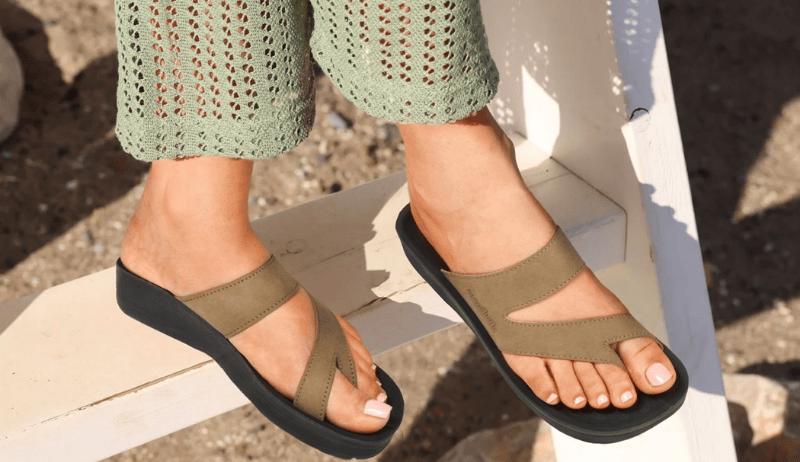
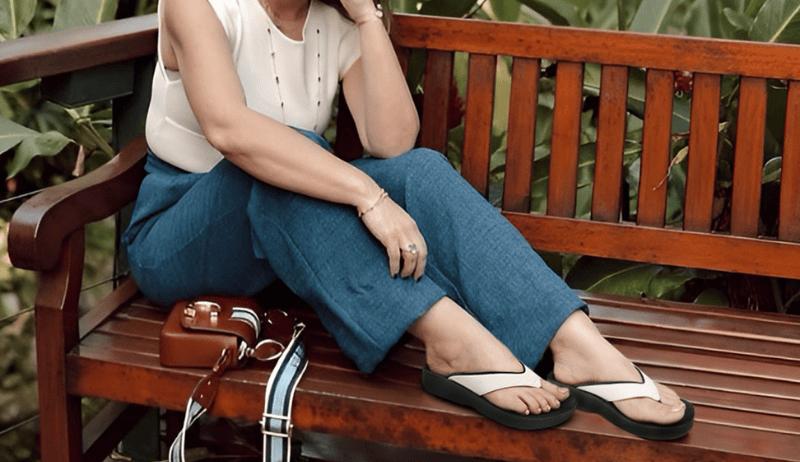
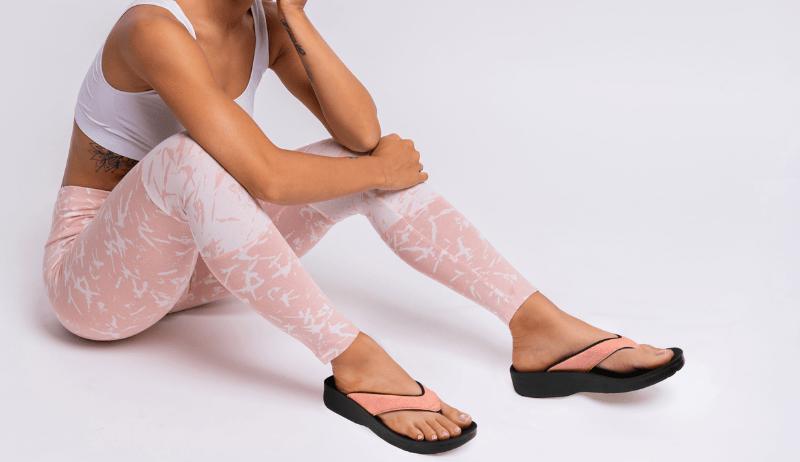
And this is why footwear like Orthopedic Sandals and Women's Arch Support Sandals feel so good outdoors or while running errands. They enable and support the foot, to maintain alignment, reduce pronation, and evenly distribute pressure. If we had a similar style of support at home, the pattern of pain would just go away.
The Importance of Support Indoors Over Outdoors
Most people stand for long periods indoors. Whether it is cooking, cleaning, folding laundry, moving around the house, or standing at the counter, we put long periods of pressure on the heels and arches. Even with these activities, when people do not wear anything supportive, it can add pressure.
From a mental standpoint, people do not expect to experience pain indoors so they feel they can ignore the early signs. These early signs—from some discomfort in the morning to sensitivity in the heel—are indicators that foot is overloaded while doing home routines.
Shoes outdoors are the armor; shoes indoors are the foundation. When the foundation is weak, the entire structure fails.
How Proper Indoor Footwear Solves the Whole Problem

The conversion from flat slippers to structured indoor footwear changes the whole picture. Good indoor slippers have enough arch support to stabilize the foot, prevent excessive pronation, and absorb the shock of being on tile or wood floors.
Once the most critical base layer of support indoors is able to keep the foot aligned, our plantar fascia relaxes, our heel is able to get extra cushioning, and toes are not gripping to keep the balance anymore. In time, we are able to escape the cycle of pain that is unique to being at home.
The heat of winter fabrics keeps tendons and muscles stiff from the colder winter months. The material is supportive to the foot, but the outline of being indoors still feels a bit loose and inviting, so you are not confined to feeling like you are wearing outdoor shoes indoors all the time.
This is why the ideal indoor option incorporates warmth, structure, cushioning, and alignment. It creates an environment to support the foot while embracing the sense of softness, squishiness, and lack of restraint we all expect from a footwear choice.
Learning What is Causing Your Pain in the Foot At Home
Most clients think they need some stretches or exercise or medical intervention for their foot pain. While those are helpful, often the cause is much simpler (Lack of indoor support). The foot is a mechanical structure with an arch, joints, tissues, and load-bearing. If that structure collapses over and over again, no open-toed shoe or sneaker can undo the cumulative effects.
The issue is never outside. It’s in the home... every day, without the person even realizing it.
The Simple Change That Impact Everything

When women swap out their flat or overly soft house shoes for a supportive shoe, the improvement is often immediate; arches feel 'lighter', heels do not ache and the first steps in the morning often feel more comfortable.
In the winter, that indoor footwear reduces pain as warmth and support do not compete with each other. Often even mild arch strain, early morning tightness, and the fatigue of being on your feet, have begun to settle.
The right 'home shoe' becomes a form of therapy; effortless, constant and protective.