It’s understandable why the feet might hurt after a long walk. It’s also completely logical to have foot pain after a workout.
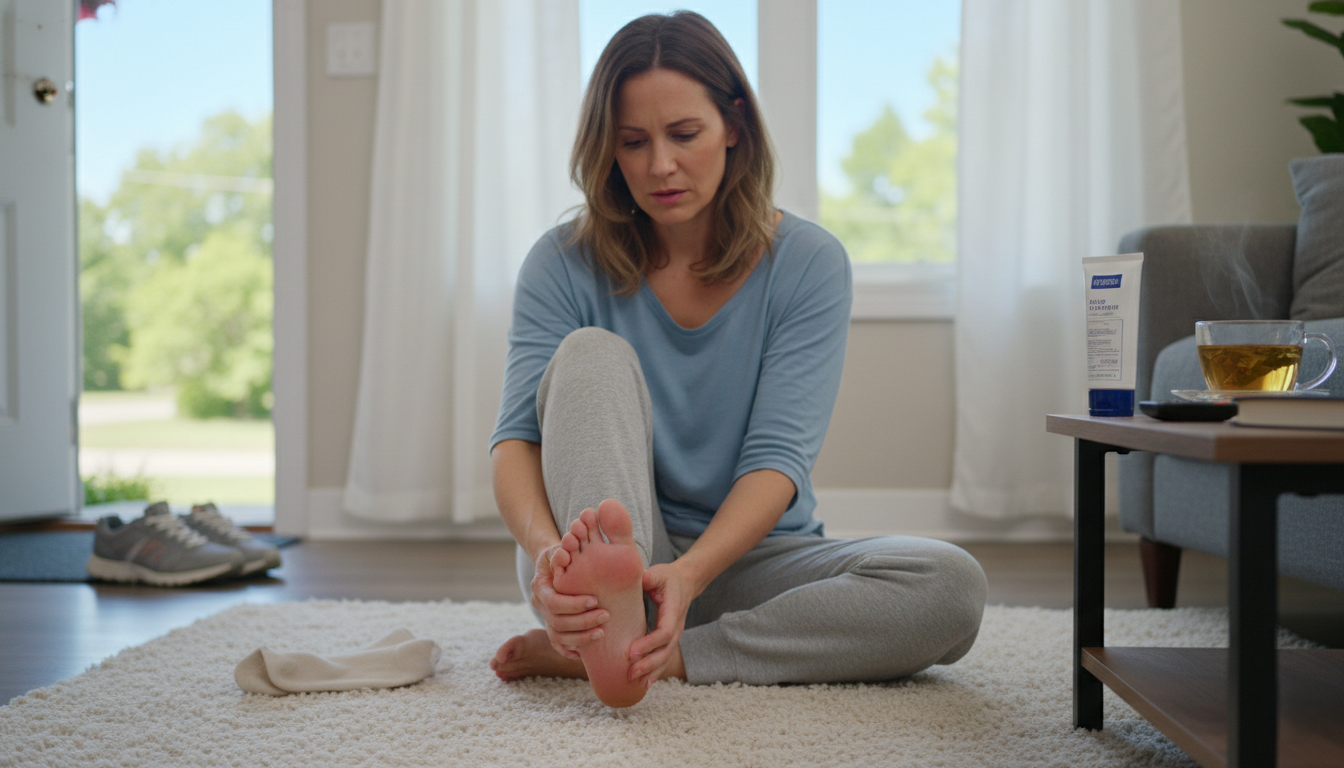
However, the phenomenon of having foot pain after vacuuming the living room or mopping the kitchen floor is a shock to people. Especially women who already experience pressure on the arch of the foot, tenderness in the heel area or soreness at the end of the day.
If you are in pain after a short chore, even though you feel fine when doing errands or wearing appropriate shoes outside of the house, there is a real reason for that! It’s NOT because of the, “Aging process.” It’s due to posture, surface, repetitive movement, and most importantly, improper footwear when you are at home.
This is where many people are unknowingly making the biggest mistake with footwear; by wearing a soft, flat slipper; walking barefoot; or sliding into cute but not structurally supportive fuzzy slippers. And it turns out that, inside the home, when you move around the space or even do it while doing chores, it puts more strain on the feet than typically realize.
Let’s break down why this is happening, what is happening biomechanically, and some simple fixes starting today.
Why Housework Can Hurt Your Feet More Than You Anticipate

Daily chores have the kind of movement patterns that challenge your feet: prolonged periods of standing still, continuous bending, side-to-side pivoting, pushing, pulling, and the habit of walking small steps over and over again. These patterns activate stabilizer muscles in your feet much more than simply walking outside does.
When you’re outside, chances are, you're wearing better shoes; possibly your Orthopedic Sandals, cushioned sneakers, or Women's Arch Support Sandals. When you come back inside, most people immediately take off supportive shoes and put on something soft and non-supportive instead. This is where the problems begin.
Why Do Chores Place a Uniquely Stressful Demand on Your Feet?
1. Hard indoor flooring
Tile, marble, hardwood, and laminate flooring do not have shock absorption at all. Standing on the floor for 15-30 minutes while vacuuming or folding laundry applies pressure to the heel and the arches without any shock absorption.
2. Slow, repetitive steps
Chores require us to take relatively tiny steps, to stop moving and shift our weight continuously. These patterns are taxing for the plantar fascia and small muscles of the foot.
3. Forward-leaning Posture
You lean forward while mopping or vacuuming, and your weight shifts onto the forefoot, which overtime, can lead to metatarsal pain.
4. Rotating movements:
Twisting your body while your foot stays still can agitate the arch, cause fatigue in the ankle, or fuel bunions.
5. Doing chores with no shoes or shoes with soft soles:
This increases the impact of every step your foot takes. Bare feet or flat winter slippers for women have little protection from prolonged stress.
All of these factors work together and lead to that familiar burning under the arch of your foot, tired ankles, or soreness creeping in during the early evening.
The Indoor Footwear Mistake Almost Everyone Makes
Most people put on flat slippers, fluffy socks as soon as they come home, as those footwear are usually associated with warm, soft, cozy sensations. However, softness is not the same as supportive.
Here is what happens with typical flat indoor slippers:
- They are too flexible and allow the arch to collapse.
- They do not have heel cups, causing your heel to roll inward with every step.
- They have no shock absorption, causing hard surfaces to feel even harder.
- They allow the foot to overpronate, which can strain the knees and ankles.
- The cushioning compresses rapidly so there is no stability after only weeks with a pair.
- This is the fastest way to tire the small muscles into the feet.
It is why women often feel fine in outdoor shoes but feel sore and discomfort the moment she puts on indoor slippers. The difference is support, the indoor pair is simply not doing its job.
Why Does Cleaning Cause Foot Pain
When you vacuum, sweep, or mop, you are not consciously bringing areas of your foot that could use support to action.
Let’s break this down anatomically.
The heel absorbs pressure
Standing in one place while you are cleaning places all of your body weight on the heel and cannot relieve itself. The hard floor makes this pressure worse.
The arch of the foot is stretched and contracted
Repetitive motions going forward overstretch the plantar fascia. If you wear non-arch-support slippers for women indoors, the extreme load will only strain the arch more consistently.
The ankle stabilizers fail
Cleaning duties include short bursts of balancing on one leg for cleaning—like sitting on your heels or getting underneath furniture. The ankle will become fatigued and inefficient quickly without arch-support footwear.
The forefoot is overloaded
Cleaning duties like mopping or scrubbing will place load on the ball of the foot, which will produce a burning sensation.
Poor posture indoors
At home position, you slouch and position will forward; thus, poor posture takes misalignment down the kinetic chain, down into your feet.
This combination will lead to you feeling fine at the grocery store or office, until cleaning the kitchen leads to a limp.
The Unseen Long-Term Effects This Can Cause
Denial doesn’t help—this will almost invariably worsen.
Common consequences of barefoot living, or inadequate indoor footwear leads or aggravates, includes:
- Plantar fasciitis
- Pain and fatigue in the heel
- Overpronation
- Discomfort associated with flat foot
- Metatarsalgia
- Morton’s neuroma discomfort
- Collapse of the arches
- Bunions and toe problems
- Weak intrinsic foot muscles
Soft flat slippers just don’t give the foot enough stability to avoid these problems. In fact, most indoor footwear makes the problems worse.
The Solution: Supportive Indoor Footwear That Works like Real Shoes

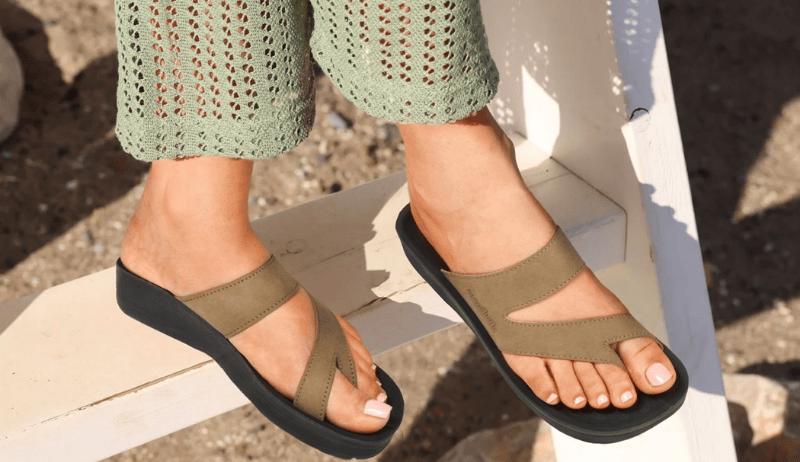
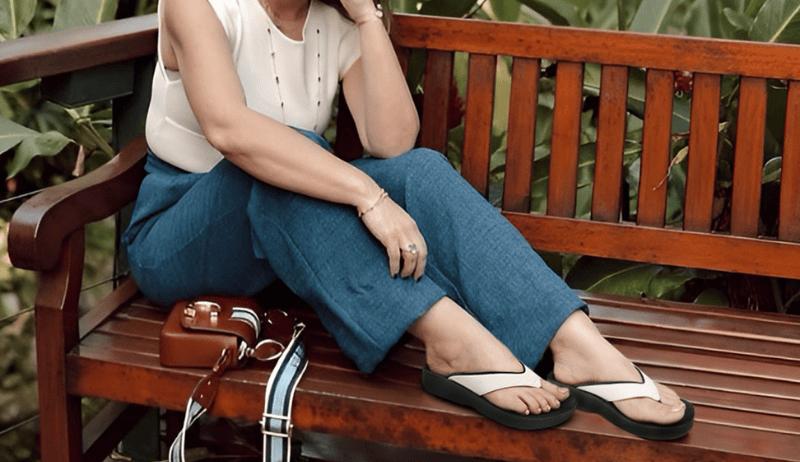
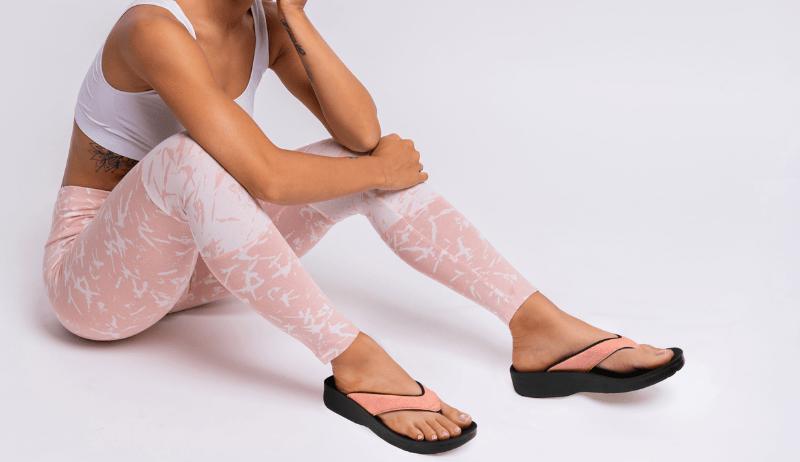
One of the simplest and most effective ways to avoid pain killing chores is to wear indoor footwear that supports your feet. More like structured indoor wear—something like Orthopedic Sandals or Women's Arch Support Sandals, but made for inside the house.
What is different about proper indoor footwear?
-
It grips the arch to prevent strain.
-
It features a deep heel cup to prevent slipping.
- It provides firm but cushioned support for the plantar fascia.
- It distributes pressure uniformly.
-
It gives stability to the ankle in twisting motions.
-
It absorbs impact from hard floors.
-
It aligns the foot and ankle while walking.
How to Select Indoor Footwear That Will Help Prevent Chore-Related Pain
When looking for support for in-home wear choose structure, NOT softness.
You want:
- A contoured base of arch support
- Heel structure
- Moderate firmness (not total flexibility)
- Shock absorption
- Outsoles that are durable
- A shape that prevents excessive rolling of the foot
These structural elements are what you will find in properly constructed slippers for women's arch support. They offer the soothing feeling of indoor softness while offering the orthopedic structure of shoes for outside. They prevent foot fatigue before it even starts.
After switching to slippers with arch support you will experience:
- Less arch burning
- Less heel pain
- Better balance
- Less end of the day throbbing
- Easier posture while cleaning
- Stronger foot muscles in the future
And you won't have sore or drained feet after your chores are done.
Convenient, Everyday Countermeasures for Chore-Related Foot Pain
If foot pain is an issue at home, you can take some immediate steps to help reduce pain:
- Warm-up the feet before doing chores - cold muscles tend to strain more easily.
- Avoid doing chores barefoot, even quick ones such as wiping the counter.
- Take breaks every 10-15 minutes while doing chores that require standing for longer times.
- After cleaning each area, be sure to Always stretch your calves - tight calves create tension on your arches.
- Invest in supportive indoor shoes, and then stop your footwear habits in keeping them close to your main living area.
- Ending the day by using smaller rolling foot massages to relax the foot fascia.
Generally speaking, most people feel better within a matter of a few days by wearing supportive shoes and being aware of their postures.
The Bottom Line
Chores can appear innocuous but actually can put more stress on your feet than you realize. Walking on hard floors, standing around, bending and twisting, changing your weight back and forth, and so on, can all add up.
The difference between feeling pain and feeling fine usually just comes down to:
What you are wearing on your feet when you are at home.
Flat women's winter slippers and going barefoot can all feel fine when you are sedentary, but they begin to fail when you start moving with purpose.
Sensible footwear for indoors should provide your feet with a good support system, much like you would find outdoors.
Once you have that upgrade, anything you do around the house, vacuuming, mopping, cooking, laundry, each becomes easy and pain-free.