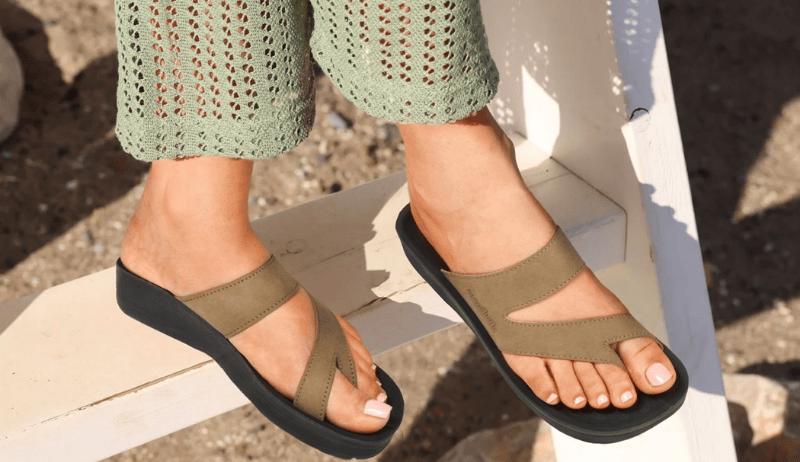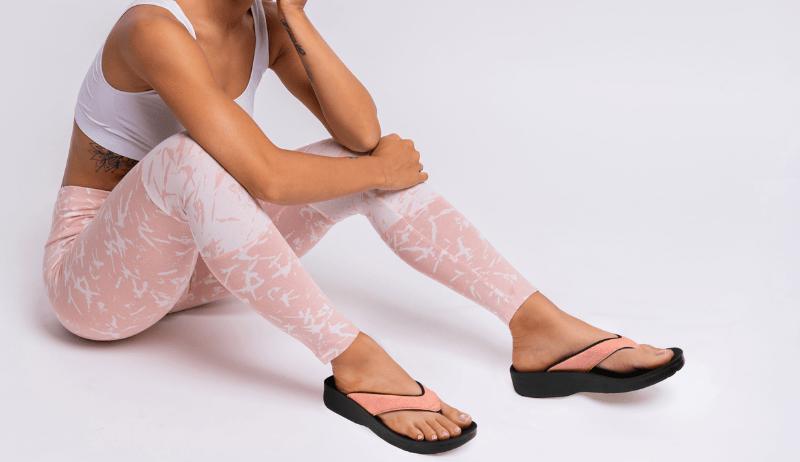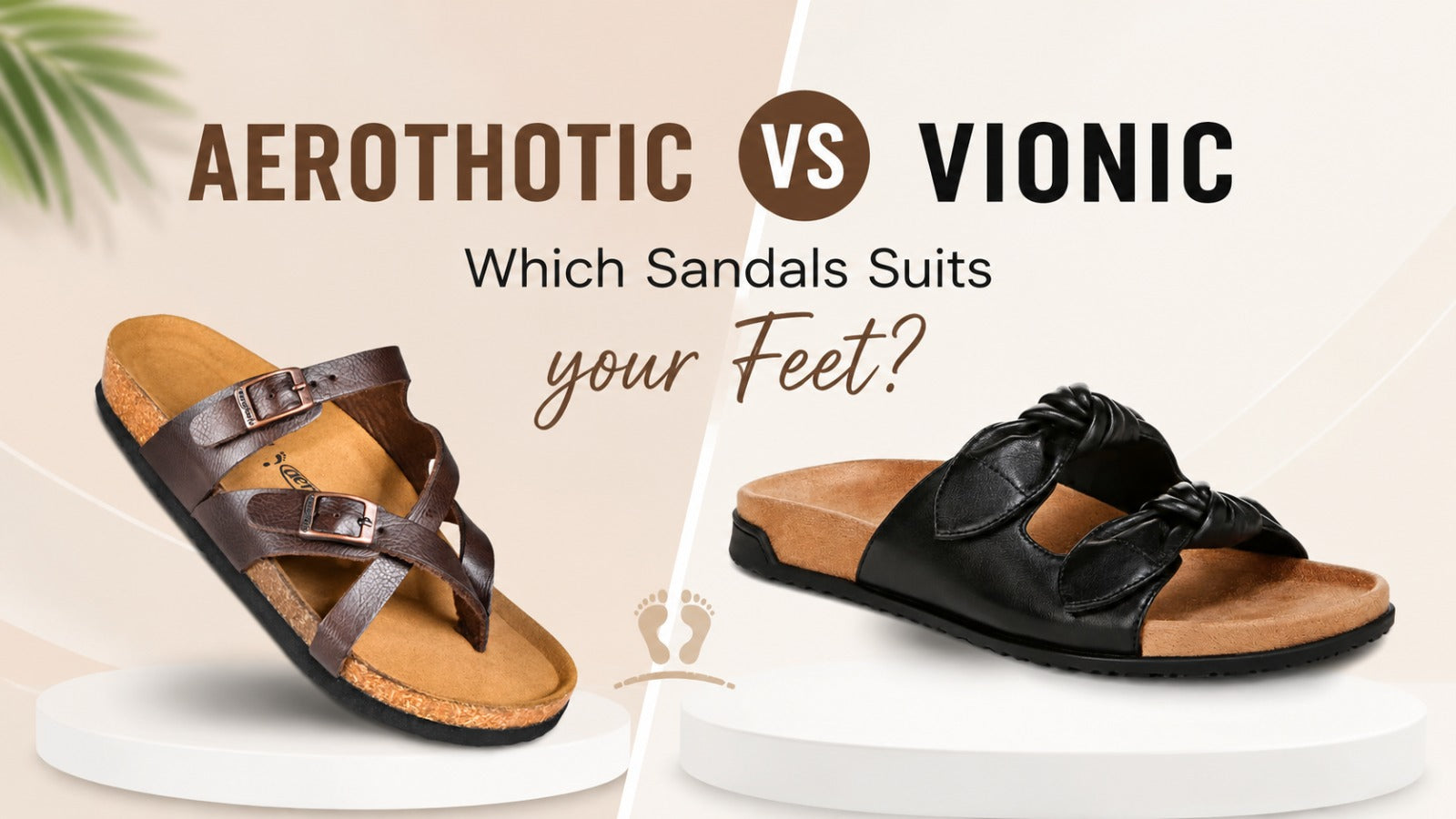
Type "sandals with arch support" into any search bar and two names show up again and again: Aerothotic and Vionic. Both promise real orthotic construction instead of a flat foam sole dressed up as a summer shoe, and both have earned loyal followings for it. But they are built around different priorities, and the gap between them is bigger than most comparison charts let on. This guide walks through what each brand actually does differently, so you can decide with your eyes open instead of picking whichever name you saw first. If you want to jump straight to browsing, Aerothotic's arch support sandals collection is a good starting point.

Quick answer
Aerothotic and Vionic both build orthotic support directly into the sandal rather than treating it as an add-on. Vionic's Orthaheel and VIO MOTION footbeds are backed by a peer-reviewed clinical study and sold at a premium, typically $90 to $130 a pair. Aerothotic uses its own contoured footbed with a deep heel cup, carries the same APMA Seal of Acceptance on many styles, and typically runs $40 to $50 with a wider range of colors and styles at that price. If clinical research and brand history matter most to you, Vionic has the edge. If you want the same core support features across more styles without the higher price tag, Aerothotic is the better fit for most people.
What both brands are actually built around
Strip away the marketing and both brands are chasing the same basic goal: a footbed that does the job an aftermarket insole usually has to do, contouring to the arch, cupping the heel, and absorbing shock, built directly into the sandal instead of stacked on top of a flat sole. Vionic calls its version Orthaheel or VIO MOTION technology. Aerothotic calls its version a contoured orthotic footbed with a deep heel cup. The underlying idea is nearly identical, arch support and heel stability are what actually reduce strain on the foot, not cushioning alone. We go deeper into why that structure matters more than padding in our piece on why arch support matters.
Where Vionic pulls ahead
Vionic has been at this longer, and it shows in a few specific ways. The brand funded a peer-reviewed clinical study on its contoured sandals and heel pain, which is a genuinely rare thing in this category and gives Vionic a research citation most competitors cannot match. It also has a wider retail footprint, sold in department stores and specialty shoe shops where you can try a pair on before buying, and a broader range that extends beyond sandals into sneakers, boots, and slippers built on the same footbed platform. For someone who wants a single brand to standardize on across every category of shoe, or who specifically wants published research behind a purchase, that consistency has real value.
Where Aerothotic pulls ahead
The clearest gap between the two brands is price. Vionic sandals typically run $90 to $130 a pair, while Aerothotic's supportive styles typically land between $40 and $50, often carrying the same APMA Seal of Acceptance. That difference means you can build a rotation of two or three Aerothotic pairs, a thong for errands, something dressier for going out, for close to the cost of a single pair of Vionics. Aerothotic's Pearly Fume sandal is a good example, a gel-injected footbed and deep heel cup dressed in a shimmer finish that does not look clinical, at less than half of what a comparable Vionic style costs.

“The only sandals I can wear all day without foot pain. Worth every penny.”
— Verified Aerothotic buyer, Pearly Fume
Hear it from podiatrists on video
If you would rather see this explained than read it, a couple of short podiatrist clips cover the same fundamentals both brands are trying to deliver, the kind of structural support that actually matters in a sandal.
Watch: a podiatrist on sandal support
Instagram video, opens in a new tab
▶Watch: podiatrist-recommended features
Instagram video, opens in a new tab
Find your fit in 5 seconds
Tell us what matters most, and we will point you to the brand worth starting with.
Price and value side by side
A single pair of Vionics at $90 to $130 buys roughly two to three pairs of Aerothotic sandals with a similar orthotic footbed and APMA acceptance. That math matters if you wear sandals seasonally rather than year round, or if you want different styles for different parts of your week without treating each pair as a major purchase. It does not mean Vionic is overpriced, the clinical study and broader retail presence cost money to maintain, but it does mean the extra spend buys brand research and reach rather than a meaningfully different footbed experience. Browsing Aerothotic's comfort sandals side by side makes that value gap easy to see for yourself.
Typical price per pair
What one Vionic pair costs, in Aerothotic pairs
Roughly two to three Aerothotic pairs for the cost of one pair of Vionics.
Style range and where to shop
Vionic's advantage in physical retail means you can try a pair on at a department store before committing, which matters if you are unsure about fit or arch height. Aerothotic sells primarily online, which trades that in-store trial for a larger size range and more frequent style drops within its price tier, including a dedicated medium arch collection for people who know their support level and just want more options inside it. Aerothotic also backs online purchases with a 30-day comfort guarantee, which closes some of the gap left by not being able to try them on first.
Aerothotic vs Vionic at a glance
Hover a row to see it highlighted.
| Feature | Aerothotic | Vionic |
|---|---|---|
| Footbed technology | Contoured orthotic footbed with deep heel cup | Orthaheel and VIO MOTION biomechanical footbed |
| Typical price | $40 to $50 | $90 to $130 |
| APMA Seal of Acceptance | Yes, on many styles | Yes, on many styles |
| Clinical research | Not published | Peer-reviewed study on heel pain |
| Where to buy | Primarily online, 30-day comfort guarantee | Online and in department or specialty stores |
| Style range per budget | Wide, several styles for the price of one Vionic pair | Wide overall, extends into sneakers and boots |
Quick poll: what matters more to you?
Just for fun, your click updates the bar below.
Which one should you actually buy
If you specifically want a brand with published clinical research behind a heel pain claim, or you shop primarily in stores and want to try a pair on first, Vionic is a reasonable place to spend more. If you want the same core support principles, arch contouring, a deep heel cup, and often the same APMA acceptance, without paying a premium for brand history and retail reach, Aerothotic covers that ground for less than half the price. For most people managing everyday foot fatigue rather than a diagnosed, severe condition, that second option covers the same daily need. Aerothotic's APMA approved styles are a good shortlist to start from either way.
Neither brand is wrong here, they are just solving for different priorities. Vionic sells you research and retail convenience. Aerothotic sells you the same structural fundamentals at a price that lets you actually build a rotation instead of committing to one pair. Ready to compare real options instead of theory? Browse Aerothotic's arch support sandals and see what fits your feet and your budget.
Related reads
- What podiatrists recommend
- Why arch support matters
- Health benefits of arch support sandals
- Lightweight sandals for standing all day
- The arch support fix most people overlook
Frequently asked questions
Tap a question to expand the answer.