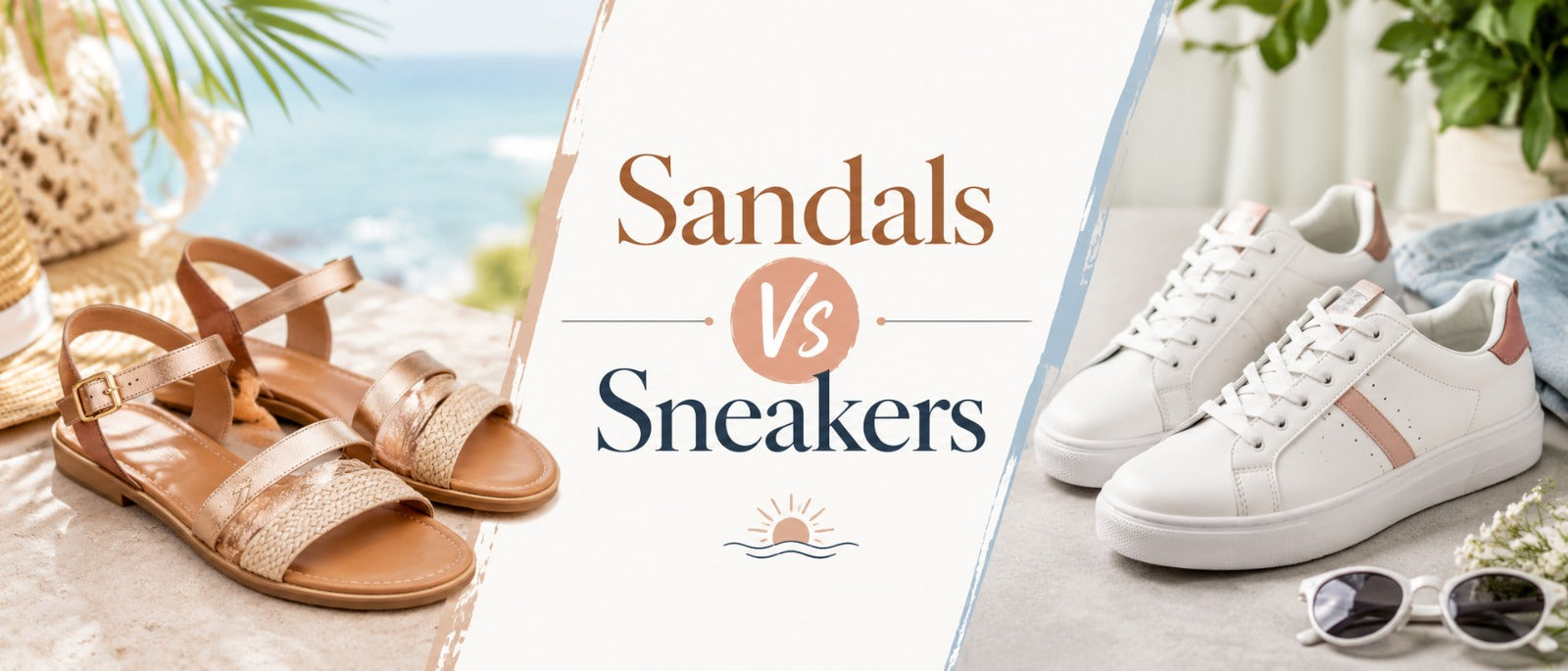
Every summer, the same question shows up in millions of search bars: sandals or sneakers? The honest answer has less to do with which category you pick and more to do with what is actually built into the shoe.
When the temperature climbs past 90 degrees, the morning shoe decision turns into a real debate. Sneakers feel familiar and supportive, but they trap heat fast. Sandals feel cool and easy, but the wrong pair leaves your arches unsupported by lunchtime. Below, we break down where each one actually wins, what foot health experts look at when they evaluate a shoe, and how to figure out which one belongs on your feet today.
The Quick Answer
Sandals win on breathability, weight, and quick relief from summer heat, but only if they include real arch support. Sneakers win on protection, stability, and long stretches of standing or walking, but they trap heat and moisture. The category matters less than the construction. A sandal with a contoured footbed and a deep heel cup can outperform a flat, unsupportive sneaker, and a thin flip-flop can underperform a well-built sneaker just as easily.
Why This Debate Heats Up Every Summer
Feet contain hundreds of thousands of sweat glands, more per square inch than almost any other part of the body. Enclose them in a sneaker on a 95-degree day and that moisture has nowhere to go. It builds up, raises the temperature inside the shoe, and creates the kind of damp environment where blisters, odor, and fungal issues thrive. Sandals solve that problem instantly by letting air move freely around the foot.
But sandals introduce a different risk. Many flat, thin-soled styles offer almost no arch support, which means your foot muscles and plantar fascia do more of the stabilizing work than they should, especially over a full day of walking or standing. That is the real tension behind the sandals versus sneakers debate. It is not really sandals against sneakers. It is breathability against structure, and the goal is finding a shoe that gives you both.
Sandals: The Case for Summer Comfort
Where Sandals Win
- Air circulates freely, which keeps feet cooler and drier through hot afternoons
- Lightweight construction reduces fatigue on long days of walking or standing
- Quick to slip on and off, ideal for beach trips, errands, and travel days
- Water-friendly materials dry fast after pool time, rain, or a beach walk
- Open design reduces the friction and grip-related strain that causes blisters in closed shoes
Where Sandals Fall Short
- Flat, thin-soled styles often lack the arch support and heel containment feet need for all-day wear
- Open toes mean more exposure to sunburn, stubbed toes, and debris on uneven ground
- Cheaper materials wear out faster on rough or rocky terrain than a structured sneaker would
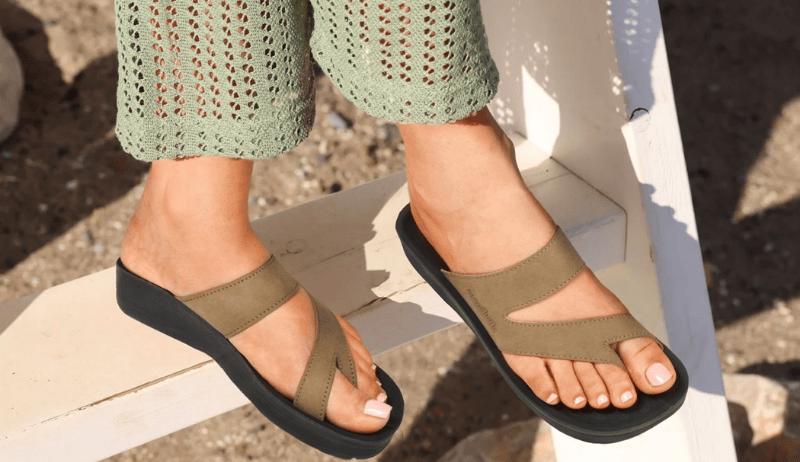
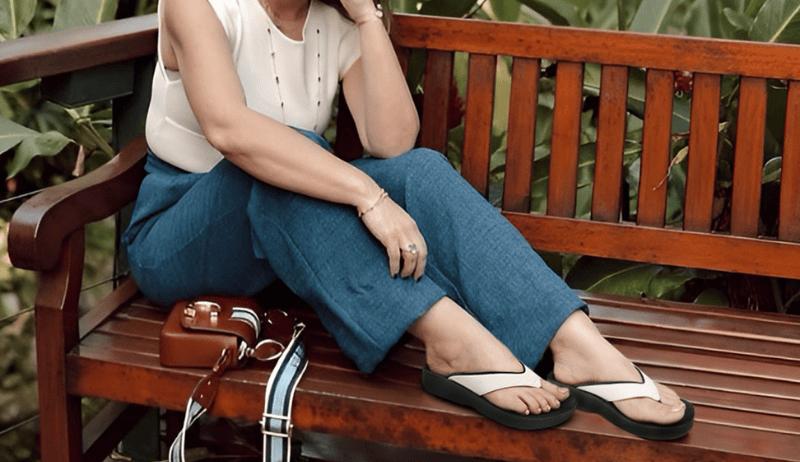
That last point is exactly where construction starts to matter more than category. A sandal built with a contoured arch support footbed, a deep heel cup, and adjustable straps closes most of that gap. The American Podiatric Medical Association (APMA) reviews footwear for exactly these features before granting its Seal of Acceptance, and several Aerothotic arch support sandals carry that recognition. It is worth noting this reflects footwear design standards rather than medical advice for any specific foot condition.
Sneakers: The Case for Summer Comfort
Where Sneakers Win
- Built-in cushioning and structured midsoles absorb shock better on hard pavement
- Enclosed design protects toes and soles from impact, debris, and uneven terrain
- Better suited to running, hiking, and high-intensity movement
- Generally hold up longer under repeated wear and rough conditions
Where Sneakers Fall Short
- Enclosed uppers trap heat and moisture, which raises the risk of sweat-related discomfort and odor
- Slower to put on and take off compared to a slip-on sandal
- Not practical for water activities or quick transitions between wet and dry surfaces
- Synthetic uppers in particular can turn into a genuine heat trap once temperatures climb into the 90s
If you are someone who reaches for sneakers purely out of habit rather than necessity, it is worth reading our breakdown of when sneakers stop making sense in summer and what a true sneaker alternative needs to deliver.
Sandals vs Sneakers at a Glance
| Factor | Sandals | Sneakers |
|---|---|---|
| Breathability | Excellent | Limited, even with mesh panels |
| Arch support | Varies widely by style | Generally consistent |
| Weight | Lightweight | Heavier |
| Water activities | Ideal | Not suitable |
| Injury protection | Lower, toes exposed | Higher, fully enclosed |
| Best for | Heat, travel, errands, all-day comfort with the right support | Workouts, hiking, rough terrain |
Look closely at that arch support row. It is the only factor on the chart that genuinely depends on the individual shoe rather than the category, and it is the one that determines whether a sandal can realistically replace a sneaker for everyday summer wear.
What Actually Determines Comfort: Category or Construction?
When podiatrists evaluate a shoe, they are not asking whether it is a sandal or a sneaker. They are looking at a short list of structural features: a contoured arch that prevents the foot from rolling inward, a heel cup deep enough to stabilize the heel bone, a cushioned footbed that absorbs shock before it reaches the knees and hips, and straps or laces that hold the foot securely without creating pressure points. Our guide on what sandals podiatrists actually recommend goes deeper into how foot specialists evaluate these features.
This is exactly why a well-built sandal can match or exceed a poorly built sneaker, and why a flimsy flip-flop will never compete with a quality running shoe. The category sets the starting conditions. The construction decides the outcome.

Matching Your Footwear to Your Summer Day
The most useful way to settle the sandals versus sneakers question is to stop thinking about it as one decision and start thinking about it scenario by scenario.
Beach days, pool trips, and casual outings
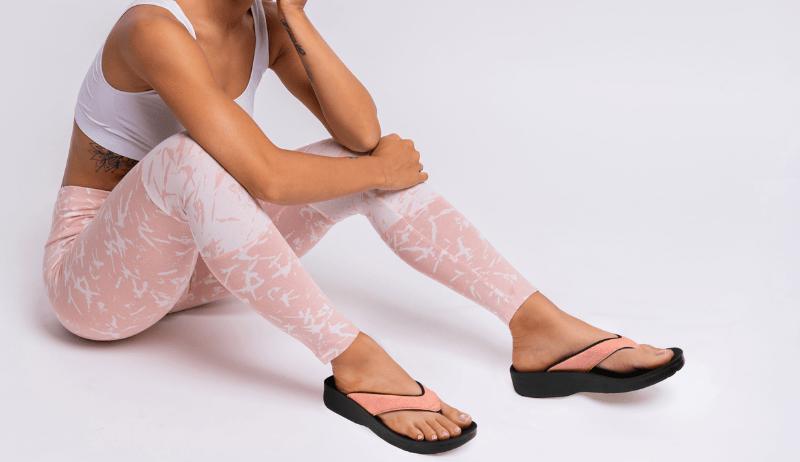
Sandals are the clear winner here. Quick-drying straps and an open design make them the easiest choice for anything involving sand or water. Browse thong sandals for a lightweight, breathable option built for exactly this kind of day.
Travel and long days of sightseeing
This is where arch support earns its keep. A supportive sandal can carry you through an entire day of airport terminals, cobblestone streets, and museum floors without the bulk of a sneaker. Our vacation essentials collection is built specifically for this kind of all-day movement.
Long shifts on your feet
Standing for eight or more hours puts real demand on your arches regardless of what is on your feet. A structured, arch-supportive sandal can handle this load just as well as many sneakers, which is why we put together a dedicated guide on orthopedic sandals for nurses and healthcare workers who spend long shifts standing.
Workouts, hikes, and uneven terrain
Sneakers genuinely win here, and it would not be honest to say otherwise. Running, trail walking, and high-impact movement call for the protection, traction, and stability that only a closed athletic shoe provides.
Swelling, sweaty feet, or heat sensitivity
If your feet swell or sweat more than usual once summer hits, sandals with adjustable straps give you room to breathe and room to adjust. Our guides on the best sandals for sweaty feet and comfortable sandals for swollen feet cover this in more detail.
Simple Habits That Keep Feet Comfortable in Either Shoe
Whichever side of the debate you land on, a few habits make a real difference once the heat sets in. Rotate between two or three pairs of shoes through the week so each one gets time to fully dry out and decompress. Moisturize feet after showering, since open-toe sandals expose skin to more sun and air than closed shoes do. And do not skip sunscreen on the tops of your feet during long days outdoors. It is a small habit that prevents a sunburn nobody thinks about until it happens.
Frequently Asked Questions
Are sandals or sneakers better for foot health in summer?
It depends on the build, not the category. A sandal with a contoured arch, deep heel cup, and cushioned footbed can support feet just as well as a sneaker, while a flat or thin sandal will not. For workouts or rough terrain, sneakers remain the safer choice.
Can sandals really be as supportive as sneakers?
Yes, when they are built with the right features. Arch support, heel containment, and shock-absorbing cushioning are what create support, and well-engineered sandals include all three. APMA-accepted styles are reviewed specifically for these structural standards.
Are sandals bad for your feet if worn every day?
Flat, unsupportive sandals worn daily can contribute to arch fatigue and heel discomfort over time. Sandals built with proper arch support and a secure fit are generally fine for daily wear and avoid most of that strain.
What should I look for in a sandal that can replace sneakers?
Prioritize a contoured arch support footbed, a deep heel cup, adjustable straps, and a sole that does not fold completely in half when twisted. Those four features are what separate a true sneaker alternative from a basic flip-flop.
Are APMA accepted sandals better for summer comfort?
APMA acceptance means a sandal has been reviewed for features that support foot health, which gives shoppers a reliable way to identify genuine arch support rather than relying on marketing language alone. It is a helpful trust signal, not a medical recommendation.
If this summer is the one where you finally retire the sneakers, start with sandals built for real support. Browse the full comfort sandals collection, check out the latest new arrivals, or explore arch support styles built specifically for all-day summer comfort.