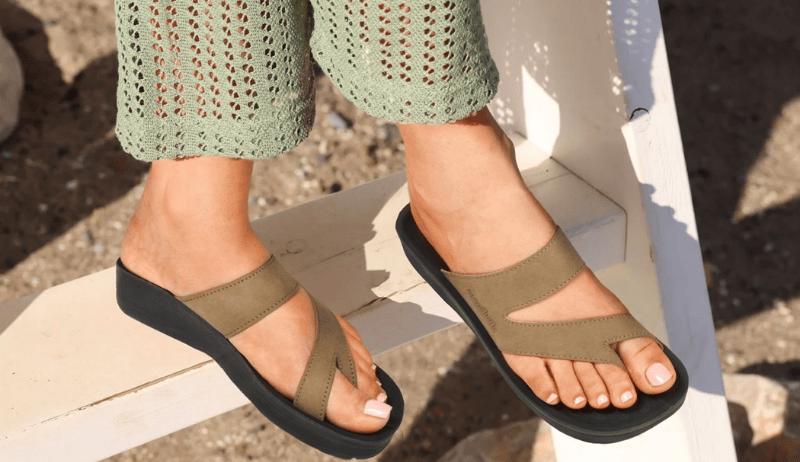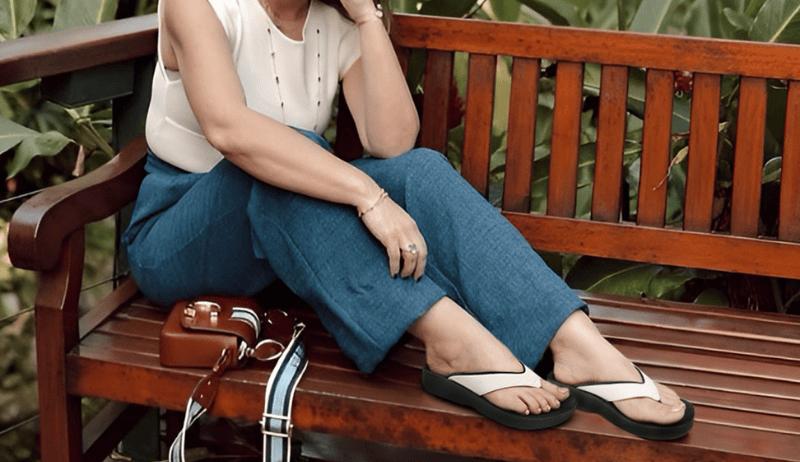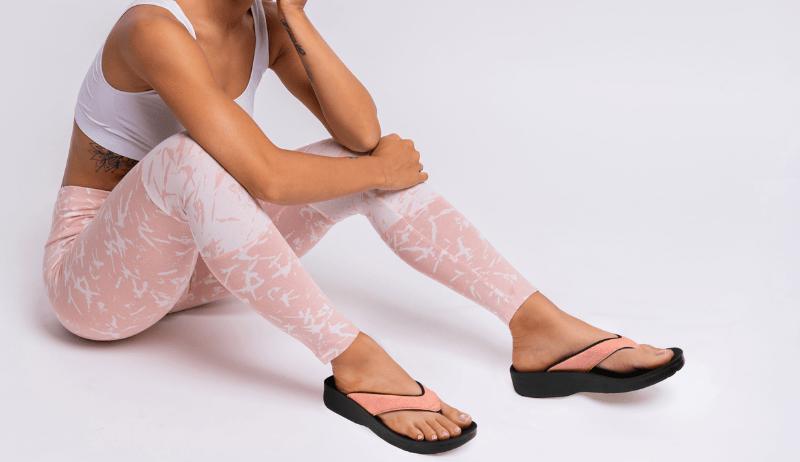
Many people believe that the source of their joint pain comes from the knee or hip joint locations. They never consider that the stress placed on their joints comes from the foot. Every time we step down on our feet the pressure is transferred and absorbed through the ankle and knee. The shoes that we wear decide how this pressure will be dealt with, how it is transferred or distributed, and how it will continue to be amplified or increased as we age.
When buying shoes don't focus on comfort for a single day. Rather, you should consider them an investment in your long-term health through proper alignment and mobility of your joints. Shoe selection will have a long lasting effect on your joints just as your choice of shoes will have an impact on the foot structure which we use to carry out our daily tasks (e.g. standing, walking or engaging in physical labour) therefore, it will be the foot structure that affects how our joints will age over time. As such, it is important to ask yourself which of the two different types of shoes may help preserve and improve your joint health over the course of time: clogs or slippers?
The Foot–Joint Connection Most People Ignore
Many people ignore the connection between their feet and the joints throughout their bodies
Our feet play an important role in the structure of our entire body; if they don't have enough support, then all the other joints in the body higher than the feet must compensate because of that lack of support. A small amount of imbalanced pressure on the foot may lead to uneven pressure on the knees, rotating hips (due to improper positioning), and/or strain in the lumbar spine.
When you wear a shoe that allows the foot to collapse inward or shift too much, the result will be misalignment with every step taken. Over months and years of repeatedly placing stress on our body from shoes, this eventually leads to discomfort in our joints, which is not instant (as the discomfort builds over time through habits).
Supportive shoes are designed to stop the foot from collapsing so that every joint above the foot can function properly.
The Importance of Every Day Slippers Versus Athletic Shoes
Most people purchase athletic shoes but do not think about what kind of shoes they are going to wear for the majority of the day. Most likely the greatest number of steps that people take per day is from getting up, going to work, running errands, shopping, etc., as opposed to exercising, therefore if your everyday shoes do not have good support, your joints will still suffer from strain because of the lack of structure, even when you are resting.
When choosing slippers or clogs, many people select the slipper because of the comfort, while others pick clogs because they are easy to put on, take off, and durable. The difference is that clogs will promote proper posture and support healthy joint movement, while slippers will only help with comfort.
Effects of Impact and Load Distribution
Every step you take causes an impact on your joints and how it is absorbed determines how much stress goes to your joints. A flat sole that has no support will just push the force straight up and place increased compression on your joints.
Shoes designed with a structured footbed allow the pressure to be more evenly distributed over a larger area which will reduce the peak impact to certain areas of the joint and allow for smoother movement.
Shoes that have arch support (clogs) help to keep the foot in alignment, which over time helps to reduce stress on the knees and hips.
Why Most Slippers don't Protect the Joints

Traditional slippers are designed to be soft, but soft slippers are not stable. While a traditional slipper may feel comfortable, they are not designed to control foot movement and therefore allow your foot to pronate excessively or distribute weight unevenly.
When your foot doesn't move in a predictable manner, your joints must compensate for the unanticipated movements. Your ankles roll, your knees internally rotate and your hips receive force from uneven distribution. The cumulative effect will eventually lead to fatigue and discomfort in your joints.
Shoes such as comfort clogs provide cushioning and comfort without allowing the foot to move uncontrollably which makes them a better long-term choice for protecting your joints.
How Material Effects Joint Support Over Time
The type of material used in the manufacture of a footwear product will affect the way that the product performs over time. If a shoe is constructed from a soft synthetic material, the shoe will compress easily under load and lose its ability to absorb shock. After compression occurs, the ability to protect the joints decreases.
In contrast, the high-quality natural material used in the manufacture of many shoes retains its structure over an extended period and therefore has the necessary properties to adapt to the individual's foot shape while still supporting and keeping correct alignment.
Because of this durability, Genuine Leather Clogs are often preferred for individuals seeking long-term joint health rather than the immediate comfort of a soft material.
Why Structure Is More Important Than Flexibility
There is a common misconception that a flexible shoe will allow a person to be more productive. The reality is that excessive flexibility can cause instability in an individual’s foot. A foot requires support and guidance from its footwear, but it should not be allowed to have too much freedom to move about, especially if the individual is going to be standing or walking for extended periods.
The use of a stable heel cup and contoured sole reduces unnecessary motion of the foot. This allows for better stabilization of the ankle joint and maintains proper tracking of the knee.
When footwear, such as women’s orthopedic clogs, is purposefully designed to provide a balanced combination of control and motion, it reduces strain on all of the joints of the body while performing daily activities.
Influence of Arch Support on the Alignment of the Knees
The arch serves an important function in how the ground forces travel through the body. Collapsing the arches of the feet can contribute to the inward rotation of the knees, resulting in uneven forces being distributed to the cartilage and ligaments around the knee.
Supporting the arches of the feet consistently allows for the correct positioning of the legs. Over time, arch support can reduce wear on the knee joint and allow for smoother movement patterns.
Many Women's Orthopedic Clogs have built-in contours that help promote healthier mechanical functioning of the joints.
The Effects of Daily Wear and Accumulative Joint Stress
It is repetitive motion, not the extreme of motion, that has the largest impact on the health of the joints. The amount of time that a shoe is worn daily (8 hours/day) is much more significant than that of an occasional shoe. Small misalignments that are repeated thousands of times over the course of a single day can gradually diminish comfort in the joints.
Therefore, in order for footwear designed for all-day wear to be effective, it needs to primarily emphasize support in addition to being easy to wear. The combination of stability and cushioning, along with the fitting of the shoe, will work together to provide cushioning and support to the joints and will protect them from accumulative stress over time.
Comfortably designed supportive clogs that are for your everyday use can help to alleviate the slow accumulation of fatigue in the joints. Most people are unaware of the slow accumulation of fatigue until the pain of fatigue sets in.
The Relationship Between Heel Height and Joint Load
The use of "zero-drop" (completely flat) footwear increases the forces that are transmitted along the Achilles tendon and knees. Shoes with excessive heel height tend to create an anterior load on the foot that alters alignment of the hip and low back.
A moderate heel height combined with a proper footbed provides a balanced position for the foot that allows the joints of the lower leg, knee, hip, and low back to move freely without adding excessive loads.
Many ladies' suede clogs provide this balance while providing a plush feel and being supportive.
Footwear for Adult Joints: Clogs Versus Slippers

As individuals age, the range of motion of the joints decreases because the tolerances for joint misalignment decrease. What may have been a "minimal" misalignment for many years may now lead to the development of stiffness or soreness. At this stage in a person's life, the choice of daily footwear will become critical.
Slippers, in comparison to clogs, do not generally provide sufficient stability for the joints as they age. Clogs, designed correctly, can provide more structure than slippers, thereby providing beneficial support so that the joints remain aligned without being restricted.
This is the reason why it is so important to choose supportive footwear early so that the long-term ability of the joint to move freely will be maintained.
The Importance of Consistency Over Perfection
No one type of shoe will eliminate joint stress completely; the goal should be to decrease the stress placed on the joint and not to attempt to achieve perfection. The cumulative amount of stress will be greatly reduced if supportive footwear is worn most of the time.
Even small adjustments in the alignment of the foot will produce greater comfort in the joints. The changes will compound over the weeks and months.
Our daily habits determine our long-term results. One of these habits is footwear selection.
The Health of Joint System, Not Single Fix
Joint pain is typically the result of one or more issues over time. It is an outcome of the body responding to all the repetitive movements that you do every day. Shoes affect these patterns of movement every day.
Shoes that provide support for the foot can enhance how the kinetic chain of the body works together, allowing for better function of joints above the foot when the foot is stable, decreasing the amount of work the joint has to do and compensating for the weakness of the foot.
For this reason—because of the impact of footwear, even moderate to mild pain can justify the need for support when wearing footwear on a daily basis.
Choosing To Be Informed Daily
Choosing between clogs and slippers should not be based on support alone, but rather, which technology provides support for healthy, pain-free movement versus which technology allows for stress to build up over time.
While slippers may seem comfortable, they typically lead to excess load being placed on joints, whereas clogs offer a better combination of comfort and alignment, thereby offering greater long-term benefits for joint health.
Over time, your shoes will change the way you *function* or "age".
How Material Effects Joint Support Over Time
The type of material used in the manufacture of a footwear product will affect the way that the product performs over time. If a shoe is constructed from a soft synthetic material, the shoe will compress easily under load and lose its ability to absorb shock. After compression occurs, the ability to protect the joints decreases.
In contrast, the high-quality natural material used in the manufacture of many shoes retains its structure over an extended period and therefore has the necessary properties to adapt to the individual's foot shape while still supporting and keeping correct alignment.
Because of this durability, Genuine Leather Clogs are often preferred for individuals seeking long-term joint health rather than the immediate comfort of a soft material.
Why Structure Is More Important Than Flexibility
There is a common misconception that a flexible shoe will allow a person to be more productive. The reality is that excessive flexibility can cause instability in an individual’s foot. A foot requires support and guidance from its footwear, but it should not be allowed to have too much freedom to move about, especially if the individual is going to be standing or walking for extended periods.
The use of a stable heel cup and contoured sole reduces unnecessary motion of the foot. This allows for better stabilization of the ankle joint and maintains proper tracking of the knee.
When footwear, such as women’s orthopedic clogs, is purposefully designed to provide a balanced combination of control and motion, it reduces strain on all of the joints of the body while performing daily activities.
Protecting Joints Begins at the Foot
Healthier joints begin with proper footwear and build with every step you take. The shoes you wear regularly affect how much pressure goes through your body, your joint alignments over time, and how easily you will be able to walk as you age.
Supportive Clogs provide stability, alignment, durability, and comfort in comparison to slippers. When you select footwear specifically made for daily use, you minimise the long-term stress on your joints and allow for easier moving in the future.
Proper joint health is achieved by consistent and thoughtful actions that begin with what you wear on your feet.