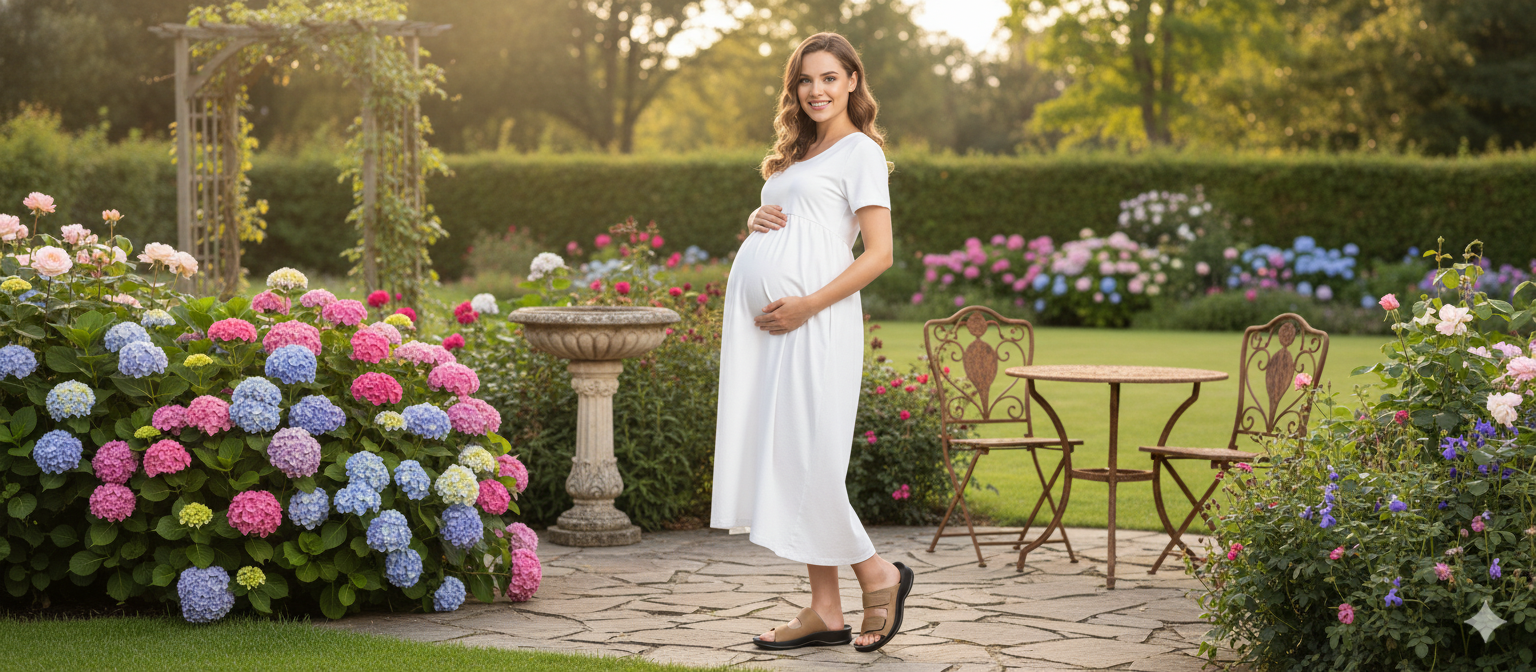
Let’s be honest: nobody warns you about your feet. You read about morning sickness, back pain, and swollen ankles, but what about the moment in your second trimester when your favourite sandals suddenly feel like they’re actively working against you?
It’s not just swelling. Pregnancy changes the structure of your feet in ways that can linger long after delivery. The right pair of sandals isn’t a luxury; it’s one of the simplest ways to protect your body during one of its most demanding seasons.
This guide covers everything: what actually happens to your feet when you’re pregnant, which features matter in a sandal, and which specific Aerothotic styles work best, trimester by trimester.
Why Pregnancy Is So Hard on Your Feet
Most foot problems during pregnancy aren’t random; they follow a pretty predictable pattern tied to hormones and weight distribution. Once you understand the mechanism, choosing the right sandal becomes a lot more intuitive.
The 'Relaxin' Effect
Early in pregnancy, your body releases a hormone called 'relaxin'. Its job is to loosen the ligaments in your pelvis to prepare for childbirth. The problem? Relaxin doesn’t discriminate. It loosens ligaments throughout your body, including the ones that support your arches.
This is why many women develop flat feet for the first time during pregnancy, and why some never fully bounce back afterward. Even in the first trimester, before any visible swelling, your arches may already be under increased stress. Starting with supportive footwear early is genuinely protective, not just comfortable.
Did You Know?
Studies suggest that up to 60–70% of pregnant women experience some degree of arch drop or foot elongation. Many go up half a shoe size or more permanently. The right sandal can help slow this process.
Pressure, Weight Gain, and Your Heels
As your centre of gravity shifts forward with a growing belly, your posture changes too. More weight presses into your heels and the balls of your feet. Walking on hard floors, which used to be completely unremarkable, starts to feel bruising by the end of the day.
A sandal with a deep heel cup and a cushioned footbed doesn’t just feel softer underfoot. It actively redirects pressure away from the spots that take the most punishment, distributing the load more evenly across the whole foot.
Swelling (Oedema) What’s Normal, and When It Matters
Fluid retention is almost universal in the third trimester, and it tends to be worse at the end of the day or after long periods of standing. The feet and ankles are usually the first to show it.
This is where adjustable straps make a real practical difference. A sandal that fits perfectly in the morning can feel painfully tight by evening if the straps don’t have give. Look for Velcro closures, buckle adjustability, or wide-opening designs, not just slip-ons or fixed-strap styles.
What to Look for in the Best Pregnancy Sandals
There’s a lot of marketing noise in the maternity footwear space. Here’s what actually matters in order of importance:
- Contoured arch support, not a flat footbed, not just “cushioning.” A shaped footbed that holds the midfoot and prevents inward rolling (overpronation).
- Deep heel cup: This stabilizes the fatty pad under your heel and keeps it from spreading under pressure, reducing impact all the way up through your knees and hips.
- Adjustable straps, Velcro, buckle, or multi-point adjustability to accommodate swelling throughout the day.
- Shock-absorbing sole polyurethane or EVA midsoles absorb impact rather than transferring it directly to your joints.
- Lightweight construction, every extra ounce matters when you’re already carrying significant additional weight. Heavy sandals cause fatigue faster.
- Non-slip outsole pregnancy shifts your centre of balance; grip on wet bathroom tiles or polished floors is non-negotiable.
- APMA Acceptance: The American Podiatric Medical Association’s seal of acceptance means the design has been reviewed for foot health. It’s a useful filter when comparing brands.
A Note on Flat Sandals
Flat doesn’t mean supportive. A completely flat footbed with no arch contour can actually accelerate arch drop and strain the plantar fascia more than a sandal with a modest 0.5–1 inch heel. Look for structure, not just thinness.
Best Sandals for Pregnancy: A Trimester-by-Trimester Breakdown
Your feet’s needs change dramatically across the three trimesters. Here’s how to think about it:
First Trimester (Weeks 1–13)
Focus on arch support and ligament protection before visible changes set in. Relaxin is already loosening your foot ligaments even if your belly isn’t showing yet. Lightweight everyday sandals with a contoured footbed are ideal at this stage; you want structural support without needing to accommodate significant swelling.
Second Trimester (Weeks 14–27)
Balance starts shifting noticeably as your centre of gravity moves forward. Heel cup stability becomes more important here, as does adjustability. You may notice your feet feeling wider or slightly longer. If your usual size is feeling snug, it’s time to size up.
Third Trimester (Weeks 28–40)
Swelling peaks. Slip-on styles come into their own here, which means you don’t need to bend down and fasten a buckle. Look for sandals with generously wide openings, soft uppers that won’t dig into swollen skin, and maximum shock absorption for joints that are under significant daily strain.
The Best Aerothotic Sandals for Pregnancy
Aerothotic builds all of its sandals around orthopedic principles, contoured footbeds, deep heel cups, and APMA-reviewed designs. Every style below is one we’d genuinely recommend to a pregnant friend, with specific reasons tied to each trimester.
OUR PICK · BEST OVERALL
Aerothotic Coral Slingback Sandal
Best for Swelling & Adjustability
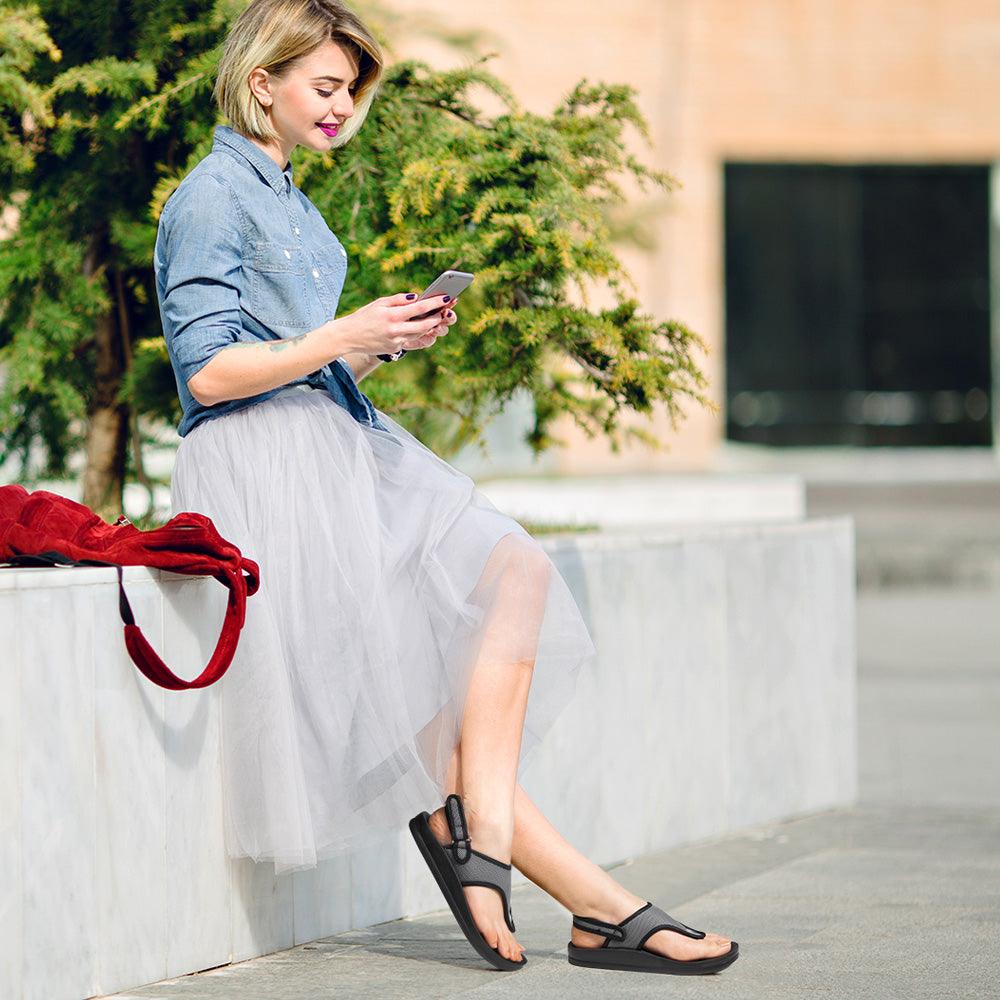
If we had to pick one sandal for the entirety of pregnancy, the Coral would be it. The ankle Velcro strap is the key feature here; it lets you adjust the fit at any point in the day without taking the sandal off, which matters enormously in the third trimester when swelling can vary hour by hour.
The built-in medial arch support keeps the midfoot from collapsing inward, and the soft footbed cushions without going so soft that the foot becomes unstable. It’s elegant enough for work or a casual dinner out, and supportive enough for a long day on your feet.
Key Features: Medial arch support | Velcro ankle strap | Cushioned footbed | Water-friendly | 30-Day Comfort Promise
BEST DAILY SANDAL
Aerothotic Enhalus Thong Sandal
Best for All-Day Breathability

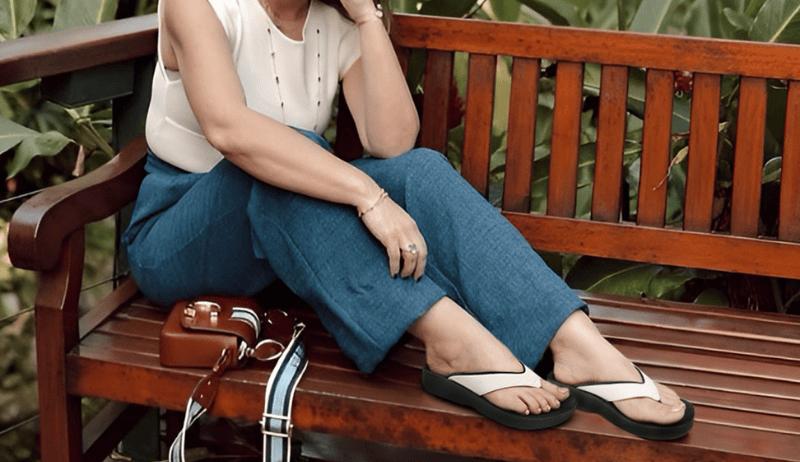
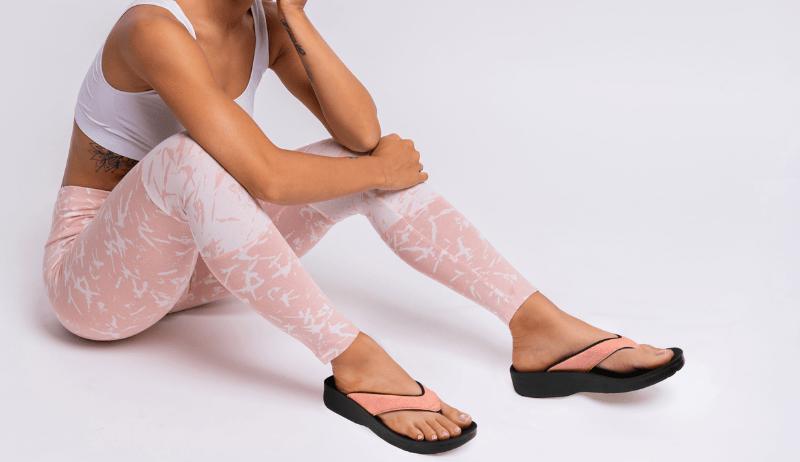
Heat and moisture are real discomforts during pregnancy, especially as blood volume increases and body temperature runs higher than usual. The Enhalus addresses this with breathable mesh-textured straps and a sweat-resistant, contoured footbed that keeps feet fresher for longer.
At just 0.65 lbs per pair, it’s among the lightest supportive sandals on the market. The polyurethane gel-infused sole molds to your arch over time, which means these actually get more comfortable the more you wear them.
Key Features: Breathable mesh straps | 0.65 lbs/pair | PU gel footbed | Sweat-resistant | APMA Seal
BEST FOR THE THIRD TRIMESTER
Aerothotic Urania Slip-On Sandal
Best: No-Bending Required

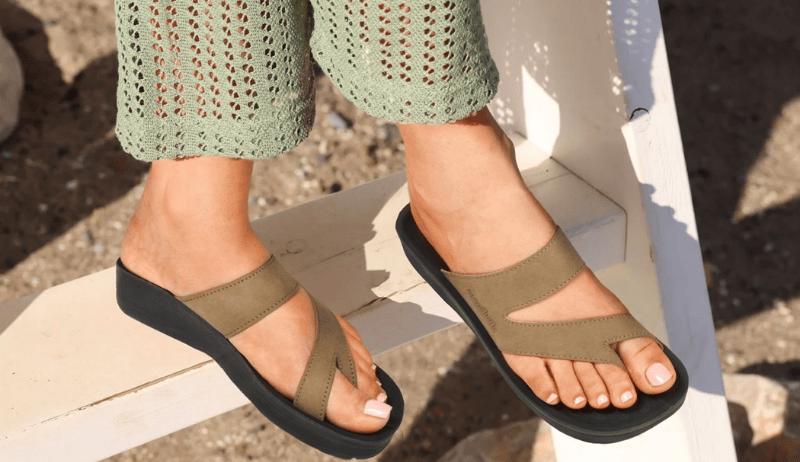
By the third trimester, reaching your feet to fasten a buckle can feel like a minor athletic event. The Urania eliminates that it’s a slip-on that still delivers APMA-approved cushioning and a suede leather upper that feels smooth against skin that may be more sensitive than usual.
The polyurethane sole provides solid shock absorption, and the design keeps your foot stable without requiring any fiddly adjustments. It’s the one to reach for on your highest-swelling, most exhausted days.
Key Features: True slip-on | Suede leather upper | APMA-approved | PU cushioned sole | Skin-friendly lining
BEST FOR PLANTAR FASCIITIS
Aerothotic Maeve Arch Support Sandal
Best for Heel & Arch Pain Relief
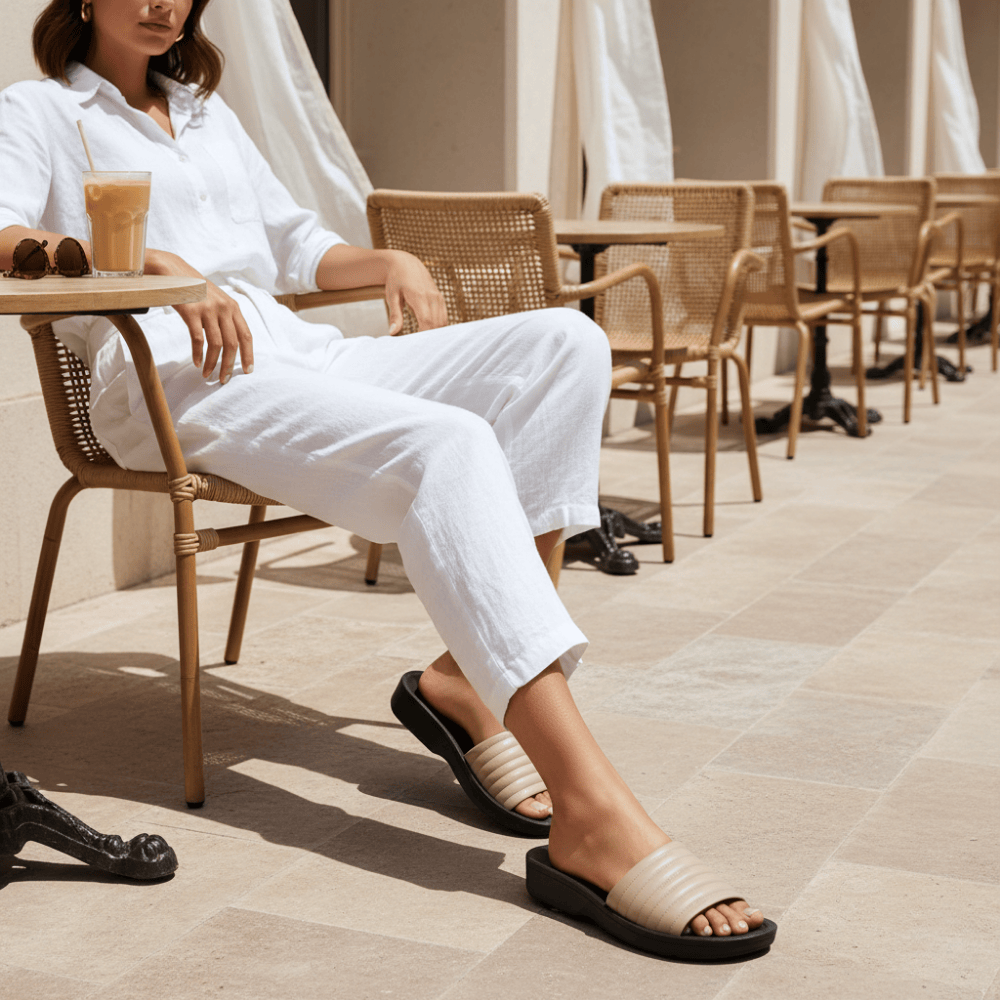
Plantar fasciitis that sharp stabbing pain in the heel first thing in the morning, is significantly more common during pregnancy because of the combination of weight gain and arch drop. The Maeve was designed with this in mind: a deep heel cup, an arch-supportive footbed that reduces tension in the plantar fascia, and a 1-inch heel height that takes additional strain off the fascia’s attachment point.
Padded straps prevent pressure points, and the overall design is polished enough to wear to work or a casual outing without looking clinical.
Key Features: Deep heel cup | Plantar fascia support | 1" heel height | Padded straps | Work-appropriate
Quick Comparison: Which Sandal Is Right for You?
|
Sandal |
Best For |
Adj. Straps |
Slip-On |
Waterproof |
Arch Support |
|
Coral Slingback |
Swelling / Overall |
✓ |
|
✓ |
✓ |
|
Enhalus Thong |
Daily Breathability |
|
✓ |
|
✓ |
|
Urania Slip-On |
3rd Trimester |
|
✓ |
|
✓ |
|
Arcus Beach |
Water / Outdoors |
✓ |
|
✓ |
✓ |
|
Maeve Arch Support |
Plantar Fasciitis |
✓ |
|
|
✓ |
|
Zen Cork |
All-Day Wear |
|
✓ |
|
✓ |
Sizing During Pregnancy: Should You Go Up?
Almost certainly, yes, especially in the second and third trimesters. Most pregnant women find they need to go half a size to a full size up from their usual, for two reasons: arch flattening lengthens the foot, and swelling adds width and volume.
Aerothotic’s general recommendation is to order your usual size, but if you’re between sizes or have wider feet, size up to the next full size. For example, if you normally wear a 7.5, order an 8.
Tip: Measure at Your Swelliest
If you measure your feet in the morning, you’ll likely underestimate the size you need. Measure in the late afternoon or evening when swelling is at its daily peak for a more accurate fit that will work all day long.
One more thing worth knowing: many women find that foot changes during pregnancy are partially permanent. Buying quality, supportive sandals that you actually enjoy wearing increases the chances you’ll keep wearing them postpartum, which is when your feet are suddenly bearing impact again after months of relative rest.
A Note on Flip Flops During Pregnancy
Standard flat flip flops, the kind you’d grab for a quick beach run, are not great for regular pregnancy wear. They offer no arch support, no heel stability, and force your toes to grip to keep the sandal on, which creates tension in the plantar fascia.
That said, not all flip–flop–style sandals are created equal. Aerothotic’s orthopedic thong sandals, like the Enhalus, use the same open-toe, slip-on format but with a contoured footbed and heel cup built in. The structure is completely different from a flat drugstore flip flop, even if the silhouette looks similar.
“The shape of a sandal tells you almost nothing about how supportive it is. It’s what’s built into the footbed that actually matters.”
Aerothotic Footwear Design Team
How Foot Support Affects the Rest of Your Body
This is the part most people don’t think about. Your feet are the foundation of your entire skeletal alignment. When arches collapse inward, the ankles roll, the knees track incorrectly, the hips compensate, and lower back strain follows. During pregnancy, when your posture is already being pulled forward by a growing belly, this chain reaction compounds quickly.
Wearing supportive sandals doesn’t just make your feet feel better. Women who wear orthopedic footwear during pregnancy consistently report lower levels of lower back pain, less knee discomfort, and reduced general fatigue at the end of the day. It’s a small decision with a surprisingly large downstream effect on how you feel overall.
Frequently Asked Questions
Q: What type of sandals are best for pregnancy?
Orthopedic sandals with contoured arch support, a deep heel cup, and adjustable straps are best. Look for designs with shock-absorbing soles and non-slip outsoles. APMA-accepted footwear is a useful quality marker.
Q: Is it safe to wear sandals during pregnancy?
Yes, the right sandals are not just safe, they’re actively beneficial. The key is choosing sandals with proper arch support and heel stability. Flat, unsupportive sandals or those with unstable heels should be avoided.
Q: What sandals are good for swollen pregnancy feet?
Look for sandals with adjustable Velcro or buckle straps; these let you loosen the fit as swelling increases throughout the day. The Aerothotic Coral Slingback is specifically designed with this in mind. Avoid fixed-strap styles that can’t accommodate changing foot volume.
Q: Should I size up in sandals when pregnant?
In most cases, yes. Arch flattening and swelling both increase foot size, often by half to a full size. Measure your feet in the late afternoon when swelling is greatest. If you’re between sizes, always go up.
Q: Can flat sandals cause back pain during pregnancy?
They can contribute to it. Flat, unsupportive sandals allow arches to collapse, which throws off knee and hip alignment and increases lumbar strain, something that’s already elevated during pregnancy. A sandal with a structured footbed reduces this chain reaction.
Q: Are flip flops bad for you when pregnant?
Standard flat flip flops are not ideal for extended wear during pregnancy because they lack arch support and heel stability. Orthopedic thong-style sandals with contoured footbeds like the Aerothotic Enhalus give you the same easy slip-on convenience with proper support built in.
Q: What are the best sandals for plantar fasciitis during pregnancy?
The Aerothotic Maeve is our top recommendation. It combines a deep heel cup, arch-supportive footbed, and a 1-inch heel height that reduces tension on the plantar fascia. Starting with supportive footwear early in pregnancy can help prevent plantar fasciitis from developing.
Q: Do feet go back to normal after pregnancy?
For many women, feet return close to their pre-pregnancy size and shape, but not always completely. Arch drop from the relaxing effect can be permanent if feet weren’t well-supported during pregnancy, one of the strongest arguments for wearing supportive sandals throughout.
Q: Are orthopedic sandals worth it during pregnancy?
Absolutely. Beyond immediate comfort, supportive footwear during pregnancy can prevent long-term foot changes, reduce lower back and hip pain, and improve overall energy levels by reducing unnecessary muscular compensation. They’re one of the most practical investments you can make for your body during this time.
The Bottom Line
Your feet are carrying you and your baby through one of the most physically demanding periods of your life. They deserve footwear that meets that challenge.
The best pregnancy sandal is one that combines genuine arch support, a heel cup that stabilizes, adjustable straps that grow with your swelling, and a sole that absorbs the extra impact your joints are taking. All of the Aerothotic styles above meet those criteria, and each one was chosen for a specific reason tied to what pregnant feet actually need.
If you’re overwhelmed and just want one answer: the Coral Slingback is our top all-around pick for pregnancy. If you’re in the third trimester and struggling to reach your feet, start with the Urania Slip-On. And if heel pain is already an issue, the Maeve Arch Support Sandal is where we’d send you first.
Your feet will thank you. And honestly, so will your back.