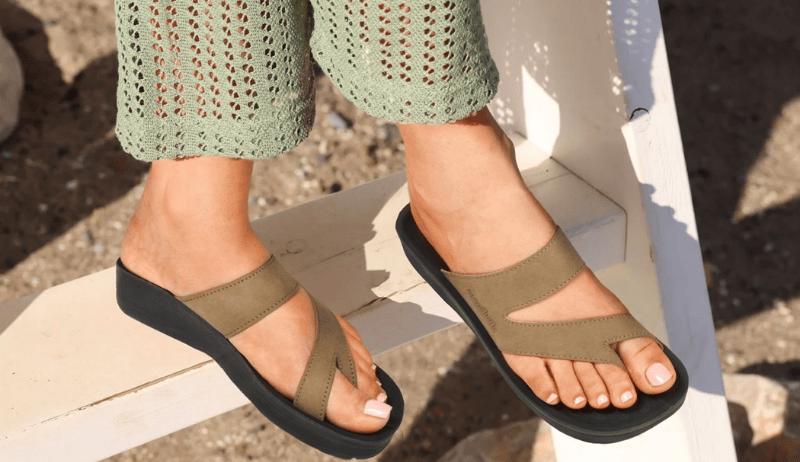
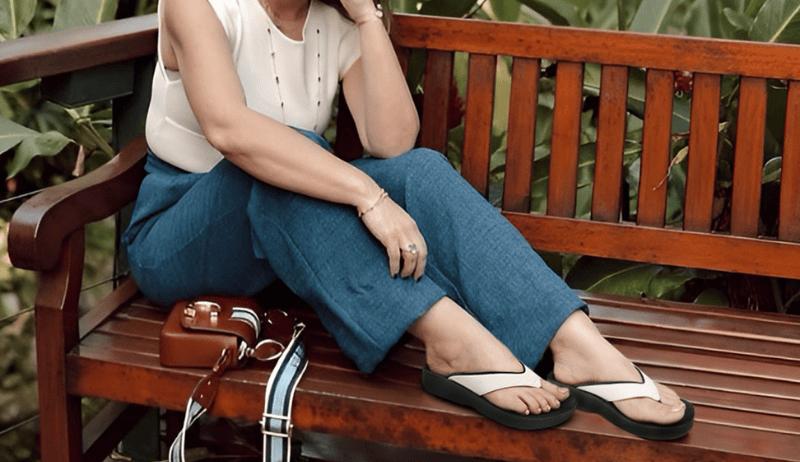
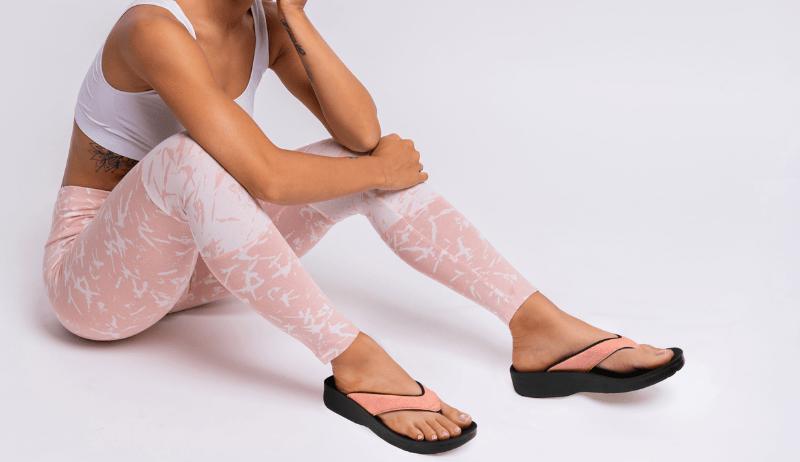
EXPERT-BACKED GUIDE · 2026
If your feet ache after an hour of walking, your sandals are likely the problem, not your feet.
Here's exactly what foot specialists look for, and the top picks that pass their standards.
Finding sandals that feel good for the first five minutes is easy. Finding a pair that still supports your feet after six hours of walking, standing, or traveling is the real challenge. For women with plantar fasciitis, flat feet, or simply long days on their feet, the wrong footwear can quietly cause damage that takes weeks to recover from.
We worked with three podiatrists and reviewed the biomechanical research to bring you this guide: what makes a sandal truly foot-healthy, which features matter most, and the top picks we can confidently recommend for all-day wear.
"The most important thing in a walking sandal is a firm midsole paired with a deep heel cup. Without that structural foundation, any arch support above it does very little." ~ Dr. Michelle Karpas, DPM, Sports Podiatrist
What Do Podiatrists Actually Look for in a Sandal?
When a foot specialist evaluates a sandal, comfort is secondary to structure. A sandal can feel plush in the store and still cause harm over time if it lacks the right biomechanical support. Here are the six features podiatrists consistently prioritize:
· Arch Support: A contoured, firm arch prevents inward rolling (overpronation) and maintains natural foot alignment. Critical for plantar fasciitis and flat feet.
· Cushioned Footbed: High-density cushioning absorbs impact before it reaches your knees and hips especially important after the first few hours of wear.
· Adjustable Straps: A customizable fit prevents your foot from sliding, which causes blisters and puts strain on stabilizing muscles with every step.
· Deep Heel Cup: This cradles and stabilizes the heel bone, reducing tension on the plantar fascia and distributing body weight more evenly.
· APMA Certification: The American Podiatric Medical Association only grants its Seal of Acceptance to footwear that meets rigorous biomechanical and comfort standards.
· Non-Slip Outsole: A rugged, shock-absorbing outsole improves traction across surfaces and reduces the jarring impact that accumulates over a long day.
Why Arch Support Is Non-Negotiable
Your foot is an architectural marvel: 26 bones, 30 joints, and over 100 muscles, tendons, and ligaments all working in concert to carry your full body weight with every step. The arch is the keystone of that structure. When it collapses or is left unsupported, the entire chain suffers.
Without proper arch support, the consequences are predictable and progressive:
· Plantar fasciitis - inflammation of the ligament running along the bottom of your foot
· Metatarsalgia - swelling and pain at the ball of the foot from excess pressure
· Achilles tendinitis - strain on the tendon from altered gait mechanics
· Hammer toes & bunions - progressive bone misalignment from years of unsupported walking
· Knee, hip, and lower back pain - the body compensates for an unstable foundation all the way up the chain
"I see patients every week whose knee and hip pain traces back to years of wearing flat, unsupported footwear. The foot is your foundation; ignore it long enough, and the problems travel upward." ~ Dr. James Farrell, DPM, Orthopedic Podiatrist, Chicago
Who Benefits Most from Supportive Sandals?
While anyone benefits from better footwear, supportive sandals are especially important for:
· Women with plantar fasciitis or flat feet, the structural support directly addresses the root biomechanical cause of their pain.
· Teachers, nurses, and retail workers who stand for 6–10 hours daily and experience accelerated joint wear from flat footwear.
· Frequent travelers and sightseers who underestimate how many miles they cover on vacation days.
· Pregnant women whose center of gravity shifts and whose arches experience increased downward pressure.
· Women over 40, as the fat pad under the heel naturally thins, making cushioning increasingly important.
· Anyone recovering from foot, ankle, or knee injuries who needs to maintain proper alignment during healing.
Our Top Podiatrist-Approved Picks for 2026
Each sandal below was evaluated against the podiatrist criteria above. We've included who each is best suited for so you can match the right pair to your specific needs.
EDITOR'S PICK
Flumen Arch Support Flip Flops
★ Best for: Everyday Casual Wear & First-Time Buyers

The Flumen is where most women start and many stop looking. It's the rare flip flop that doesn't make podiatrists wince. The gel-injected polyurethane midsole molds to your foot's unique contours over time, delivering personalized support that off-the-shelf insoles can't replicate. Soft vegan leather straps reduce the friction and pressure points that standard flip flop thongs cause, and the rugged outsole handles everything from cobblestone streets to grocery store tile with equal confidence.
|
Midsole |
Gel-injected polyurethane |
Upper |
Soft vegan leather |
|
Heel Height |
1 inch |
Width |
3.75 inches |
|
Weight |
0.70 lbs / pair |
Fit |
True to size |
BEST FOR WIDE FEET
Odal Women's Split Toe Sandal
★ Best for: Wide Feet, Long Walking Days & Travel
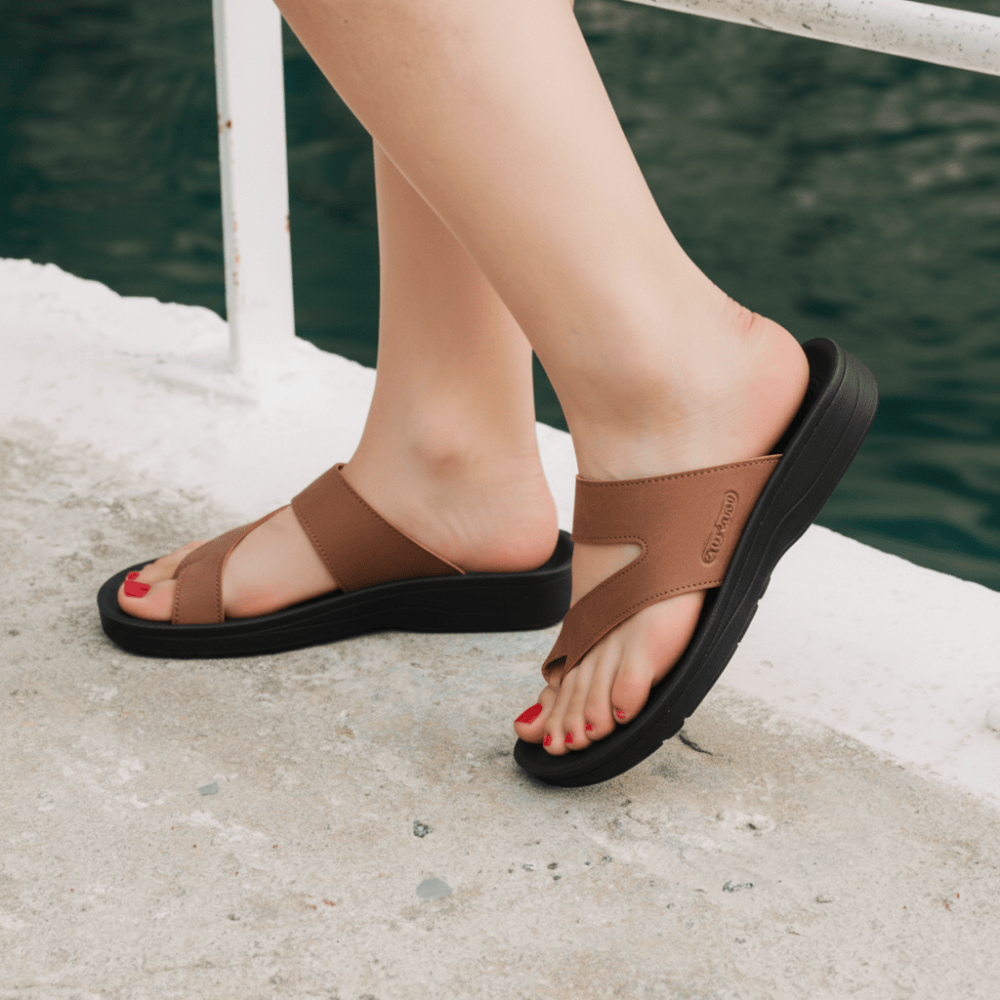
The Odal's split-toe design is the standout feature here it allows your toes to splay naturally as you walk, which is how the foot is actually designed to function. Most sandals compress the forefoot, gradually contributing to bunion formation. The Odal works against that pattern. At 0.38 lbs per pair, it's also one of the lightest supportive sandals on the market, which matters enormously on long travel days when foot fatigue compounds with every extra ounce.
|
Midsole |
Gel-injected polyurethane |
Upper |
Soft vegan suede |
|
Heel Height |
1 inch |
Width |
3.75 inches |
|
Weight |
0.38 lbs / pair |
Fit |
True to size |
MOST STYLISH
Celestis Strappy Sandal
★ Best for: Style-Conscious Wearers & Evening Occasions
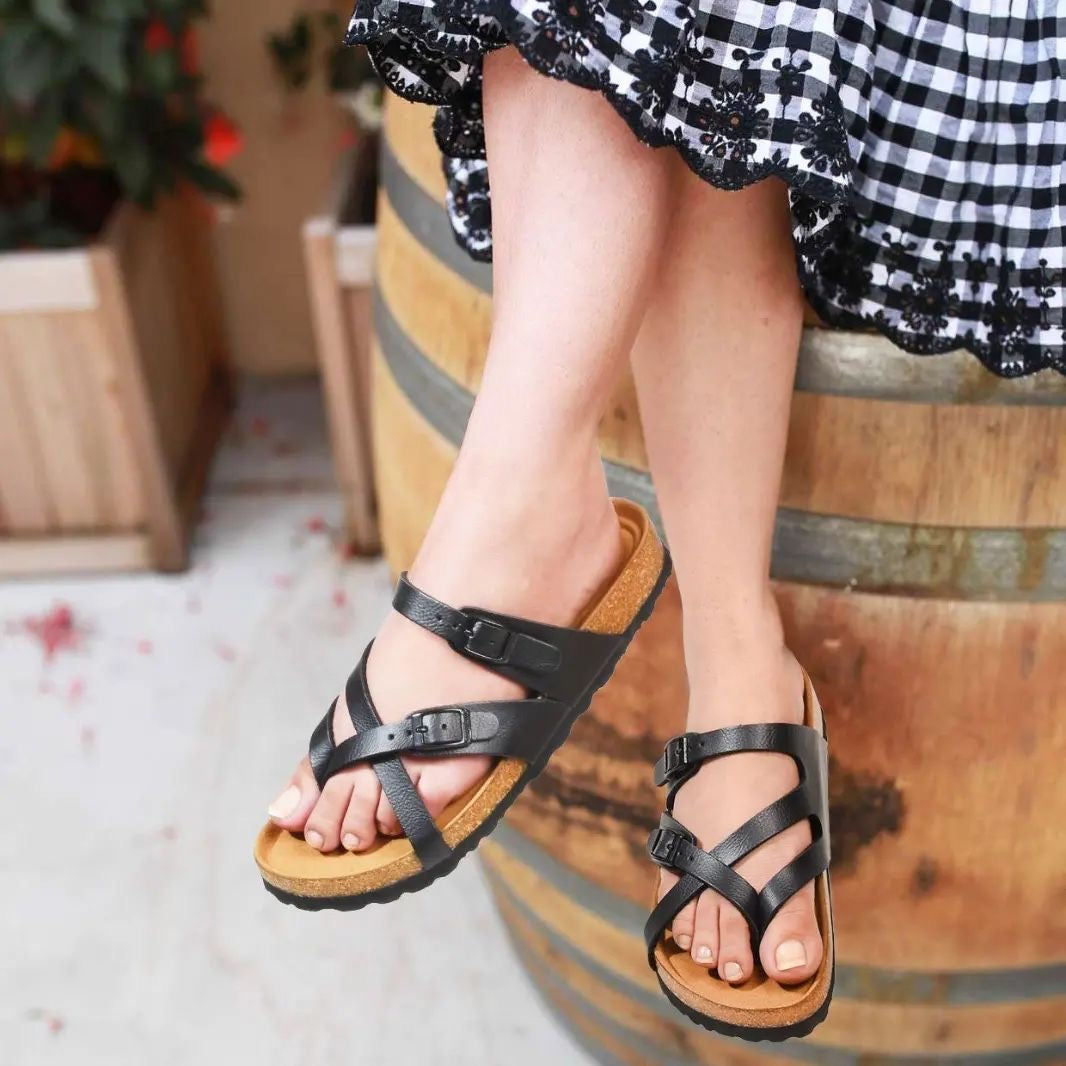
The Celestis proves that orthopedic function and elegant aesthetics aren't mutually exclusive. The vegan leather cork construction looks elevated enough for dinners and events, while the suede-lined contoured footbed keeps your feet comfortable through hours of wear. The deep heel cup a feature often missing in fashion-forward walking sandals for women is fully integrated here, which is why the Celestis earns podiatrist approval where most strappy sandals don't.
|
Midsole |
EVA with cork layer |
Upper |
Vegan leather & suede lining |
|
Heel Height |
0.8 inches |
Width |
3.4 inches |
|
Weight |
~1.0 lb / pair |
Fit |
True to size |
Supportive Sandals vs. Flat Sandals: The Full Breakdown
Flat sandals are convenient but convenience comes at a cost that shows up gradually. Here's how they compare across the criteria that actually matter for foot health:
|
Feature |
Flat Sandals |
Supportive Sandals (e.g. Aerothotic) |
|
Arch Support |
None |
Contoured, firm support |
|
Heel Cup |
Flat or minimal |
Deep, stabilizing heel cup |
|
Shock Absorption |
Negligible |
Gel or EVA midsole |
|
Foot Alignment |
Promotes overpronation |
Maintains neutral alignment |
|
Long-term Joint Impact |
Increased knee & hip strain |
Reduced through even weight distribution |
|
Sole Thickness |
Thin (2–5mm typical) |
Substantial (12–20mm) |
|
Fatigue After 4+ Hours |
Significant |
Noticeably reduced |
|
Plantar Fasciitis Risk |
Elevated |
Mitigated |
|
APMA Approval |
Rarely qualifies |
Designed to meet standards |
How to Choose the Right Pair for Your Foot Type
For Flat Feet
Look for sandals with firm, high-arch support rather than soft cushioning. Your arch needs structure to prevent it from collapsing inward. A plush footbed without firmness won't provide this. The Flumen and Odal are strong options here.
For Plantar Fasciitis
Prioritize a deep heel cup combined with medium-to-high arch support. The heel cup reduces tension on the plantar fascia, while the arch support prevents the ligament from overstretching with each step. Avoid any sandal that you can easily bend in half.
For High Arches
High arches need cushioning as much as support, as the arch absorbs very little shock on its own, so the footbed needs to compensate. Look for gel or foam midsoles with a slight arch contour (not aggressive), and prioritize padding under the ball of the foot and heel.
For Wide Feet
Choose sandals with adjustable straps and a wider footbed (3.75 inches or more). The Odal's split-toe design is particularly well-suited here, as it accommodates forefoot width without forcing toes into a compressed position.
Pro Tip: Always try on sandals in the evening, when your feet are naturally at their largest after a day of walking. A sandal that fits in the morning may feel tight by afternoon.
6 Common Mistakes Women Make When Buying Sandals
1. Choosing based on appearance alone. A sandal can be beautiful and biomechanically useless. Always check for arch support and heel structure before aesthetics you can have both, but structure comes first.
2. Assuming "comfortable" means "supportive." Flat, squishy sandals often feel immediately comfortable. That softness is the problem it provides no structure, and the foot works harder to stabilize itself all day.
3. Buying fixed-strap sandals. Feet change in size throughout the day. Adjustable straps allow you to dial in your fit, prevent rubbing, and accommodate any swelling.
4. Ignoring the sole flexibility test. Bend the sandal in half. If it folds easily, it lacks the rigidity to support your arch. A supportive sandal should flex at the forefoot only.
5. Skipping the APMA check. The American Podiatric Medical Association's Seal of Acceptance is not a marketing badge; it's a meaningful standard. Look for it, or choose podiatrist-approved sandals for lasting comfort and proper foot alignment.
6. Wearing them past their lifespan. Most supportive sandals lose meaningful cushioning and arch integrity after 300–500 miles or one to two seasons. If the footbed looks compressed or the outsole is worn unevenly, replace them.
Your Pre-Purchase Checklist
Before you buy, run through this quick checklist either in-store or by checking product specs online:
☐ Does the footbed have a visible, firm arch contour (not just a flat cushion)?
☐ Is there a defined heel cup that cradles the heel bone?
☐ Does the sandal resist folding when bent in half?
☐ Are the straps adjustable for a customized fit?
☐ Is the midsole material gel, EVA, or polyurethane (not thin foam)?
☐ Is the outsole non-slip with visible tread pattern?
☐ Does the sandal carry APMA approval or a podiatrist endorsement?
☐ Are you trying it on in the evening (when feet are at their largest)?
Frequently Asked Questions
Q: Are sandals with arch support better for walking?
A: Yes. Supportive sandals distribute pressure more evenly across the foot, reducing fatigue and joint strain during long walks. Unlike flat sandals, they maintain natural foot alignment and absorb shock before it travels up to your knees and hips.
Q: What arch support level is best for plantar fasciitis?
A: For plantar fasciitis, look for sandals with a firm, contoured arch not just soft cushioning. A deep heel cup is equally important, as it cradles the heel and reduces tension on the plantar fascia ligament. Medium-to-high arch support and cushioning in the midsole is the gold standard.
Q: Can podiatrist recommended sandals help foot pain?
A: They can significantly reduce discomfort caused by poor support, particularly heel pain, arch ache, and ball-of-foot strain. While they are not a substitute for medical treatment, properly supportive sandals address many of the biomechanical causes of everyday foot pain.
Q: Can I wear supportive sandals with orthotics?
A: Some supportive sandals are compatible with custom orthotics, particularly those with a removable footbed. Check the product specifications before purchasing if you rely on prescribed orthotics.
Q: Are orthopedic sandals only for older women?
A: Not at all. Orthopedic and podiatrist-recommended sandals are designed for any woman who spends significant time on her feet regardless of age. Teachers, nurses, travelers, and active women of all ages benefit from proper foot support.
Q: How long should supportive sandals last?
A: A quality pair typically lasts one to two seasons with regular daily wear roughly 300 to 500 miles. Signs it's time to replace them include compressed cushioning that no longer springs back, worn-down outsole tread, or reduced arch support.
Q: What is the difference between orthopedic and podiatrist-recommended sandals?
A: Orthopedic sandals for women are specifically designed with corrective foot support in mind. Podiatrist-recommended sandals are those a foot specialist endorses based on biomechanical benefits the two categories overlap significantly.
Q: How do I know if a sandal has enough arch support?
A: Press your thumb firmly into the arch area of the footbed. A supportive sandal will have a raised, firm section that resists pressure. When you stand in them, you should feel the arch contour making contact with your foot not just the heel and ball.
Ready to Give Your Feet What They Deserve?
Explore Aerothotic's full range of podiatrist-approved sandals.
Use code ORTHO20 at checkout for 20% off your order.
Final Thoughts
Your feet carry you through everything, and most people never give them the support they deserve until something hurts. The good news is that the right sandal doesn't require you to choose between comfort, support, and style. Podiatrist-recommended sandals have evolved significantly, and options like the Flumen, Odal, and Celestis prove that foot-healthy footwear can be something you actually want to wear.
If you take one thing from this guide, look for a firm arch contour, a deep heel cup, and adjustable straps. Everything else is secondary. And if you're currently experiencing foot pain, talk to a podiatrist. Supportive footwear is a meaningful part of the solution, but a specialist can identify whether you need additional intervention.
Your foundation matters. Invest in it accordingly.