WINTER FOOTWEAR GUIDE · 2026
A warm slipper that fits poorly is no gift at all. Here's how to measure, size, and choose women's winter slippers and slides that deliver real comfort — all season long.
Updated October 2026 · Backed by Foot Health Research · Aerothotic Expert Guide
It's late October. The sweet aroma of cinnamon lingers in the room, and the first cool breath of winter sneaks through your open window. You shed your boots after a long day and slide into your go-to fuzzy slippers — but something feels off. Maybe your toes are too close to the front, or your heel lifts slightly with every step. What should have been pure comfort now feels a little awkward.
Then it dawns on you: fit is just as important as fluff.
As the weather turns cooler and cozy footwear season begins, finding the best slippers for women this winter isn't only about warmth — it's also about proper fit, posture, and support. Most women know how to buy sneakers or heels, but rarely think about fit when it comes to indoor footwear. That stops here.
Did you know? The 2026 Foot Comfort & Lifestyle Report found that over 61% of women have experienced foot fatigue or toe discomfort from improperly fitting indoor footwear. This isn't just an inconvenience — it's a long-term health issue.
This guide will give you everything you need: how to measure your foot accurately, how slippers and slides should fit, what sizing mistakes to avoid, and our top recommendation for women's winter slippers that balance warmth, support, and adjustability.
The Underappreciated Value of Fit in Slippers and Slides
We tend to think of fit as something that matters for performance shoes, but slippers are worn for far longer, continuous stretches than most athletic footwear. The wrong fit in a slipper can lead to arch strain, circulation issues, and postural imbalances that accumulate quietly over weeks.
Too small, and your toes get pinched, limiting warmth and natural movement. Too large, and your foot slides with every step, forcing your muscles to overcompensate, which creates tension, fatigue, and even fall risk on smooth floors.
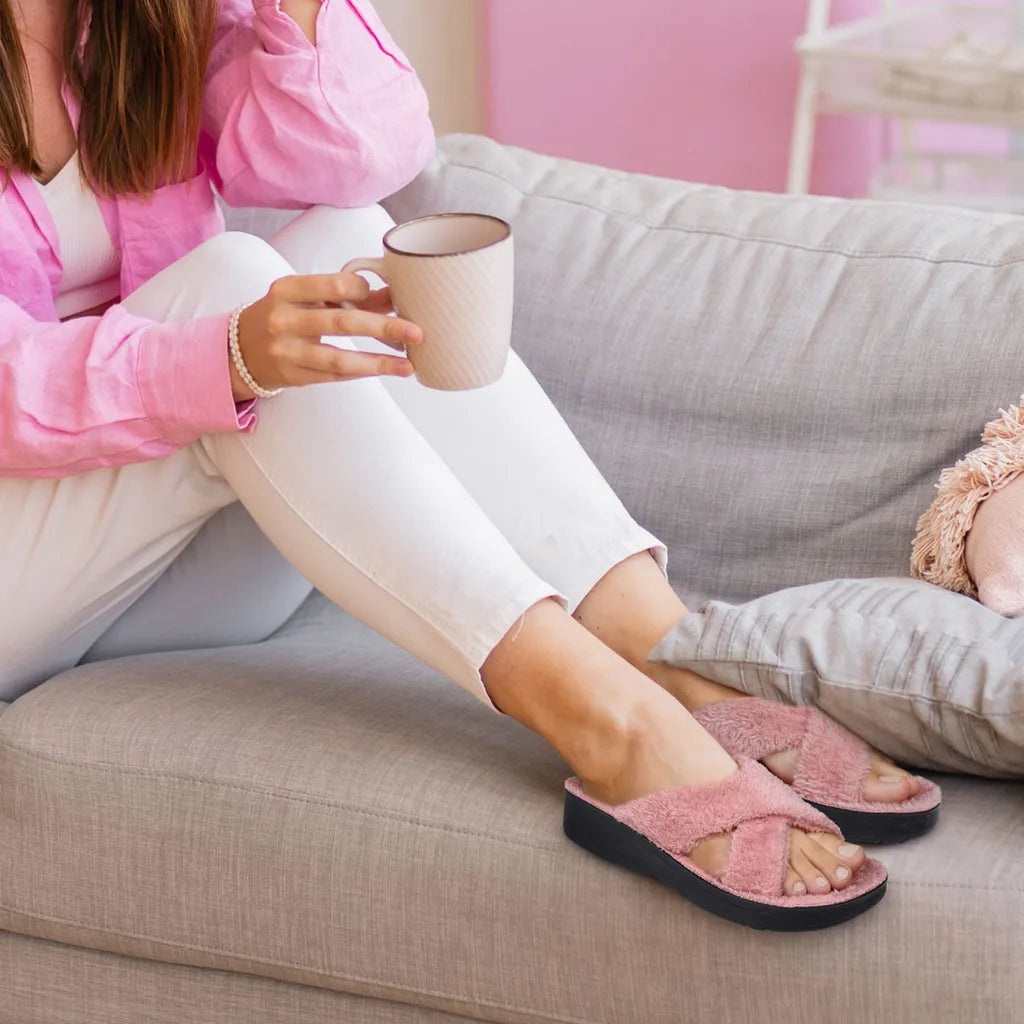
Whether you're choosing fuzzy slippers for women or supportive open-toe slides, getting the fit right is the single most important decision you'll make. Two minutes of measurement now saves weeks of discomfort later.
Step-by-Step: How to Measure Your Foot for Slippers or Slides
Before purchasing any women's winter slippers, take a quick measurement. Here's what you'll need and how to do it correctly.
Step 1: Gather Your Materials
· A piece of paper larger than your foot
· A pencil
· A ruler or measuring tape
· A flat surface and a wall to stand against
Important: wear the socks you plan to use with your warm slippers for women. Sock thickness directly affects how snugly your foot fills the footbed.
Step 2: Position Your Foot
Place the paper flat against the wall on the floor. Stand upright with your heel lightly touching the wall. Distribute your weight evenly across both feet — standing on one foot will exaggerate the measurement.
Step 3: Mark Your Longest Toe
With your pencil, make a soft mark at the tip of your longest toe. Do not press the pencil into your toe — just mark where it ends naturally. Repeat for both feet, as most people have one foot slightly larger than the other.
Step 4: Measure Heel to Toe
Measure from the back edge of the paper (your heel point) to the pencil mark. This is your foot length. Record both measurements and use the larger one when sizing slippers or slides — footwear should accommodate your bigger foot.
Step 5: Measure Width (Recommended)
Wrap the tape around the ball of your foot — the widest part just below your toes. This measurement is especially useful if you have wide feet, frequently experience toe squeeze, or are considering slides with adjustable straps.

How Should Slippers Fit? Key Rules for the Perfect Fit
Once you have your measurements, use these expert-backed sizing rules to evaluate any slipper before you buy:
Rule 1: Always Leave Toe Wiggle Room
A properly fitting slipper should have approximately 1/4 inch (0.6 cm) of space between your longest toe and the front of the footwear. This space lets your toes rest without pressing forward, which prevents pressure points and supports healthy circulation — especially important during long evenings indoors.
Rule 2: Account for Sock Thickness
Many women wear fuzzy socks, thermal liner socks, or sleeping socks during winter. If you plan to layer socks with your warm slippers for women, size up by half a size to one full size. Ordering your bare foot size when you wear thick socks is one of the most common fit mistakes.
Rule 3: Check Brand Sizing Charts Carefully
Sizing is not standardized across brands. Some use US sizing, others use EU sizing, and still others have their own internal scale. Always cross-reference your foot length measurement (in cm or inches) with the specific brand's size chart — especially when ordering online where you can't try before you buy.
Rule 4: Prioritize Arch Support in the Footbed
For any slipper labeled orthopedic or arch-supportive, the contour height and depth of the arch matters as much as the length. A well-designed arch contour prevents overpronation (inward rolling of the foot), reduces plantar fascia strain, and supports anyone who spends extended time standing or walking indoors.
Rule 5: The Heel Should Stay Put
Slip your foot in and walk a few steps. Your heel should remain snugly in the heel cup without lifting. Heel slippage causes shuffling, increases fall risk, and forces the foot to grip with the toes — creating unnecessary tension with every step.
How Should Slides Fit? What's Different About Open-Back Footwear
Slides have their own fit considerations because they lack a heel enclosure. Knowing how slides should fit correctly prevents the most common problems — slipping, toe overhang, and forefoot pinching.
Length: No Toe Overhang
Your toes should not extend past the front edge of the slide's footbed. Overhang means your toes are constantly gripping to keep the slide on, which creates toe cramps and forefoot fatigue. Leave the same 1/4 inch of clearance you would in a closed-toe slipper.
Strap Position and Tension
The strap should sit across the widest part of your foot and feel secure without cutting in. If you have to cinch the strap to the tightest setting to feel any hold, the slide is too wide. If the strap leaves red marks after 20 minutes, it's too narrow. Adjustable straps are strongly recommended for anyone between sizes or with fluctuating foot swelling.
Width: Your Foot Should Sit Centered on the Footbed
Look down at your foot in the slide. It should sit centered — not hanging over either the inner or outer edge. Slides that are too narrow cause the foot to bulge at the sides; slides that are too wide cause constant lateral slipping. If your feet tend to swell during the day, err on the slightly larger side and use an adjustable strap to compensate.
Arch Alignment
The raised arch section of the footbed should make contact with your natural arch — not press into it uncomfortably, and not fall short of it. If the arch contour is too far forward or backward for your foot, no amount of strap adjustment will fix the support problem. This is why measuring foot length accurately before choosing slides matters so much.
Why the Right Fit Is a Health Decision, Not Just a Comfort One
It might be tempting to grab the cutest pair on sale — but fit is self-care, not luxury.
A properly fitting slipper promotes healthy circulation, supports joint alignment, and relieves the cumulative strain that hard indoor floors place on your feet, knees, and lower back. This matters even more in winter, when cold causes muscles and connective tissue to contract and tighten.
Research finding: A 2024 study published by the American Orthopaedic Foot & Ankle Society (AOFAS) found that women who wore supportive house shoes experienced a 40% reduction in daily foot fatigue compared to those who chose flat, unsupportive indoor footwear.
A slipper that fits your arch correctly also means you stand just a little taller. Your steps feel lighter. Even your posture subtly improves — because balance genuinely begins at the ground. Every morning trip to the kitchen, every walk down the hallway feels easier when your foot is working with your footwear instead of against it.
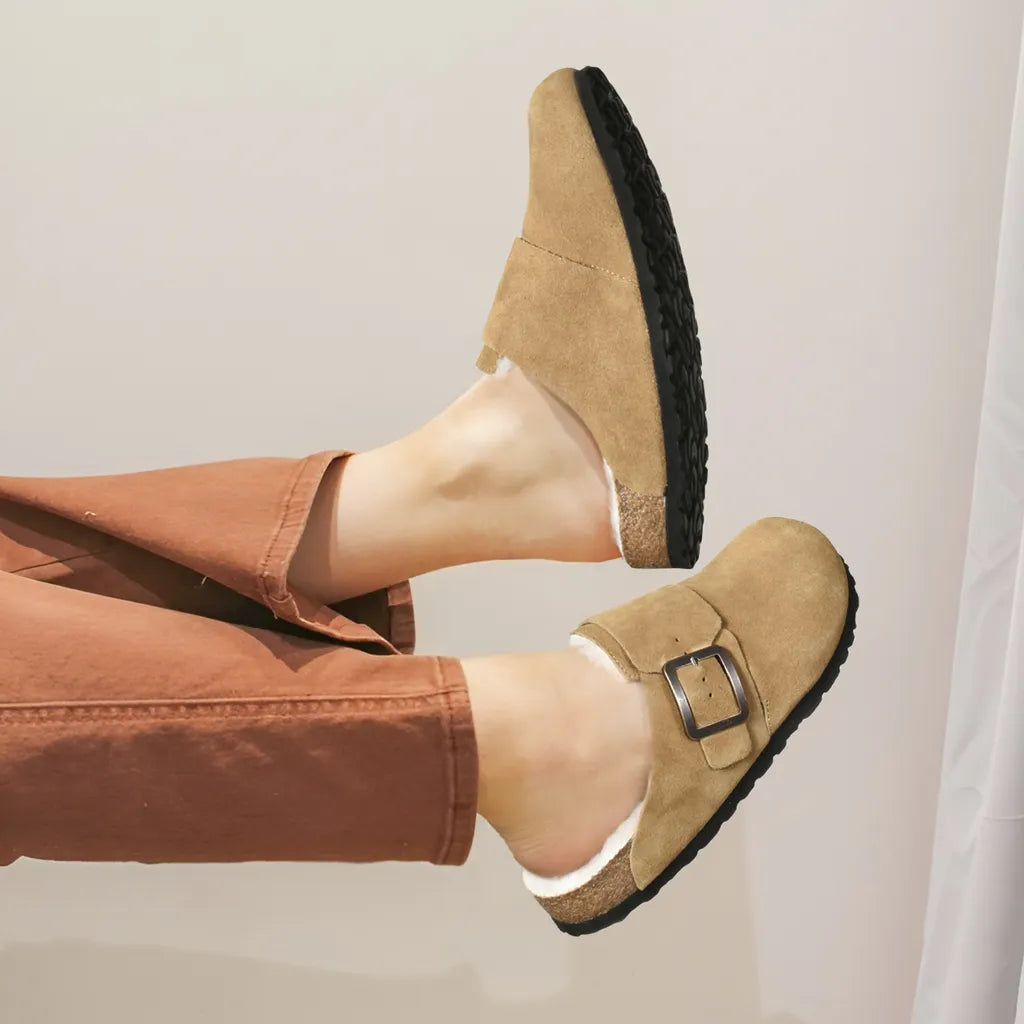
And in cold weather, properly fitting women's winter slippers distribute warmth evenly across the foot. No cold toes near a gap at the front. No sweaty buildup from excessive compression. That balance between snugness and breathability is what a truly good fit feels like.
Common Fit Mistakes to Avoid
1. Buying Small for a Snug Feel. Tight shoes don't "break in" like leather boots. They compress your toes from day one and typically never improve — they just cause different problems as the material wears down.
2. Ignoring Width Entirely. Even if your length is right, a narrow width can cause your foot to bulge at the sides, leading to friction and hot spots. If your feet swell during the day, always size for your largest measurement.
3. Overlooking Heel Fit. Your heel should sit fully in the heel cup. Any lift or gap means the slipper is too long or the heel cup is too shallow — and you'll be shuffling rather than walking within a week.
4. Skipping Arch Fit Verification. If a slipper is marketed as orthopedic or arch-supportive, verify that the arch contour actually matches your foot type — flat, neutral, or high. A high arch insert is uncomfortable for a flat foot, and vice versa.
5. Assuming Your Outdoor Shoe Size Transfers Directly. Indoor slipper sizing often differs from your outdoor shoe size because slippers typically have no thick outer sole or cushioned insole stack. Always measure against the brand's own size chart.
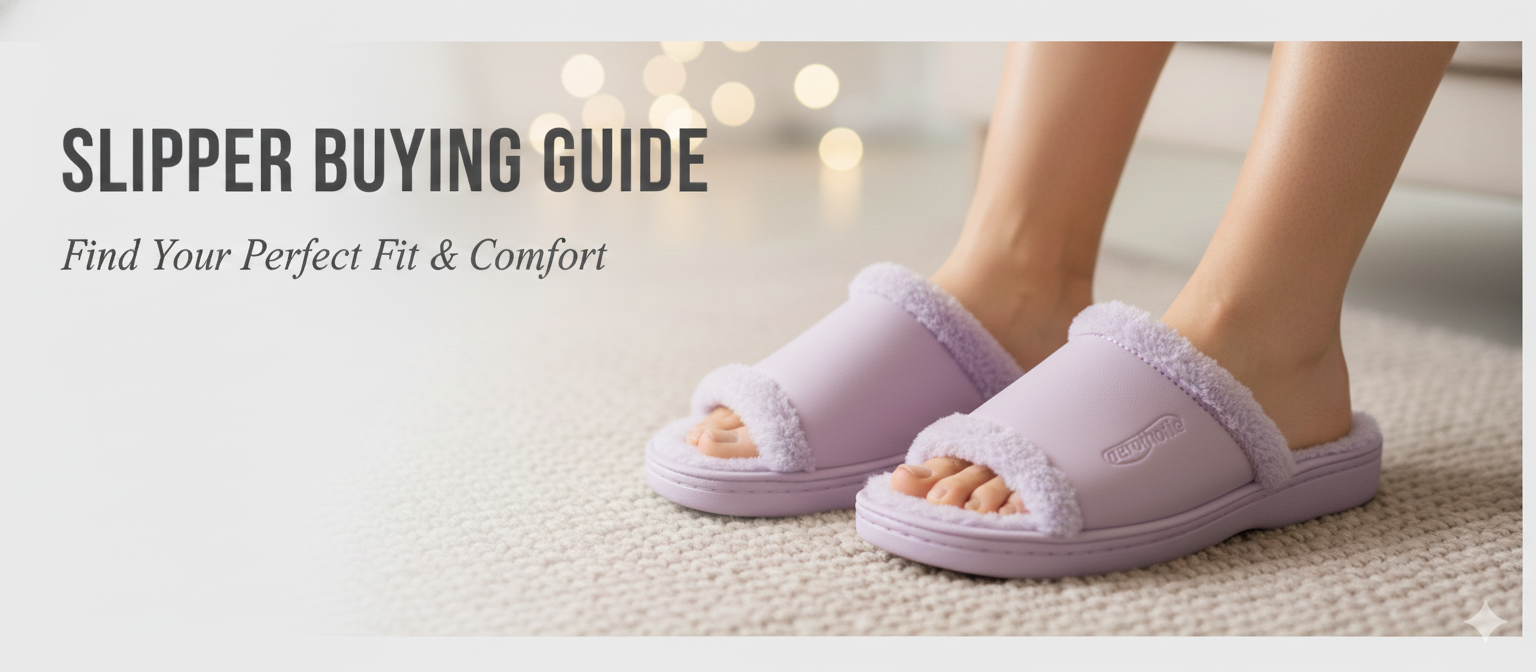
Our Recommendation: Aerothotic Aspen Fuzzy Strap Ladies Arch Support Slides
If you're looking for women's winter slippers that genuinely deliver on fit, warmth, and adjustability all at once, the Aerothotic Aspen Fuzzy Strap Slides are our go-to recommendation for this season.
The contoured arch footbed follows the natural curve of the foot, which means the arch support makes actual contact rather than sitting in a position that misses your arch entirely. The fuzzy strap is fully adjustable, so whether you're wearing bare feet or thick thermal socks, you can dial in a secure fit without cinching or loosening throughout the day.
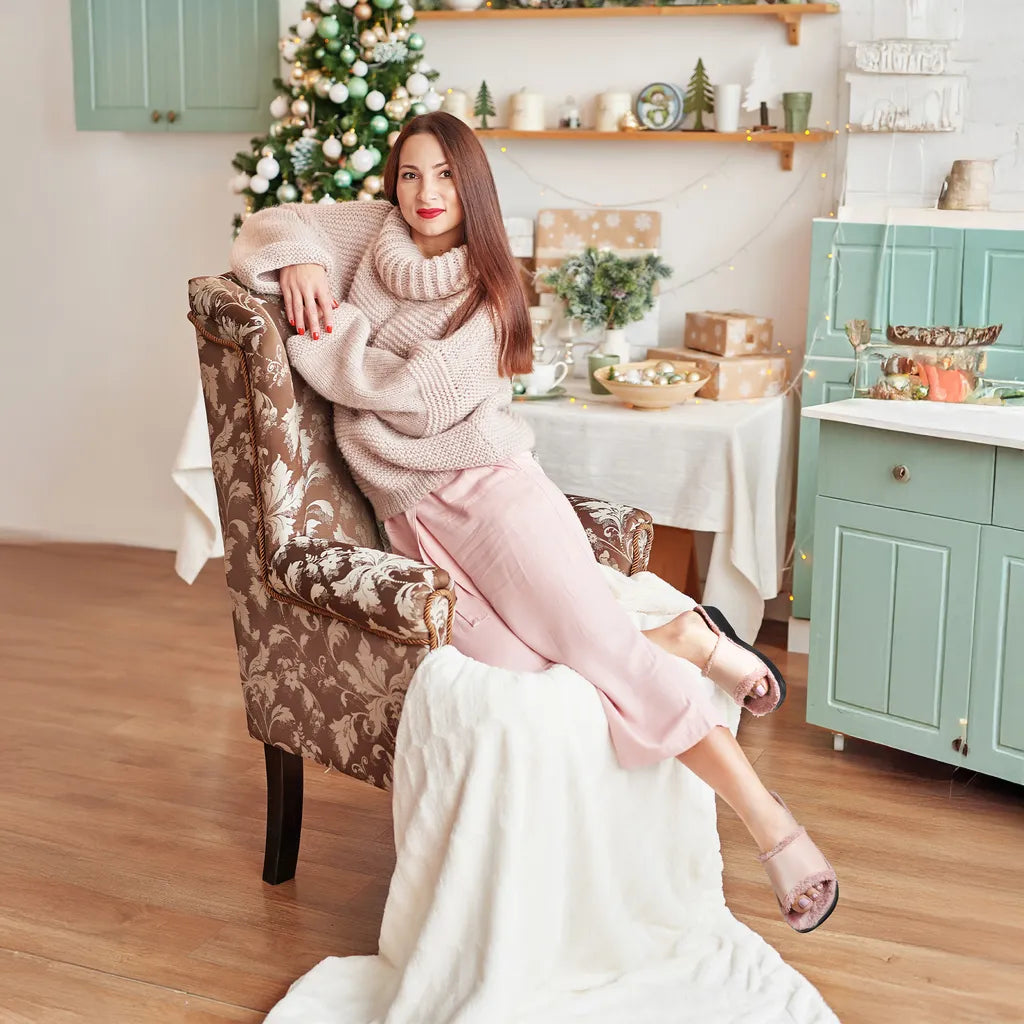
The open-toe design allows natural toe splay and adds breathability, preventing the sweaty buildup that fully enclosed slippers can cause, while the faux-fur lining provides the cozy, insulating warmth that makes winter footwear genuinely worth wearing. The non-slip outsole makes them safe on smooth floors, which is critical for any slide-style slipper.
|
Style |
Open-toe arch support slide |
|
Strap |
Adjustable fuzzy faux-fur strap |
|
Footbed |
Contoured arch support with cushioned base |
|
Lining |
Faux-fur interior lining |
|
Outsole |
Non-slip for indoor & light outdoor use |
|
Best For |
All-day indoor wear, wide feet, sock wearers |
Whether you're staying home, making a quick errand run, or wrapping holiday gifts at the kitchen table, the Aspen Slides support your feet without looking like a medical device. For women in the US looking for fuzzy slippers that support posture and warmth in equal measure, they strike the right balance between luxury and everyday usability.
A Quick At-Home Fit Test
Once your slippers or slides arrive, run through this four-point check before committing to keep them:
✓ Walk a few steps: Your heel should stay in the heel cup, and your toes should not touch the front.
✓ Put them on both feet: Comfort and fit shoulda feel consistent on both sides; a significant difference signals a width or arch mismatch.
✓ Check your arch alignment: The raised contour inside should meet your natural arch curve. You should feel support, not pressure.
✓ Sit, stand, and flex: The slipper should move naturally with your foot through all positions if it pulls or gaps, the fit isn't right.
Frequently Asked Questions
Q: How should slippers fit?
A: Slippers should have approximately 1/4 inch of space at the toe, a snug heel that doesn't lift during walking, and a width that lets your foot sit centered on the footbed without bulging at the sides. The arch contour should make comfortable contact with your natural arch. They should feel secure without any tightness or pinching.
Q: How should slides fit?
A: Slides should fit with no toe overhang at the front, a strap that sits securely across the widest part of your foot without cutting in, and a footbed wide enough that your foot sits centered. The arch support should align with your natural arch, not press uncomfortably into it or miss it entirely. If you're between sizes, size up and use an adjustable strap to compensate.
Q: Should I size up for slippers when wearing thick socks?
A: Yes. If you plan to wear fuzzy or thermal socks with your warm slippers for women, size up by half a size to a full size from your bare foot measurement. Ordering your regular shoe size in thick-sock conditions typically results in a slipper that feels uncomfortably tight by the second wearing.
Q: Do fuzzy slippers for women come in wide widths?
A: Many brands offer wide-width options or slides with adjustable straps that accommodate wider feet. Always check the width measurement (ball of foot) against the brand's size chart, and look for styles with stretchy uppers or adjustable closures if you have wider feet or foot swelling.
Q: How long should quality women's winter slippers last?
A: A well-constructed pair of supportive women's winter slippers typically lasts one to two full seasons with daily use. Signs it's time to replace them include compressed cushioning that no longer springs back, worn-down outsole tread, or a collapsed arch contour that no longer provides meaningful support.
Q: Can slippers help with plantar fasciitis?
A: Supportive slippers with a firm arch contour and deep heel cup can meaningfully reduce plantar fascia strain during indoor wear. Look for styles specifically designed with arch support — flat, unsupportive slippers can worsen plantar fasciitis symptoms over time.
Final Thoughts: Measure First, Then Shop
The pleasure of warm slippers for women isn't just in giving or receiving them. It's a fact that every pair can feel completely customized when you've taken two minutes to measure your foot properly.
Knowing how slippers should fit, and how slides should fit, means you'll never again spend a winter evening fighting with footwear that slides, pinches, or leaves your arch unsupported. It transforms an ordinary purchase into one that genuinely improves how your evenings feel.
Before you click Add to Cart, take the measurement. Give yourself the gift of comfort that actually fits because a good fit isn't just a number. It's the feeling of sinking into your sofa at the end of the day and realizing your feet feel as rested as the rest of you.
Ready to Find Your Perfect Winter Fit?
Shop Aerothotic's women's winter slippers and arch support slides designed for warmth, support, and a fit that lasts all season.