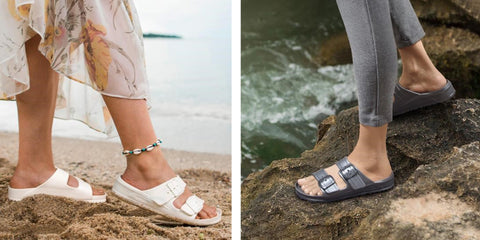
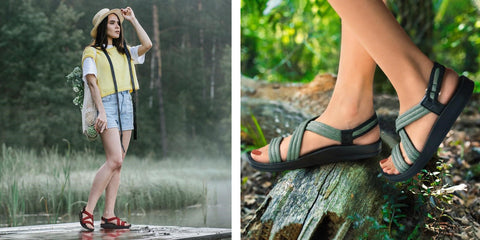
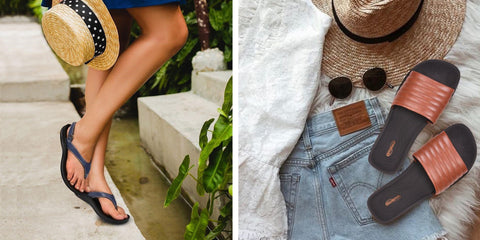
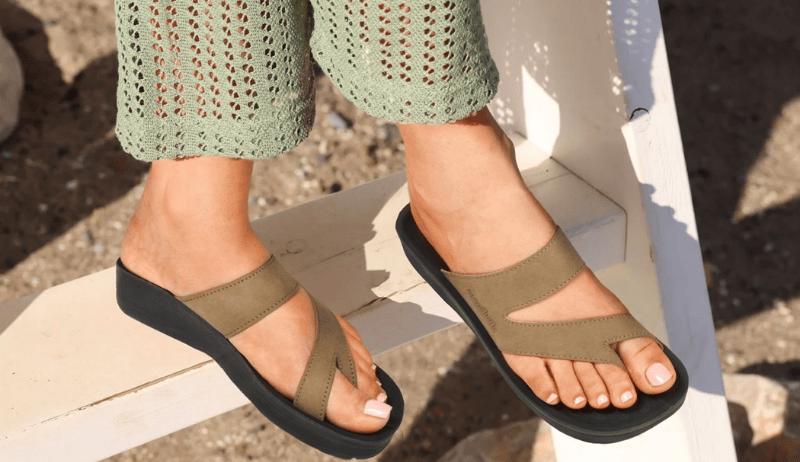
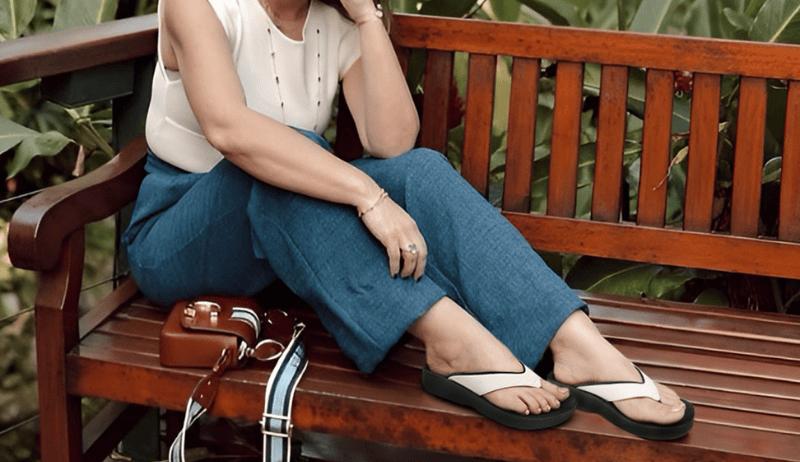
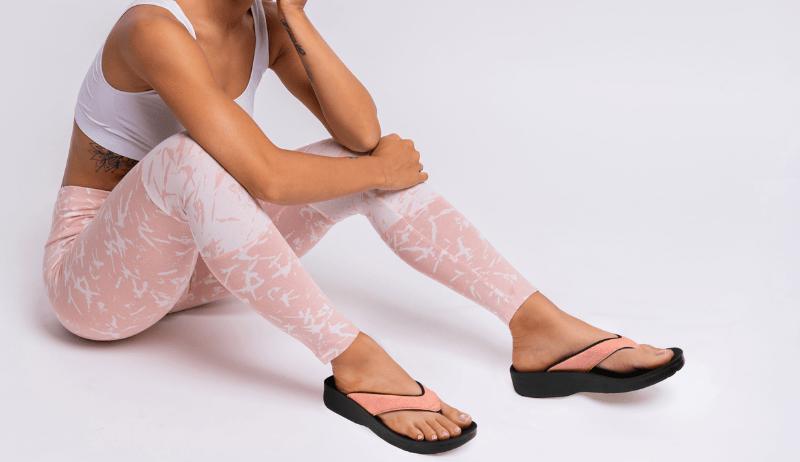
Between the first bell, back-to-back classes, and standing at a whiteboard or in a lecture hall aisle for hours, campus season is hard on feet. If you are shopping for arch support sandals that can survive a full school day, comfort has to come before anything else this year. Back to school shopping lists are full of sneakers and loafers for kids, but teachers, college students, and parents doing daily drop-off need something different. Most of your day happens standing, walking hallways, or crossing a quad in August heat, and regular sandals are not built for that kind of mileage. A pair with real arch support changes how your feet feel by 3 p.m., not just how they look at 8 a.m. Quick answer: for back to campus 2026, look for sandals with contoured arch support, a deep heel cup, adjustable straps, and ideally APMA acceptance. Below we break down the best styles by who wears them and what they do all day. Why Campus Days Are So Hard on Your Feet Teachers average several miles a day just moving between rooms, and college students often clock even more crossing campus between buildings. Add standing through lectures, office hours, or lab sessions, and unsupported footwear can leave your arches and heels aching long before the day is over. This kind of repetitive strain is part of why walking sandals with proper arch support matter so much once the school year starts. Flat, unsupportive sandals force your foot muscles to work overtime to keep you stable, which is where fatigue, heel pain, and even plantar fasciitis flare-ups tend to start. A contoured footbed does that stabilizing work for you, which is one of the simplest changes you can make heading into a new semester. It is not just distance either. Standing still for a long stretch, like proctoring an exam or waiting in line at registration, can be just as taxing as walking, since your foot muscles stay under constant load without the natural break that comes from movement. This is where a lightweight sandal built for standing all day earns its place in your rotation. What to Look for in Back-to-Campus Sandals Not every sandal on your feed this August is built for a school day. Before you buy, look for a few specific things. Contoured arch support that keeps your foot properly aligned, not just a flat footbed with a strap on top A deep heel cup that cradles the heel and reduces impact with every step across pavement or tile Adjustable straps so the fit stays secure through a full day of movement A grippy, stable outsole for stairs, wet hallways, and quick walks between classes Breathable materials that hold up to the tail end of summer heat during the first few weeks back One trust signal worth checking for is APMA acceptance. Sandals accepted by the American Podiatric Medical Association have met a set of criteria for promoting good foot health, which is a helpful shortcut when you are comparing options in our APMA approved sandals collection. It is not a guarantee against foot pain for every person, but it is a meaningful starting point when narrowing down a school-day shoe. Quick Comparison: Which Sandal Fits Your Campus Day If you only read one section, make it this one. Here is how the four styles below stack up against each other for a typical school day, based on what each one is built for. Sandal Best For Arch Type Style Pearly Fume Teachers standing at the front of a room Medium arch Classic thong Crystal Mist Students walking long distances between classes Medium arch Shimmer thong Maeve Early drop-off runs and quick errands Medium arch Slide Raido Active days that mix walking and standing High arch Double strap Best Aerothotic Sandals for Back to Campus 2026 For Teachers Who Stand All Day If most of your day is spent on your feet at the front of a classroom, the Pearly Fume sandal is worth a look. It has a padded strap, a deep heel cup, and gel-injected arch support designed for medium arches, which may help reduce the fatigue that builds up during a long teaching day. For College Students Walking Between Classes Students crossing campus multiple times a day need something lightweight but supportive. The Crystal Mist flip flop pairs a shock-absorbing outsole with a firm, contoured footbed, so it can go from an early lecture to a late study session without your feet feeling it. For Busy Mornings and School Drop-off If your version of back to campus is drop-off lines, errands, and being on your feet before 8 a.m., the Maeve slide sandal is an easy slip-on option with a cushioned, ergonomic sole built for quick, repeated wear. For High Arches and Active Days If your day mixes long walks with long stretches of standing, like a lab assistant or a coach on campus, the Raido strappy sandal is built for high arches, with a double strap design and deep heel cup for extra stability when your schedule does not slow down. Shop by What Your Campus Day Actually Looks Like Everyone's back-to-campus routine is different, so tap the option below that matches your day for a faster recommendation. I stand at a podium or whiteboard most of the day Prioritize a deep heel cup and medium arch support to reduce the strain of staying in one place for hours. The Pearly Fume is built for exactly this. I walk long distances between buildings Look for a shock-absorbing outsole and a lightweight build so repeated walking does not wear you down. The Crystal Mist is designed for this kind of daily mileage. My mornings are rushed drop-offs and errands An easy slip-on with real support beats fumbling with straps at 7 a.m. The Maeve slide is built for exactly this kind of quick, repeated wear. My schedule mixes standing, walking, and everything in between A high-arch, double-strap design keeps up with unpredictable days. The Raido is built for that kind of variety. Styling Sandals for a Campus Schedule Comfort does not have to mean sacrificing style. A neutral thong sandal pairs easily with denim, midi skirts, or the wide-leg pants that are trending this school year, while a strappy style dresses up a simple outfit for meetings or presentations. Keeping one supportive pair in a neutral tone and one in a color you love covers most of a semester's worth of outfits. For early fall, when mornings are cool but afternoons are still warm, sandals paired with midi socks and a light cardigan give you a layered, put-together look without giving up the breathability you need during the day. It is a small styling trick, but it is one of the easiest ways to stretch a single pair of comfort sandals across changing weather. A Simple Back-to-Campus Foot Care Checklist A few small habits go a long way toward keeping your feet comfortable across a full semester. ☐ Rotate between two pairs so each footbed gets time to fully air out ☐ Choose arch support sandals over flat, unsupportive ones for high-mileage days ☐ Stretch your calves and the bottoms of your feet at the end of a long standing day ☐ Keep a backup pair in your bag or car for unexpected long walks across campus ☐ Replace sandals once the footbed feels flat or the tread starts to wear smooth Caring for Your Sandals Through the School Year A school year is long, so your sandals need to hold up to daily wear. Rotate between two pairs when you can, since giving the footbed time to fully air out between wears may help it keep its shape and support longer. Our flip flops collection is built with durable, abrasion-resistant materials designed to hold up to that kind of regular rotation across a full semester. Wipe straps down after muddy or rainy days, and let sandals dry fully before storing them in a closed locker or bag, since trapped moisture can wear down cushioning faster than normal use. If you notice the footbed compressing or the arch support feeling flatter than it did in August, that is usually a sign it is time to shop the medium arch collection for a fresh pair rather than pushing through discomfort. Ready to find your pair before the first day back? Browse the full women's comfort sandals collection and shop by arch type, color, and style. Frequently Asked Questions What are the best sandals for teachers who stand all day? Look for sandals with a contoured arch support footbed, a deep heel cup, and adjustable straps. Styles like the Pearly Fume are designed specifically for extended standing and walking. Do college students need arch support sandals for walking to class? If you are covering significant distance across campus daily, arch support may help reduce the foot fatigue and heel discomfort that can come from flat, unsupportive sandals over a full semester. What does APMA approved mean on a sandal? It means the American Podiatric Medical Association has reviewed the design and accepted it as promoting good foot health. You can browse Aerothotic's APMA approved styles to see which ones carry that acceptance. Can arch support sandals help with plantar fasciitis during a busy school year? Supportive footwear with a contoured footbed and deep heel cup may help manage discomfort associated with plantar fasciitis, though it is not a substitute for guidance from a podiatrist. Our blog on walking sandals and plantar fasciitis covers this in more depth. How many pairs of sandals do I need for a school year? Two is a good baseline, one neutral pair for daily wear and one backup so each footbed has time to rest between uses. Rotating pairs from our comfort sandals collection also tends to extend how long the arch support lasts. Are strappy sandals or flip flops better for high arches? Strappy styles with a double strap and deep heel cup, like the Raido, tend to offer more structured support for high arches than a simple thong flip flop. Related Searches comfortable sandals for teachers arch support sandals for college students best sandals for standing all day podiatrist recommended sandals for women APMA approved sandals campus walking sandals for women sandals for plantar fasciitis back to school back to school sandals 2026
Learn moreWalking Shoes VS Walking Sandals Which Is Actually Better? The research says it depends on the walk you're about to take You're packing for a trip and staring at your closet. Shoes, or sandals? It seems like a small decision until your feet are three miles in and one choice is clearly winning. The honest answer is that neither option is universally better, the research shows they change your gait, your impact forces, and your comfort in different, measurable ways. Here is what the biomechanics actually say, and how to tell which one you need today. Quick answer: shoes win on long distances and rough terrain, sandals win on heat, swelling, and quick on-off, and a supportive orthotic sandal closes most of that gap. 300-500 miwalking shoe cushioning lifespan ~1 cupof moisture feet release daily 43%of women observed wearing flip-flops in one study What the Research Actually Shows A gait biomechanics study comparing shoes, sandals, flip-flops, and barefoot walking found that shoes produced a smaller loading rate at initial impact and a greater dorsiflexion moment in early stance compared to sandals and flip-flops. In plain terms, shoes spread out the shock of each step more gradually, while sandals let more of that impact land at once. That is a real, measurable difference, not just a feeling. Separately, research comparing minimally-shod and conventionally-shod populations found that people who habitually wear less restrictive footwear, including sandals, tend to have stronger, stiffer foot arches, since the foot muscles are doing more of the stabilizing work themselves instead of relying on a rigid shoe structure. Neither finding crowns an overall winner. It just means shoes protect you more from repetitive impact, while unstructured sandals ask more of your foot's own strength, for better and worse depending on your feet. Head to Head, By the Numbers Lower loading rate, per gait research Impact Higher loading rate, more muscle engagement Enclosed, traps heat and moisture Breathability Open, better for heat and swelling Long distances, uneven terrain Best For Short walks, errands, hot climates Breaks down in 300 to 500 miles Lifespan Depends on footbed quality, not mileage Slower on and off Convenience Fast on, fast off When Each One Actually Wins Shoes You are walking more than 3 to 4 miles at a stretch Sandals It is hot and your feet swell over the course of the day Shoes The terrain is uneven, rocky, or unpredictable Sandals You want a contoured, orthotic-grade footbed without socks Shoes You are on your feet most of the workday and need ankle stability Sandals Quick on and off matters, security lines, beach, pool The Catch With "Regular" Sandals Most of the research showing sandals perform worse than shoes was done using standard, flat flip-flops with no arch contouring, since that is what most people default to. A flat sandal offers close to nothing in the way of shock absorption or arch support, which is exactly why the loading rate looks higher in those studies. An orthotic-grade walking sandal with a contoured footbed, deep heel cup, and real arch support closes a meaningful part of that gap, since it is doing structurally similar work to a shoe's midsole, just without the enclosed upper. This is the difference between "sandals are bad for walking" and "flat, unsupportive sandals are bad for walking," and it is a bigger difference than most people assume. Which One Fits Today's Walk? Tap an answer for each question and watch the meter lean. How far are you walking? Over 3 miles Under 3 miles What's the terrain? Uneven or rocky Pavement or flat How's the weather? Cool or wet Hot, feet swell ShoeSandal Getting the Fit Right Matters More With Sandals A shoe that is slightly too big is hidden by laces and a tongue that can be tightened. A sandal has nowhere to hide a bad fit, so sizing mistakes show up immediately as slipping heels, straps that dig in, or toes hanging off the front edge. Feet also swell over the course of a walk, more so in sandals since there is less structure holding everything in place, which is exactly why measuring properly before you buy matters more here than it does for closed shoes. If you are unsure how a style should fit, this guide to measuring for the perfect fit walks through exactly what to check, and Aerothotic's size chart is worth a look before ordering a new style, especially if you are between sizes. What If You Have a Specific Foot Condition? The shoes-versus-sandals question changes shape a little if you are also managing a specific foot condition, since some features matter far more than others depending on what you are dealing with. Plantar fasciitis: a deep heel cup and contoured arch matter more than the shoe-versus-sandal question itself. See our guide on habits that make plantar fasciitis worse or browse the plantar fasciitis sandals collection. Bunions: a wide, open toe box usually matters more than shoe versus sandal, since narrow shoes tend to aggravate bunions faster than an open sandal does. Our buyer's guide to sandals for bunions covers exactly what to look for, and the bunion sandals collection is built around those same features. Flat feet: arch support becomes non-negotiable in either category. The flat feet sandals collection and the arch support collection are both good starting points. Building a Two-Pair Rotation The most practical answer for most people is not choosing one category forever, it is having a good option in each. A supportive walking shoe for long, uneven, or high-mileage days, and a properly built orthotic sandal for shorter, hotter, or more casual ones. Rotating between two pairs also gives each one time to fully dry out and recover its cushioning between wears, which extends the life of both. If you are starting that rotation from scratch, the best sellers collection is a reasonable place to see what holds up best for other walkers, and the new arrivals page covers the latest styles if you want more options to compare. A Few Walking Sandals Built To Compete These three close the gap the research points to, contoured footbeds and real arch support, so you are not choosing between comfort and protection. Odal Split Toe Sandal Built for travel days and long hours on your feet. $49.99 Shop Now Mellow Vibe Flip Flops Gel-injected midsole, grippy outsole for active days. $49.99 Shop Now Crystal Mist Flip Flops Shock-absorbing gel footbed with contoured arch support. $49.99 Shop Now Flumen Arch Support Flip Flops An ergonomic footbed built for exceptional arch support on longer walks. $49.99 Shop Now Aerothotic footwear is APMA accepted, meaning it has met the American Podiatric Medical Association's criteria for promoting good foot health. This is a helpful reference point when comparing footwear, not a substitute for medical advice. Dealing with heel pain specifically? See our breakdown of 7 everyday habits that make plantar fasciitis worse before you decide between shoes and sandals. Frequently Asked Questions Are walking sandals as good as walking shoes for long walks? For walks longer than 3 to 4 miles, walking shoes generally offer more consistent shock absorption. A well-built orthotic sandal narrows the gap but most people still notice more fatigue on very long distances in sandals. Why do my feet hurt more in flip-flops than sneakers? Standard flip-flops have a flat, thin footbed with no arch contouring, so the foot has to work harder to stabilize itself with each step, which is exactly what gait research on footwear loading rates has found. Are sandals better for foot health than shoes? It depends on the sandal. Research on minimally-shod populations found stronger foot arches associated with less restrictive footwear, but that benefit applies to well-designed sandals, not flat, unsupportive ones. How often should I replace walking shoes versus walking sandals? Walking shoes typically need replacing every 300 to 500 miles, or about every 4 to 6 months for daily walkers. Sandals do not wear the same way, but a contoured footbed should still be checked periodically for flattening. Are sandals okay for walking with bunions? Often better than closed shoes, since an open toe box removes the side pressure that narrow shoes place directly on the joint. Look for a wide, strap-free front rather than thin straps positioned right over the bunion. Do I need different sandals for flat feet versus a normal arch? Yes, generally. Flat feet benefit from firmer, more structured arch support to compensate for the arch's own reduced stiffness, while a normal or higher arch has more flexibility to work with a slightly softer footbed. Related Reads 7 Habits That Make Plantar Fasciitis Worse Best Plantar Fasciitis Sandals for Hot Weather The Arch Support Fix Most People Overlook Are Flip Flops Bad for Your Feet? How to Measure for the Perfect Fit in Slippers & Slides Best Sandals for Bunions: A Buyer's Guide The real answer to "shoes or sandals" is not one or the other forever, it is knowing which one fits the walk in front of you. Long, uneven, all-day on your feet, reach for the shoe. Hot, short, want to feel the air, reach for a sandal that is actually built to support you, not just cover your feet. Whichever category you're shopping, the full comfort sandals collection and arch support styles are both good places to start. Find Your Next Walking Sandal Contoured footbeds, real arch support, and all-day comfort, built to hold up to actual walking. Shop All Comfort Sandals
Learn more6:47 a.m. Feet hit the floor. There it is again. If you know that exact stab of pain before you have even brushed your teeth, you are not imagining it, and you are not alone. Research puts the lifetime odds of developing plantar fasciitis at around 1 in 10, and roughly 83 percent of the people dealing with it are working-age adults on their feet all day, not weekend athletes who overdid it once. Here is the part that surprises most people: plantar fasciitis rarely gets worse because of one dramatic moment. It gets worse in small, unremarkable increments, from habits repeated so often they stop registering as choices at all. Below are seven of them, backed by what the research actually shows, plus what to do instead. ~10%of adults will experience plantar fasciitis 4 in 5also have a tight Achilles tendon 83%of cases are active working adults, 25 to 65 What Is Plantar Fasciitis, Quickly The plantar fascia is the thick band of tissue running along the bottom of your foot, connecting heel to toes. When it becomes irritated, that is plantar fasciitis, and the giveaway symptom is a sharp, stabbing pain near the heel that is worst with your first steps after rest. Research also shows women are diagnosed roughly 2.5 times more often than men, and the condition peaks between ages 40 and 60, though plenty of younger, active people get it too. 7 Everyday Habits That Can Make Plantar Fasciitis Worse 1 Overpronation, up to 86% of cases Wearing Unsupportive Shoes Around the House You save the "real" shoes for outside and slip into flat slippers or worn flip-flops the second you walk in the door. But you are on hard kitchen and bathroom floors for hours a day in them, and studies on plantar fasciitis patients find overpronation, the inward roll of the foot, in as many as 81 to 86 percent of cases. Flat, structureless footwear does nothing to stop that roll. Swap them for supportive indoor sandals with an actual footbed underneath you. 2 Removes cushioning entirely Walking Barefoot on Hard Floors Barefoot walking has genuine upsides for healthy feet, it can strengthen the small stabilizing muscles in the arch. But if the plantar fascia is already inflamed, tile, hardwood, and concrete offer zero shock absorption, and every step drives pressure straight into the heel and arch. Keep a supportive pair by the bed and the back door so barefoot is never the default. 3 Highest-risk occupations Standing for Long Stretches Without Support Nurses, teachers, retail staff, and warehouse workers show up disproportionately in plantar fasciitis research, and it is not a coincidence. Standing on concrete or tile for hours applies constant, repetitive load to the fascia, and unlike a single hard workout, the damage builds quietly across an entire shift. Rotating your weight, taking short seated breaks, and choosing shoes actually built for standing all day all slow that buildup down. 4 Early treatment works best Ignoring Early Heel Pain The first flare feels minor enough to shrug off, so most people keep walking through their normal routine. Clinicians consistently point out that early intervention, rest, ice, stretching, and support, is what prevents a mild morning ache from becoming a chronic, recurring problem that is much harder to treat later. The window where this is easy to fix closes faster than it feels like it will. 5 Tight Achilles in ~4 out of 5 cases Skipping Daily Stretching This is one of the strongest patterns in the research: an estimated four out of five people with plantar fasciitis also have a tight Achilles tendon. A tight Achilles limits how far your ankle can flex, which pulls directly on the fascia with every step. A few minutes of calf stretches against a wall, or rolling your foot over a frozen water bottle, keeps that tension from compounding day after day. 6 Runner prevalence up to 22% Ramping Up Activity Too Fast A sudden jump in mileage, a new running routine, or a long day on your feet after weeks off all load the fascia faster than it can adapt, which is part of why prevalence among runners has been measured as high as 22 percent in some studies. Build volume gradually and give the tissue time to catch up, instead of asking it to absorb a spike all at once. 7 Support fades before shoes look worn Wearing the Same Worn-Out Shoes Every Day Cushioning and arch support break down with wear long before a shoe looks worn out on the outside. Reaching for the same pair every single day means you are slowly losing the exact support that was helping in the first place, without any visible warning sign. Rotating in a properly built pair, like sandals designed specifically for plantar fasciitis, keeps that support consistent instead of quietly disappearing. "Four out of five people with plantar fasciitis also have a tight Achilles tendon, and it's rarely a coincidence." Quick Self-Check: How Many of These Are You Doing Right Now? Check off any habit that sounds like your week. This stays on your screen only, nothing is saved or sent anywhere. I wear flat slippers or old flip-flops around the house I walk barefoot on tile, wood, or concrete floors regularly I stand for long stretches without a supportive shoe I've pushed through early heel pain instead of addressing it I rarely stretch my calves or Achilles I've ramped up walking, running, or standing time quickly I wear the same pair of shoes almost every day How the Right Support Helps Proper footwear will not undo every habit on this list by itself, but it removes a meaningful share of the daily strain that keeps plantar fasciitis flaring. Look for a contoured footbed that cradles the arch, a deep heel cup that stabilizes the heel on impact, and enough cushioning to absorb shock with every step, the same combination arch support sandals are built around. It is worth checking for this if you also deal with flat feet, since research finds the two conditions overlap in roughly 1 in 5 plantar fasciitis cases. Feature Worn-Out or Flat Footwear Supportive Orthotic Sandal Arch support Minimal or collapsed Contoured, holds arch position Heel cup Flat, no stabilization Deep, cradles and stabilizes heel Shock absorption Compressed, worn thin Fresh cushioning across the footbed Effect on plantar fascia Allows overpronation, added strain Distributes pressure, reduces strain Aerothotic footwear is APMA accepted, meaning it has met the American Podiatric Medical Association's criteria for promoting good foot health. This is a helpful reference point when comparing footwear, not a substitute for medical advice. A Few Styles Built For This If you are ready to swap out habit #1 or #7 above, these three are built around the exact features this article covers: a contoured footbed, a deep heel cup, and shock-absorbing cushioning. Bestseller Crystal Mist Flip Flops $49.99 A shock-absorbing PU gel footbed and contoured arch support in a lightweight, everyday flip flop. Shop Now Arch Support Flumen Flip Flops $49.99 An ergonomic design footbed built for exceptional arch support with vegan leather straps. Shop Now All-Day Wear Mellow Vibe Flip Flops $49.99 A gel-injected midsole that molds to your arch over time, with a grippy outsole for standing all day. Shop Now Want sandals that support you the way sneakers do, without giving up your summer wardrobe? See how they stack up in our guide to the best plantar fasciitis sandals for hot weather. Frequently Asked Questions Can walking make plantar fasciitis worse? Walking itself is not the problem. Walking in unsupportive shoes, on hard surfaces, or for much longer than usual can aggravate the plantar fascia and make pain worse. Should I go barefoot at home if I have plantar fasciitis? Generally, no. Hard floors without cushioning tend to increase strain on an already inflamed plantar fascia. A supportive indoor sandal is a better everyday choice. Why does tight calf muscle matter for heel pain? A tight calf and Achilles tendon limit how far your ankle can flex, which increases tension on the plantar fascia with every step. It is one of the most consistently reported risk factors in the research. Do orthotic sandals actually help with plantar fasciitis? Sandals with a contoured footbed, deep heel cup, and firm arch support can meaningfully reduce the daily strain that keeps plantar fasciitis irritated, especially when paired with stretching. Related Reads Hot Weather Best Plantar Fasciitis Sandals for Hot Weather Arch Support The Arch Support Fix Most People Overlook Sandal Shopping What Types of Sandals Can Make Plantar Fasciitis Worse Flip Flops Are Flip Flops Bad for Your Feet? None of these habits look dramatic on their own, which is exactly why they are so easy to keep doing. Swapping out unsupportive shoes, keeping up with stretching, and taking early pain seriously are small, unglamorous changes that add up. For more on building a foot-friendly routine, see our guide on the arch support fix most people overlook, or browse the full plantar fasciitis sandals collection to find a pair built for it. Ready to Give Your Feet an Easier Day? Shop sandals built with a contoured footbed, deep heel cup, and real arch support, made for the exact strain this article covers. Shop Plantar Fasciitis Sandals
Learn moreYour cart is currently empty.
Not sure where to start?
Try these collections: